The government risks shooting itself in the foot over VAT relief scheme

Ahead of Wednesday’s budget Rachel Reeves is having to hunt for cash behind every sofa cushion. But if she removes help to repair places of worship, she could find unintended consequences await

Imagine if you had tens of thousands of volunteers who were motivated to give their time simply because they wanted to make the world a kinder, fairer place. Imagine that their volunteering plugged gaps left unfilled by government and neighbours. Imagine that all these helpful souls needed was somewhere safe and warm to operate from, but without that, they’d have to give up and go home.

This isn’t hard to imagine, of course, because it’s the situation the government finds itself in vis à via the vast array of community work done or hosted by the nation’s places of worship.

The National Churches Trust has estimated that the social and economic wellbeing benefit of the UK’s churches is worth £55bn. That takes the form of food banks, warm spaces, debt counselling, after-school clubs – providing the safety net that prevents people in need from slipping further into poverty or isolation and potentially require more costly intervention by the state.

You’re not going to attract a dementia café or mums and toddlers club to an unheated Victorian barn.

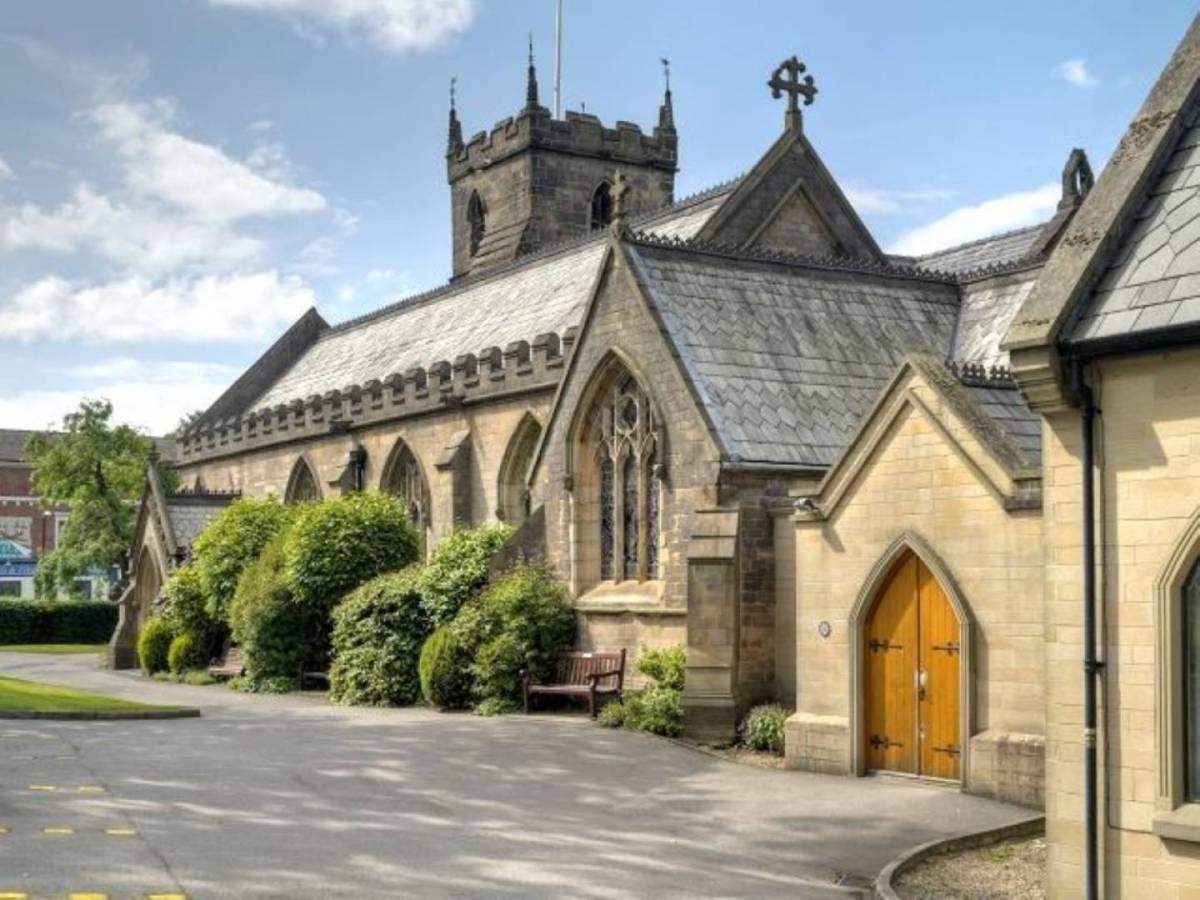
Because many churches are old, leaky and creaky, (some 45 per cent of the UK’s Grade I listed buildings are maintained by the CofE), their congregations want to do the only responsible thing and fix the roof, update the windows, install more efficient heating. You’re not going to attract a dementia café or mums and toddlers club to an unheated Victorian barn.

What made such repairs easier was the Listed Places of Worship Grant scheme put in place in 2001 by Gordon Brown, Reeves’ predecessor as chancellor (rewind past the Tory ones and Alistair Darling), which allowed Listed Places of Worship grants to cover the VAT on repair bills higher than £1,000. Brown understood the contribution faith communities would willingly make.

Yet in April it was suddenly announced that the scheme would only award grants up to £25,000, leaving any major project that was under way or about to begin either scrabbling to find hundreds of thousands of pounds or having to go back to the drawing board to be scaled down. A few churches have supporters with deep pockets, most don’t. 

As the Archbishop of York, Stephen Cottrell, told the Sunday Telegraph, “The vast majority of fundraising for our churches is done locally by heroic volunteers and we are deeply grateful for all they do. For more than 20 years, they have relied on the Listed Places of Worship Grant Scheme to give that crucial bit of extra help.” There are fears it could be scrapped all together.

Volunteers at a church that runs many social projects
Volunteers at St Laurence Church in Chorley, Lancashire, (also above) which has had to postpone finishing roof repairs because of the cap on VAT relief. Photo: CofE

Clearly, ahead of Wednesday’s autumn budget, the chancellor, Rachel Reeves is having to hunt behind every sofa cushion to find cash that can be put towards reducing the national debt. Aside from these buildings’ heritage value, ending the Listed Places of Worship scheme might make some sense if churches only served as a self-righteousness boost for the few.

But a survey published by the Church of England late last week found that two in five people, or 43 per cent of all adults, reported having had contact with their local church, 23 per cent of those – nearly seven million people in the UK – “for community support such as parent toddler groups, lunch clubs and food banks”. The CofE, which runs or supports 31,300 social action projects, estimates that “2.8 million people, 4 per cent of the UK population, have been in contact with their local church for a food bank.”  

The churches have shown themselves to be a trusted partner of government. They shut their doors during the pandemic, aware they had to set an example to other faith communities even though many of their own members were furious; they rallied support for the Coronation of King Charles with the bellringing initiative Ring for the King.

Yet even cathedrals, irreplaceable treasures, are not immune. Jo Kelly-Moore, Dean of St Albans and Chair of the Association of English Cathedrals, said: “The threat to end the Listed Places of Worship Grant, and the cap currently imposed, is having a hugely negative impact on our cathedrals, many of which have long-term repair and renewal projects costing hundreds of thousands of pounds.” Cathedrals are often criticised for charging visitors to look around, yet how else are they supposed to keep the lights on? (And they do stress that anyone wanting a space to pray can be shown in without charge.)

Cutting costs where heritage places of worship are concerned is short-term thinking. Churches come with ready-made goodwill and generally accessible premises. If churches cannot host community events because they are too cold or simply unsafe, alternative provision will sooner or later end up costing the state, undermining what Ms Reeves is trying so hard to achieve.

Can the former chief nursing officer heal the fractured Church of England? 

Bishop Sarah Mullally’s appointment as the next Archbishop of Canterbury is ground-breaking but she inherits a fractured Church. What comes next?

Congratulations to the Rt Revd and Rt Hon Dame Sarah Mullally DBE, who has today been announced as the 106th archbishop of Canterbury and the first woman to occupy the role.  

Her move from just north of the river, as bishop of the diocese of London, is one of shortest distances on the episcopal chess-board. But she arrives at a desk where the in-tray overflows: divisions persisting around how far the Church should recognise gay relationships, ongoing factional point-scoring, and a long-term slow decline in the numbers of dedicated, generous members (bar a modest post-Covid bounceback). 

There is of course, good news; the Bible Society’s findings of a “quiet revival”, especially among young men, should gladden the heart of any church leader. The robust discussion around where the Church should allocate its finances has led to a hearty public defence of the humble parish and the system that has for centuries been the nation’s unofficial safety net. And the Church’s work to address racism and links to historic slavery is giving the Church more of a right to speak up when racism spills anew on to our streets or seeps back into our public discourse.  

As one of the first women bishops, Archbishop-designate Sarah is no stranger to moving into worlds dominated by men, by tradition, by Old School ways. This will surely serve her well. And women leaders are generally seen as more trustworthy when it comes to handling situations of abuse. 

Much has been made of the fact that several provinces in the Anglican Communion, over which she is now “first among equals”, do not recognise female leadership. Closer to home, the campaign group Watch, Women and the Church, say 1 in 12 bishops do not fully accept women as priests or church leaders. (Parishes that don’t are given “flying bishops”.) Today on Twitter/X the group added: “the Archbishop of Canterbury will not be able to celebrate communion in 439 churches – simply because she is a woman”. Meanwhile a statement from Forward in Faith welcomed her while noting that a 2014 agreement meant “provision for an assured sacramental ministry for traditional catholics would continue as before”, with “the consecration of Society bishops … undertaken exclusively by other Society bishops”. Is this a triumph of Anglican “living with difference” or a failure of unity?

I’m also interested in how her first meeting with Pope Leo XIV will go. Her predecessor Justin Welby got on famously with Leo’s predecessor, Francis, who referred to him as “brother Justin”. Catholics who long to see women ordained in the Catholic Church, or at least given more space to use their gifts in the Church, will be watching closely. It calls to mind the photo of Queen Elizabeth II giving the Saudi King Abdullah a spin in her Landrover at a time when women in his country were not permitted to drive. (I’m not equating the Catholic Church with the Saudi kingdom, though 11 years after his eye-opening ride, women’s capabilities were recognised and the ban lifted.)

As for the Church’s need to prove its integrity on dealing with abuse victims with the utmost seriousness, what is needed? A clean sweep, a new broom? Clearing away cobwebs? I’m wanting a metaphor that points to the new archbishop signalling a decisive and much-needed clean start in all sorts of areas where cobwebs lurk.

At 37, Mullally became the youngest chief nursing officer in England. Now she is to become the most senior bishop in the Church of England. Anglicanism’s other famous nurse, Florence Nightingale, would be thrilled. She is quoted as saying, “I attribute my success to this – I never gave or took any excuse.” That could be a good medicine for a Church that suffers from periodic lethargy. 

It’s too easy and almost too hackneyed to do down the Church of England, with its deep divisions and widening differences. But the nation’s not in great shape either. That means there’s plenty of space for Archbishop-designate Sarah to articulate a renewed vision of the nation, one that is hopeful, compassionate, just, wise and varied, but united around common goals.

Photo: Archbishop of Canterbury-designate Sarah Mullally. Credit: Lambeth Palace

Boris Johnson is on to something – the obesity crisis could point to a deeper malaise

Boris Johnson wishes religious leaders would address the “aching spiritual void in people’s lives”. He makes a good point

It was one of the most intriguing headlines I had seen in years: “Boris Johnson blames the Church of England for obesity crisis”. Of all the shortcomings our rotund former PM could pin on the Church, that was not one I had expected.

He had recorded his comments for the National Food Survey, an independent review by the Government, before the Archbishop of Canterbury, Justin Welby, announced two weeks ago that he was stepping down, taking “personal and institutional responsibility” for safeguarding failings.

Welby’s move has prompted a good deal of raking over personal and institutional failings, much of which has circled around the undeniable reality of declining church attendance.

What is up with people that they plainly are seeking solace in something that they know is self-destructive?

Academics have tried to understand this numerical trend of the last 50 years or so, and pointed to, among others, a desire for greater sexual freedoms, the end of deference culture, clergy failing to keep up with social change, and people having more disposable income and greater expectations of individualism.

However, Johnson made an astute point about “what is obviously an aching spiritual void in people’s lives, that drives them to gorge themselves”. “Religious leaders, as well as politicians, they think, ‘what is up with people that they plainly are seeking solace in something that they know is self-destructive’. And when did you last hear the Archbishop of Canterbury preach a sermon about that?”  

And as if to bear it out, this week also heard about Prime Minister Sir Keir Starmer’s plans to help people on long-term benefits back into work.

According to the white paper in which the plans were outlined, a record 2.8 million people are out of work due to long-term sickness, and “economic inactivity is higher in some coastal and ex-industrial communities”. The paper proposes expanding access to mental health and musculoskeletal services, and tackling obesity. Analysis by The Times found that “the problems are concentrated in the poorer, ‘left behind’ places that successive governments have failed to level up, where obesity, inactivity, addiction, depression and hopelessness caused by lack of opportunity can become a mutually reinforcing spiral … Some 69 per cent of those claiming incapacity benefits cite mental health conditions and 47 per cent cite musculoskeletal problems, with the average claimant having 2.7 illnesses which often interact with each other.”

“Work is a necessity, part of the meaning of life on this earth, a path to growth, human development and personal fulfilment”

Pope Francis

What if some of these problems point to, to quote Johnson, a spiritual void? One that is also not filled by over-eating, substance misuse and inactivity? Many poorer areas are post-industrial, ie where mining or manufacturing, which used to provide the economic foundations of those communities, have departed for cheaper climes, leaving the old workforce without a job, without alocal work stream, and without the community and way of life that grew up around it. The white paper stresses that there is work to be done – as they immigration stats bear out – but new forms of work have been slow to fill the gaps that were left, or have appeared in different areas, or may not offer the same level of community or, in its stead, fulfilment.

Why would this count as a spiritual void? Because as the Work and Pensions Secretary, Liz Kendall MP, acknowledged in the white paper, work itself can provide “dignity and purpose”, and people of faith would argue that dignity is God-given. The so-called Protestant work ethic puts a positive moral value on doing a job well, and the place of dignified work is important in Catholic Social Teaching. Pope Francis has said: “Work is a necessity, part of the meaning of life on this earth, a path to growth, human development and personal fulfilment. Helping the poor financially must always be a provisional solution in the face of pressing needs. The broader objective should always be to allow them a dignified life through work.”

Material help, in the form of cash benefits, can meet material needs. However, any initiative that offers the person who is long-term sick counselling and physiotherapy could make only temporary progress if the reason for their depression and back trouble is exacerbated by not having meaningful work and a meaningful community life to get out of bed for.

It is rare to find a preacher talk about eating disorders, body image and self-destructive behaviour in a way that is not glib

Perhaps what Johnson was alluding to was that it shouldn’t be the duty of government to preach hope, and that is what he believes is the task of Churches. Johnson has a lengthy relationship with Church. The twice-divorced father of nine (or thereabouts) children was baptised Catholic, confirmed Anglican and married his current wife, Carrie, at Westminster Cathedral. Around a decade earlier, while he was mayor of London, I heard Johnson addressing an interfaith group of community leaders with a fond and clear recollection of a Sunday School lesson. It concerned the achievements of Rahab the prostitute but had some relevance for 2010s London that was something to do with faith without deeds being dead (look up James 2). More recently, Johnson described himself as a “very, very bad Christian,” but judging by his comments to the food survey, in this instance he could be commended as a refreshingly honest and thoughtful one. 

A few points then: when one of the main sources of employment for a town shuts, a viable replacement or replacements need to be available, or a kind of social depression will follow, that can take decades to recover from. Expectations of work that provides meaning – and enjoyment – have grown in the social media age, not always in ways that have matched the jobs and salaries that are on offer.

Historically, religious industrialists such as the Quakers were motivated by a holistic vision for society to open factories and look after the needs – including the spiritual needs – of their employees (albeit in a way we might regard as paternalistic). These days we expect business to step in, but there may be scope for partnerships forged between business, the state and the third sector. The government’s plans draw in employers such as the Premier League, Channel 4 and the Royal Shakespeare Company may inspire young job-seekers, though it is to be hoped that enough jobs in these competitive sectors can be found.

Second, Johnson clearly expects church-going to nurture the soul, and I hear his comments as a plea for churches to be more emotionally literate. It is rare to find a preacher who will talk about eating disorders, body image and self-destructive behaviour and link them in a way that is not glib to the way that a relationship with God can come to fill the spiritual void. The church I attended as a student did just that, and as a result attracted many people who found considerable healing there.

Finally, if Johnson has felt frustrated by a lack of spiritual content in newsworthy comments made by an archbishop, a better way to find out whether the Church is preaching its message of hope is perhaps not to tune into HQ but to pop into the local branch.

Who would want to take over the top job at the Church of England?

Archbishop Justin Welby’s shock announcement that he will step down, and the circumstances around his decision, present urgent questions for the Church of England

After the shock announcement of Justin Welby on Tuesday that he is to resign, following his handling of allegations of abuse by the prolific abuser John Smyth, the hunt begins for the next Archbishop Canterbury, Primate of All England and head of the Anglican Communion.

Archbishop Justin announced on Tuesday that he would step down in due course, after the damning 251-page Makin review published last week found a “distinct lack of curiosity” into allegations around John Smyth QC among senior church leaders including Welby, “and a tendency towards minimisation of the matter”. Accounts the report carefully pieced together “conclude that Smyth had subjected” around 115 boys and young men in the UK and southern Africa “to traumatic physical, sexual, psychological and spiritual attacks” over around 40 years.

Yet the task is a daunting one. So split is the Church of England over issues of sexuality, and specifically gay unions, that this issue is believed to be behind the failure to agree nominations for a number of episcopal roles. And so angry are the various factions over Welby’s attempts to reach out to both sides that both liberal and conservative clerics were involved in calling for him to go.

Both liberal and conservative clerics were involved in calling for him to go

Because Welby came from the Evangelical wing of the Church, one might now expect an archbishop from the liberal wing. And yet if liberals hope for a leader who would conduct and promote gay blessings, or even usher in a liturgy for gay marriage, the Evangelicals, especially the conservative ones, who are traditionally enthusiastic funders of the Church’s mission, would likely break away as they have threatened to. And such a move would have knock-on effects on the more conservative and already fragile Anglican Communion.

Archbishop Welby brought admirable qualities to the seat of Canterbury. He stood in a marked contrast to his charming, if somewhat other-worldly, polymath of a predecessor, Rowan Williams. Here was plain-speaking man who came from the world of business. When he was installed in 2013, this was a breath of fresh air: the world was still reeling from the global financial crisis and struggling to find the words to challenge the money men who had plunged so many people into poverty without being held accountable for it. Welby spoke the language of finance confidently and could cut through their jargon to raise basic questions of right and wrong. This ability led to his being invited, while Bishop of Durham, on to the Parliamentary Commission on Banking Standards.  

What kind of Church uses NDAs?

His openness was also commendable. First he spoke of his and his wife’s devastation at the death of their first child Johanna in a car crash in infancy. Then he opened up out his difficult childhood and his struggles with depression. Commendably he coped publicly with the revelation that the man who raised him had not been his biological father. In these ways he has not been a distant figure but one who was prepared to make himself vulnerable, perhaps to show the depth of his faith in, and need for, God.

He was happy to go against the flow of public opinion, first welcoming a Muslim Syrian family to Lambeth Palace at the height of the refugee crisis, and more recently attacking the Conservative Government’s its plan to deport asylum-seekers to Rwanda. In calling the plan “the opposite of the nature of God” in his Easter 2022 sermon, he restored dignity to the idea of godliness and, by implication, shame to ungodliness.

Yet his clear thinking and clear speaking did not seem to be reflected seen in the wider leadership of the church. He said he was “horrified” to learn from a television documentary that non-disclosure agreements (NDAs) were being used to silence people raising complaints of racism within the Church, and would write to bishops to tell them to stop. Had he not known what his bishops were up to? And what kind of Church uses NDAs?

Welby’s resignation alone cannot dismantle the culture and structures that enabled the cover-up

Welby forged a refreshing friendship with Pope Francis, which was most clearly seen on their joint visit to South Sudan in 2023. Yet he and his fellow bishops could have learnt more from their Catholic counterparts, given the scandals from the other side of the Tiber: namely that silence is seen as complicity; and that abuse – or failing to prevent it – puts public opinion squarely on the side of the victims; and victims should be met and taken very seriously. No matter that some Catholic bishops’ responses have been far worse, in some cases knowingly moving abusive priests to a new parish where they continue to abuse, and even committing the abuse themselves in the cases of the late Scottish Cardinal Keith O’Brien and the now-laicised former Cardinal-Archbishop of Washington, Theodore McCarrick.

With Welby the bar has been raised. Even though he commendably increased the number of safeguarding experts at Lambeth Palace, being insufficiently curious and failing to follow up with police became a resigning offence. His resignation announcement includes the line: “When I was informed [about the allegations against Smyth] in 2013 and told that police had been notified, I believed wrongly that an appropriate resolution would follow.” Should leaders of institutions be scratching their heads over which issues they have been insufficiently curious about?

The report also faults him and his team for “a distinct defensiveness” in response to a BBC news item about Smyth. This was not the time for defensiveness, but for humble and swift action.

Silence is seen as complicity, and abuse – or failing to prevent it – puts public opinion squarely on the side of the victims

The Archbishop of Canterbury is not a pope, but a first among equals, with little authority to boss bishops around. And yet in this age that demands clear lines of accountability for failings, he said he had to “bear personal and institutional responsibility” over abuse committed by a man who was not ordained, at camps run not by a Church of England body but by an independent charity. Smyth wielded huge influence over young men who were part of the CofE, and many of those whom the Makin review says knew about the allegations were Church of England clergy. The structures along which power flows in the Church of England are labyrinthine yet there is an acute need for them to be clearer. The report stresses that other people knew a lot more about Smyth’s abuse than Welby, and his resignation alone cannot dismantle the culture and structures that enabled the cover-up. The stepping back of Hampshire vicar Revd Sue Colman from her ministerial duties, and her husband, from his volunteering, whom the report said “had significant knowledge” of Smyth’s abuse, is a welcome first move.

The day after Welby’s appointment was announced in 2012, the BBC lost its director-general George Entwistle over the ongoing fall-out of the broadcaster’s handling of the scandal around the high-profile serial child abuser Jimmy Savile. Entwistle, facing MPs on the Commons Culture, Media and Sport Select Committee, was criticised for “an amazing lack of curiosity” – that word again. He admitted that the way that the past “culture and practices of the BBC seems to allow Jimmy Savile to do what he did, will raise questions of trust for us and reputation for us, adding it is “a gravely serious matter and one cannot look back at it with anything other than horror”. His words could have echoed this week around the walls of Lambeth Palace, and it is to be regretted that they didn’t sooner. But how tragic that such costly scandals – unquantifiably costly to the victims first, and only second to the institutions through their own poor judgment – have happened again.  

I wish Archbishop Justin well in his retirement, which will begin a few months sooner than he expected. The circumstances surrounding his resignation reflect as poorly on the clerics who covered up as they have on him. Denial in the Church will not bring Smyth’s victims healing.

Historically the Church has been likened to a ship, carrying the faithful through the storms of life. The battle for the helm needs to be calmed quickly if the Church is to keep itself afloat and repair any credibility as a moral guide through the issues of our day, most urgently the assisted dying vote.

Photo: Archbishop Welby. Credit: World Council of Churches.

In the House of God

Try walking with one eye shut, and then re-open your other eye. You get that moment of sudden greater understanding when you get to see your surroundings in 3D again.

Sometimes there is a way of looking at the world that shows us a dimension we had missed. A way that explains a person’s priorities, their concerns, their red lines, the communities with whom they share concerns. A dimension not always obvious.

What does the Greens’ co-leader Carla Denyer have in common with Ruth Cadbury, who is descended from the confectioners and social reformers? What does that mean for the values they espouse? Why was new Hindu MP Uma Kumaran so proud to meet Pope Francis, whom she whom she hailed as “probably the world’s foremost climate leader”?

For my article in this week’s issue of The Tablet I delve into the increased religious diversity that’s now filling the benches of the House of Commons, and take a look at what it could mean in practice.

This isn’t about tribalism – thank God. This is about the way our elected politicians understand, navigate and value difference. We have MPs of all faiths and none representing mixed constituencies fairly and faithfully. In July’s election we had Muslim MPs standing against fellow Muslims of other parties, showing that values derived from the same creed can be expressed in different ways politically.  

So look at the Commons through the lens of religion and see what you hadn’t previously spotted.

Click here.