Ahead of Wednesday’s budget Rachel Reeves is having to hunt for cash behind every sofa cushion. But if she removes help to repair places of worship, she could find unintended consequences await
Imagine if you had tens of thousands of volunteers who were motivated to give their time simply because they wanted to make the world a kinder, fairer place. Imagine that their volunteering plugged gaps left unfilled by government and neighbours. Imagine that all these helpful souls needed was somewhere safe and warm to operate from, but without that, they’d have to give up and go home.
This isn’t hard to imagine, of course, because it’s the situation the government finds itself in vis à via the vast array of community work done or hosted by the nation’s places of worship.
The National Churches Trust has estimated that the social and economic wellbeing benefit of the UK’s churches is worth £55bn. That takes the form of food banks, warm spaces, debt counselling, after-school clubs – providing the safety net that prevents people in need from slipping further into poverty or isolation and potentially require more costly intervention by the state.
You’re not going to attract a dementia café or mums and toddlers club to an unheated Victorian barn.
Because many churches are old, leaky and creaky, (some 45 per cent of the UK’s Grade I listed buildings are maintained by the CofE), their congregations want to do the only responsible thing and fix the roof, update the windows, install more efficient heating. You’re not going to attract a dementia café or mums and toddlers club to an unheated Victorian barn.
What made such repairs easier was the Listed Places of Worship Grant scheme put in place in 2001 by Gordon Brown, Reeves’ predecessor as chancellor (rewind past the Tory ones and Alistair Darling), which allowed Listed Places of Worship grants to cover the VAT on repair bills higher than £1,000. Brown understood the contribution faith communities would willingly make.
Yet in April it was suddenly announced that the scheme would only award grants up to £25,000, leaving any major project that was under way or about to begin either scrabbling to find hundreds of thousands of pounds or having to go back to the drawing board to be scaled down. A few churches have supporters with deep pockets, most don’t.
As the Archbishop of York, Stephen Cottrell, told the SundayTelegraph, “The vast majority of fundraising for our churches is done locally by heroic volunteers and we are deeply grateful for all they do. For more than 20 years, they have relied on the Listed Places of Worship Grant Scheme to give that crucial bit of extra help.” There are fears it could be scrapped all together.
Volunteers at St Laurence Church in Chorley, Lancashire, (also above) which has had to postpone finishing roof repairs because of the cap on VAT relief. Photo: CofE
Clearly, ahead of Wednesday’s autumn budget, the chancellor, Rachel Reeves is having to hunt behind every sofa cushion to find cash that can be put towards reducing the national debt. Aside from these buildings’ heritage value, ending the Listed Places of Worship scheme might make some sense if churches only served as a self-righteousness boost for the few.
But a survey published by the Church of England late last week found that two in five people, or 43 per cent of all adults, reported having had contact with their local church, 23 per cent of those – nearly seven million people in the UK – “for community support such as parent toddler groups, lunch clubs and food banks”. The CofE, which runs or supports 31,300 social action projects, estimates that “2.8 million people, 4 per cent of the UK population, have been in contact with their local church for a food bank.”
The churches have shown themselves to be a trusted partner of government. They shut their doors during the pandemic, aware they had to set an example to other faith communities even though many of their own members were furious; they rallied support for the Coronation of King Charles with the bellringing initiative Ring for the King.
Yet even cathedrals, irreplaceable treasures, are not immune. Jo Kelly-Moore, Dean of St Albans and Chair of the Association of English Cathedrals, said: “The threat to end the Listed Places of Worship Grant, and the cap currently imposed, is having a hugely negative impact on our cathedrals, many of which have long-term repair and renewal projects costing hundreds of thousands of pounds.” Cathedrals are often criticised for charging visitors to look around, yet how else are they supposed to keep the lights on? (And they do stress that anyone wanting a space to pray can be shown in without charge.)
Cutting costs where heritage places of worship are concerned is short-term thinking. Churches come with ready-made goodwill and generally accessible premises. If churches cannot host community events because they are too cold or simply unsafe, alternative provision will sooner or later end up costing the state, undermining what Ms Reeves is trying so hard to achieve.
Bishop Sarah Mullally’s appointment as the next Archbishop of Canterbury is ground-breaking but she inherits a fractured Church. What comes next?
Congratulations to the Rt Revd and Rt Hon Dame Sarah Mullally DBE, who has today been announced as the 106th archbishop of Canterbury and the first woman to occupy the role.
Her move from just north of the river, as bishop of the diocese of London, is one of shortest distances on the episcopal chess-board. But she arrives at a desk where the in-tray overflows: divisions persisting around how far the Church should recognise gay relationships, ongoing factional point-scoring, and a long-term slow decline in the numbers of dedicated, generous members (bar a modest post-Covid bounceback).
There is of course, good news; the Bible Society’s findings of a “quiet revival”, especially among young men, should gladden the heart of any church leader. The robust discussion around where the Church should allocate its finances has led to a hearty public defence of the humble parish and the system that has for centuries been the nation’s unofficial safety net. And the Church’s work to address racism and links to historic slavery is giving the Church more of a right to speak up when racism spills anew on to our streets or seeps back into our public discourse.
As one of the first women bishops, Archbishop-designate Sarah is no stranger to moving into worlds dominated by men, by tradition, by Old School ways. This will surely serve her well. And women leaders are generally seen as more trustworthy when it comes to handling situations of abuse.
Much has been made of the fact that several provinces in the Anglican Communion, over which she is now “first among equals”, do not recognise female leadership. Closer to home, the campaign group Watch, Women and the Church, say 1 in 12 bishops do not fully accept women as priests or church leaders. (Parishes that don’t are given “flying bishops”.) Today on Twitter/X the group added: “the Archbishop of Canterbury will not be able to celebrate communion in 439 churches – simply because she is a woman”. Meanwhile a statement from Forward in Faith welcomed her while noting that a 2014 agreement meant “provision for an assured sacramental ministry for traditional catholics would continue as before”, with “the consecration of Society bishops … undertaken exclusively by other Society bishops”. Is this a triumph of Anglican “living with difference” or a failure of unity?
I’m also interested in how her first meeting with Pope Leo XIV will go. Her predecessor Justin Welby got on famously with Leo’s predecessor, Francis, who referred to him as “brother Justin”. Catholics who long to see women ordained in the Catholic Church, or at least given more space to use their gifts in the Church, will be watching closely. It calls to mind the photo of Queen Elizabeth II giving the Saudi King Abdullah a spin in her Landrover at a time when women in his country were not permitted to drive. (I’m not equating the Catholic Church with the Saudi kingdom, though 11 years after his eye-opening ride, women’s capabilities were recognised and the ban lifted.)
As for the Church’s need to prove its integrity on dealing with abuse victims with the utmost seriousness, what is needed? A clean sweep, a new broom? Clearing away cobwebs? I’m wanting a metaphor that points to the new archbishop signalling a decisive and much-needed clean start in all sorts of areas where cobwebs lurk.
At 37, Mullally became the youngest chief nursing officer in England. Now she is to become the most senior bishop in the Church of England. Anglicanism’s other famous nurse, Florence Nightingale, would be thrilled. She is quoted as saying, “I attribute my success to this – I never gave or took any excuse.” That could be a good medicine for a Church that suffers from periodic lethargy.
It’s too easy and almost too hackneyed to do down the Church of England, with its deep divisions and widening differences. But the nation’s not in great shape either. That means there’s plenty of space for Archbishop-designate Sarah to articulate a renewed vision of the nation, one that is hopeful, compassionate, just, wise and varied, but united around common goals.
Photo: Archbishop of Canterbury-designate Sarah Mullally. Credit: Lambeth Palace
Forty years on from the ground-breaking Live Aid concerts, what would another event or campaign focus on now? Global co-operation is under pressure, so no matter what issue most needs global attention, who could turn disparate worries into large-scale, well articulated public consensus?
Who wouldn’t want to go back just for one day? To 13 July 1985, when the nation’s coolest rock musicians came together and electrified the 72,000 people filling Wembley Stadium and millions more viewers at home, and galvanised the British public to give around £50m for victims of the Ethiopian famine.
There is a lot to celebrate in BBC2’s Live Aid at 40: When Rock ’n’ Roll Took on the World. The three-part series has pulled in an impressive run of interviewees that included organisers Bob Geldof and Bono, Sting, Midge Ure, Phil Collins; politicians George Bush, Condoleezza Rice and Tony Blair, the head of Ethiopia’s Relief and Rehabilitation Commission, Dawit Giorgis, former Nigerian President Olusegun Obansanjo – and Birhan Woldu, the woman who as a near-dying young girl had become the face of the Ethiopian famine at Live Aid.
The series transports you to a time when our tiny island was doing what it loves doing best: punching above its weight
The interviewees and footage provide a multi-dimensional look at the event and its second punch, 2005’s Live 8, from British, American and crucially, African, perspectives. (Slightly awkward triangle of locations, mind – it rings a bell of some sort.) They built a picture of how the concert helped to raise the profile of aid in public awareness and foreign policy and how it was followed by an understanding of the need to articulate and address the causes of poverty.
Accompanied by a zinging soundtrack, it transports you to a time when our tiny island was doing what it loves doing best: punching above its weight. Geldof’s Live Aid concert inspired a similar concert in Philadelphia and more around the world, and leading efforts that ultimately raised a total of £150m.
Somewhat alarmingly the series is categorised as “history”. Then again, it did make history: technologically, socially and politically
Somewhat alarmingly the series is categorised as “history”. Then again, it did make history: technologically, socially and politically. The British public, today worn down by “scandal-hit” this and “broken” that, can look back to when quality BBC journalism led to the creation of a charity song that raised £8 million and pressured the Government of Margaret Thatcher to allocate food aid to a forgotten corner of a then-Marxist African nation.
Campaigners at the 2005 Make Poverty History rally in Edinburgh called on G8 leaders to address Western-linked causes of poverty in Africa. Photo: One.org
In 2005 Geldof issued a new call to action for Live 8, the campaign focused on Western-linked causes of extreme poverty and on the G8 summit that the UK would chair that July. A-list musicians prepared for concerts in Wembley, Philadelphia and in the other G8 nations and an estimated 30 million viewers worldwide tuned in to watch. (We learnt that South Africa’s event, at which Nelson Mandela spoke, was an afterthought, to the organisers’ embarrassment.) Meanwhile public opinion was galvanised through the affiliated Make Poverty History campaign for which NGOs and their supporters marched for clear asks on trade, aid and debt. Some 225,000 people took part in the march in Edinburgh. G8 leaders – including Vladimir Putin – pledged to increase aid, cancel some debt and reduce trade barriers. The documentary shows Tony Blair reflecting that that was the last time that world leaders acted together for the common good.
What would a third event or campaign focus on now? What cause would it champion and who would it lobby?
The question it left me with was, what would a third event or campaign focus on now? Surely it would involve more artists of colour because there are more top-selling British artists of colour, and there would be little tolerance for a mostly white line-up. But what cause would it champion and who would it lobby?
After all, as the world begins to re-arm, areas for global co-operation are shrinking and, as aid budgets get funnelled to defence, ploughshares are being turned into swords.
A big cause of suffering making headlines is linked to so-called “natural disasters” such as flooding and droughts. As I write, the death toll from the Texas flash floods stands at at least 109. We know such disasters are becoming more likely due to climate change. (Indeed, to the extent that they are caused by climate change, how much longer can we call them natural?) We can ask our leaders to re-commit to the Paris Agreement or hasten their nation’s path to Net Zero, share-holders can make their environemntal concerns known to companies, but a lot of the commitment comes back to individuals. Can anyone picture a stadium of 70,000 concert-goers waving their hands to show they commit to slashing their carbon footprint and boarding a plane only in emergencies?
Charities are urging the public to meet with their MPs today at an event called the Mass Lobby to assure their elected leaders that they still really want politicians to make choices to reduce the impact of climate change. Nearly 5,000 people have signed up to take part. I hope politicians will listen, with or without celebrity big guns. A greater push is needed to get from 5,000 to 70,000 or 225,000 – or indeed the millions needed to demonstrate widespread consensus and move the global dial.
Unlike a famine, which can be ended if the international community has the will, preventing the climate from breaking down is an ongoing commitment that costs more than the price of a record or a concert ticket or a one-off donation. Are we up to the challenge?
Top: The official Live Aid poster. Eil.com, fair use, via wikipedia
My secondary school has just been named Sunday Times’ State Secondary School of the Year in London 2025. Brava! Yet I find myself reflecting on what they didn’t teach me as much as on what they did.
My old secondary school, Newstead Wood School, has just been named The Sunday Times’ State Secondary School of the Year in London 2025. Brava! The girls in bottle green are still swotting away and climbing to the top of the league tables. And brava to the Year 6s who have just been told they have a place there. While I am proud of the school’s academic achievements, two return trips I made there last year – after 30 years – have got me thinking about what I would want to say to those hard-working girls.
According to The Sunday Times, pupils at my old school take part in Model UN debates and there is finally a football club. When one of my peers asked if we could learn football or rugby, she was told it might have damaged the development of our breasts – quelle horreur. Now you will get the chance to participate in the nation’s favourite sport, for which we – all right, mainly just men – divide themselves into tribes and war-paint their faces. I mean, no one ever did that for a netball match.
And I hope you also pick up the post-match bants. This will come in handy when you have to encounter actual men in the workplace. Unencumbered by niceties, manspeak can seem blunt, even presumptuous – but once you tell yourself you were not born obliged to end every spoken request with “if that’s all right?” and every written request with a smiley emoji, you realise it is actually rather efficient.
Surely we educate girls for the workplace, not the netball court.
Talking of netball, what is the point? Who knew fitness can be satisfying and fulfilling? Not us, from the hours we spent watching the tall, sporty kids pass each other the ball while the rest of us loitered, sans endorphins, in our flimsy skirts, feeling redundant. We were closer to hypothermia than breaking into a sweat, yet we were still haunted by the fear of the showers being switched on – and the dreaded communal run-through. No, cycling and running are my cup of tea, and a shower in a locked bathroom.
If netball and hockey were supposed to teach us how to be assertive, constructive members of a team (and maybe football and rugby work for boys), more accessible activities must exist for girls – ones that might actually arise in the workplace and that don’t depend on our oh-so-embarrassing teenage bodies. After all, surely we educate girls for the workplace, not the netball court.
As Margaret Thatcher and Amy Winehouse would say: “No, no, no.”
But here’s the thing, and a big secret you’re not told when the carrot of an A* is being held out just within reach if you only swot that bit harder: there is a social wealth associated with being a man that has been quietly accrued over centuries of unbelievably sexist laws and ways of thinking. While men were favoured because they would legitimately carry on the family line and name, if a woman was made pregnant while unmarried, no one thanked her for the fact the child would continue the name. (One could say “she got pregnant” like she “got a new pair of shoes”, but pregnancies don’t just happen, do they.) And even though we women are far less likely to start wars, invade countries, commit murders and rob banks, some of us are still rewarded with, for example, unconscious bias in families towards boys, and a disappointingly long shadow caused by inheritance patterns that still favour men. As Margaret Thatcher and Amy Winehouse would say: “No, no, no.”
As hard workers and high achievers, you could find yourselves rising to places where privilege, confidence and connections conspire to overshadow Britain’s apparent meritocracy. A grammar girl with straight As may find herself being out-praised by a privileged toff with no chin. Our dear alma mater didn’t spell out this ugly truth, but it’s best you start to come to terms with it now. Just know that your struggle is not yours alone, and is definitely not your fault.
Here’s another tip: top grades open university doors and can boost confidence, but beyond that, there their magical power ends. You may endure a hideous break-up from a spotty oik who never deserved you and wonder, “How did I end up here? I was a straight As girl!” That’s because letters aren’t life skills, darling. Especially if this scenario should befall you once you’re in work, pick yourself up quickly and press on, or the less gifted chap in the office may take the chance to impress your boss while you’re sobbing in the Ladies’.
Perfectionism doesn’t make you perfect, it makes you brittle.
And please, please, don’t become perfectionist. It’s such a temptation for high-flyers to become addicted to top grades – and then have no clue how to handle getting something wrong. Mistakes must be learning experiences, not shaming experiences (even if your boss thinks otherwise). Perfectionism doesn’t make you perfect, it makes you brittle.
I offer a sprinkling of anecdotes from a time when social media had not yet begun to shred teenage girls’ self-esteem and a dose of second-wave feminism went a long way.
At our reunion last year, after a long line of male senior staff had given talks about this or that, the now octogenarian headmistress who had retired during my sixth form skipped up to the podium looking scarcely a week older, and certainly happy to be back. She shared anecdotes, including about when a cancelled school trip resulted in disappointed girls deciding to join her and her late husband on their holiday. She also recalled an occasion a pupil asked to borrow her academic gown for an assembly, and proceeded to lead the assembly impersonating her. Irreverence, girls; vital.
Let’s hear it for irreverence. In my first year at Newstead, a year 11 class (Year 11 – looking so grown up – they even had breasts!) ran a fundraising week, and included a competition for which you had to guess the combined weight of the six male teachers. Without a second thought, we paid our 20p to objectify the men who bravely walked our oestrogen-filled corridors.
One of these short-strawed men had been given a lively Year 10 class for the year, members of which – in distinctly dubious taste – had pinned a Tampax advert to the class noticeboard and scrawled their teacher’s name and that of one of the other male teachers above the two sanitary products pictured.
This was a place that evoked the role-reversing Lord of Misrule (or should that be, the Ladies of Misrule?). During one much-anticipated Sixth Form Revue, a parody assembly was staged in which the wigged girl lampooning the deputy head dropped to her most serious voice to inform the girls that a flasher had been seen in the woods behind the school (not an uncommon occurrence). In their parody the girls all jumped to their feet in excitement and ran off screaming, “Where?”
The lesson from this is that humour punctures fear, and men can be gently mocked. Very handy, in all sorts of situations. When I was in my late thirties, a scaffolder cat-called me. (Me – cat-called in my late thirties!) I looked at where he was standing and enjoyed shouting up, “That’s my house!” At which pointed his colleagues laughed at him and he went quiet. This is all so far away from the nasty intimidation of women that MeToo highlighted.
So, obviously, keep trying to beat the boys in exams – that’s always fun, and becomes more so if later in life you manage to outpace someone who has been more highly privileged by life. But don’t beat yourself up if you don’t manage to; there will be other outlets for your talents. Learn manspeak and how to use it to maximum effect; give up those anxious emojis for Lent/for Ramadan/for ever; do not lower your dating standards, even if you’re feeling a bit lonely; campaign for the abolition of netball and run-throughs; ignore Instagram, and embrace irreverence.
Archbishop Justin Welby’s shock announcement that he will step down, and the circumstances around his decision, present urgent questions for the Church of England
After the shock announcement of Justin Welby on Tuesday that he is to resign, following his handling of allegations of abuse by the prolific abuser John Smyth, the hunt begins for the next Archbishop Canterbury, Primate of All England and head of the Anglican Communion.
Archbishop Justin announced on Tuesday that he would step down in due course, after the damning 251-page Makin review published last week found a “distinct lack of curiosity” into allegations around John Smyth QC among senior church leaders including Welby, “and a tendency towards minimisation of the matter”. Accounts the report carefully pieced together “conclude that Smyth had subjected” around 115 boys and young men in the UK and southern Africa “to traumatic physical, sexual, psychological and spiritual attacks” over around 40 years.
Yet the task is a daunting one. So split is the Church of England over issues of sexuality, and specifically gay unions, that this issue is believed to be behind the failure to agree nominations for a number of episcopal roles. And so angry are the various factions over Welby’s attempts to reach out to both sides that both liberal and conservative clerics were involved in calling for him to go.
Both liberal and conservative clerics were involved in calling for him to go
Because Welby came from the Evangelical wing of the Church, one might now expect an archbishop from the liberal wing. And yet if liberals hope for a leader who would conduct and promote gay blessings, or even usher in a liturgy for gay marriage, the Evangelicals, especially the conservative ones, who are traditionally enthusiastic funders of the Church’s mission, would likely break away as they have threatened to. And such a move would have knock-on effects on the more conservative and already fragile Anglican Communion.
Archbishop Welby brought admirable qualities to the seat of Canterbury. He stood in a marked contrast to his charming, if somewhat other-worldly, polymath of a predecessor, Rowan Williams. Here was plain-speaking man who came from the world of business. When he was installed in 2013, this was a breath of fresh air: the world was still reeling from the global financial crisis and struggling to find the words to challenge the money men who had plunged so many people into poverty without being held accountable for it. Welby spoke the language of finance confidently and could cut through their jargon to raise basic questions of right and wrong. This ability led to his being invited, while Bishop of Durham, on to the Parliamentary Commission on Banking Standards.
What kind of Church uses NDAs?
His openness was also commendable. First he spoke of his and his wife’s devastation at the death of their first child Johanna in a car crash in infancy. Then he opened up out his difficult childhood and his struggles with depression. Commendably he coped publicly with the revelation that the man who raised him had not been his biological father. In these ways he has not been a distant figure but one who was prepared to make himself vulnerable, perhaps to show the depth of his faith in, and need for, God.
He was happy to go against the flow of public opinion, first welcoming a Muslim Syrian family to Lambeth Palace at the height of the refugee crisis, and more recently attacking the Conservative Government’s its plan to deport asylum-seekers to Rwanda. In calling the plan “the opposite of the nature of God” in his Easter 2022 sermon, he restored dignity to the idea of godliness and, by implication, shame to ungodliness.
Yet his clear thinking and clear speaking did not seem to be reflected seen in the wider leadership of the church. He said he was “horrified” to learn from a television documentary that non-disclosure agreements (NDAs) were being used to silence people raising complaints of racism within the Church, and would write to bishops to tell them to stop. Had he not known what his bishops were up to? And what kind of Church uses NDAs?
Welby’s resignation alone cannot dismantle the culture and structures that enabled the cover-up
Welby forged a refreshing friendship with Pope Francis, which was most clearly seen on their joint visit to South Sudan in 2023. Yet he and his fellow bishops could have learnt more from their Catholic counterparts, given the scandals from the other side of the Tiber: namely that silence is seen as complicity; and that abuse – or failing to prevent it – puts public opinion squarely on the side of the victims; and victims should be met and taken very seriously. No matter that some Catholic bishops’ responses have been far worse, in some cases knowingly moving abusive priests to a new parish where they continue to abuse, and even committing the abuse themselves in the cases of the late Scottish Cardinal Keith O’Brien and the now-laicised former Cardinal-Archbishop of Washington, Theodore McCarrick.
With Welby the bar has been raised. Even though he commendably increased the number of safeguarding experts at Lambeth Palace, being insufficiently curious and failing to follow up with police became a resigning offence. His resignation announcement includes the line: “When I was informed [about the allegations against Smyth] in 2013 and told that police had been notified, I believed wrongly that an appropriate resolution would follow.” Should leaders of institutions be scratching their heads over which issues they have been insufficiently curious about?
The report also faults him and his team for “a distinct defensiveness” in response to a BBC news item about Smyth. This was not the time for defensiveness, but for humble and swift action.
Silence is seen as complicity, and abuse – or failing to prevent it – puts public opinion squarely on the side of the victims
The Archbishop of Canterbury is not a pope, but a first among equals, with little authority to boss bishops around. And yet in this age that demands clear lines of accountability for failings, he said he had to “bear personal and institutional responsibility” over abuse committed by a man who was not ordained, at camps run not by a Church of England body but by an independent charity. Smyth wielded huge influence over young men who were part of the CofE, and many of those whom the Makin review says knew about the allegations were Church of England clergy. The structures along which power flows in the Church of England are labyrinthine yet there is an acute need for them to be clearer. The report stresses that other people knew a lot more about Smyth’s abuse than Welby, and his resignation alone cannot dismantle the culture and structures that enabled the cover-up. The stepping back of Hampshire vicar Revd Sue Colman from her ministerial duties, and her husband, from his volunteering, whom the report said “had significant knowledge” of Smyth’s abuse, is a welcome first move.
The day after Welby’s appointment was announced in 2012, the BBC lost its director-general George Entwistle over the ongoing fall-out of the broadcaster’s handling of the scandal around the high-profile serial child abuser Jimmy Savile. Entwistle, facing MPs on the Commons Culture, Media and Sport Select Committee, was criticised for “an amazing lack of curiosity” – that word again. He admitted that the way that the past “culture and practices of the BBC seems to allow Jimmy Savile to do what he did, will raise questions of trust for us and reputation for us, adding it is “a gravely serious matter and one cannot look back at it with anything other than horror”. His words could have echoed this week around the walls of Lambeth Palace, and it is to be regretted that they didn’t sooner. But how tragic that such costly scandals – unquantifiably costly to the victims first, and only second to the institutions through their own poor judgment – have happened again.
I wish Archbishop Justin well in his retirement, which will begin a few months sooner than he expected. The circumstances surrounding his resignation reflect as poorly on the clerics who covered up as they have on him. Denial in the Church will not bring Smyth’s victims healing.
Historically the Church has been likened to a ship, carrying the faithful through the storms of life. The battle for the helm needs to be calmed quickly if the Church is to keep itself afloat and repair any credibility as a moral guide through the issues of our day, most urgently the assisted dying vote.
Photo: Archbishop Welby. Credit: World Council of Churches.
Its gleaming gates rise from the murky waters of the River Thames, and next week one of the country’s most under-sung feats of engineering will receive a visit from one of its highest-profile fans, the Emperor of Japan. But for most of us, planning a trip there is unbelievably fiddly.
Its gleaming gates rise from the murky waters of the River Thames like towers in a medieval castle wall, and next week one of the country’s most under-sung feats of engineering will receive a visit from one of its highest-profile fans.
The Emperor and Empress of Japan are making a private trip to the Thames Barrier before the engagements of their state visit next week. According to a touching article in The Times, Emperor Naruhito, when crown prince, devoted his postgraduate thesis to the river while at Oxford University in the 1980s.
And why shouldn’t they? To stand only metres from one of those giant rotating gates is awe-inspiring.
Except, unless you’re the Emperor of Japan and have imperial levels of administrative support (well, access to private boat trips and chauffeurs), the planning is unbelievably fiddly. In which case, read on.
For the steel-gated super-structure is surprisingly inaccessible.
I wanted to go because my five-year-old son is a budding engineer, into steam trains, diesels, modern trains, trams, buses and so on – and his grandparents were visiting us.
We needed a rainproof daytrip with multi-generational appeal, ie suitable for differing concentration spans and levels of mobility: one member of the group would want to run around constantly; another member would really not.
Even in five years, minus the lockdowns, we’ve ticked off many London attractions. So I cast my mind east and settled on the Thames Barrier. It’s one of the largest movable flood barriers in the world, according to the Environment Agency. And climate change is only making flood defences more topical. The other adults assured me they wouldn’t find it too nerdy.
That was the easy part. I imagined there would be a visitor centre just next to the barrier, from where a boat-trip would take visitors right up close. And a shop where you could buy postcards, cups of tea and books about Charles Draper, the engineer whose cooker’s gas taps gave him the inspiration for the rotating gates.
I adjusted my expectations when I found the barrier isn’t obvious from Google Maps. Que?
And if you want to pass between its gates by boat, the nearest pier is more than 1.5 miles away from the visitor centre car park.
Let’s start with the boat part.
You can take the Uber Clipper, which sails through the barrier, to Royal Woolwich Arsenal, disembark, have a quick coffee, and sail back the other way. There is a Thames Barrier Park on the other side of the river, so, on your return trip you’d need to hop back only one stop to Royal Wharf Pier, and then it’s a 15-20-minute walk away. Apparently there’s a great café there and some eye-impressive topiary, but we didn’t get there because the mobility issues put it out of our reach.
Yours to print out and draw on any missing elements
So accustomed am I to Google’s omniscience that I feel cheated when it turns out to be fallible and I should have consulted other, more British maps, such as Streetmap. So Royal Woolwich Arsenal, for example, is not just the old military buildings turned into tidy streets of private residences. A coffee shop is squeezed into one of two Grade 2-listed guardrooms, and the large Visitors’ Book Café, which has a full brunch menu, sits just the other side of a courtyard adorned with sculptures. Neither of these was obvious in advance. Had they been, we could have enjoyed some shakshuka or avocado on sourdough – tastier than a hasty sandwich on the boat.
Between the pale grey sky and murky grey river we sailed, and passing through such powerful gates was a privilege, if a fleeting one. The Thames Barrier Park being out of our reach, we opted to pad our day out with a quick stop at Greenwich, where the grounds of the Cutty Sark, with their benches and ice cream vans, are clearly more accustomed to welcoming visitors.
There is a visitor centre, next to the barrier, but it’s only open – and its phone is only picked up – for five hours on a Saturday. The boat stops a further 1.7 miles away, so if you want to visit, you’ll need a bus or a car. We returned to Royal Woolwich Arsenal, picked up our car and drove east down a busy A road through a markedly unloved part of town that has you questioning your eyes and your memory. Did I really see a sign? Did it really point down here?
Past the tired garages and up and down over untarred roads finally looms a tall, more promising sight. Sadly, having wanted to prioritise the boat trips, we arrived at the centre at 3.37pm to find it shut. Peering through a window of the centre I saw a notice that said the centre was only open by prior appointment.
Finally paying homage, from the Thames Path beyond the shut Visitor Centre
Nonetheless, being close to the steel that was dazzling in the sunlight that had finally broken through, reinforcing the awe of seeing the structure from the water. The Thames Path bears an attractive mural of the course of the river from its source, though that its main audience when we visited – joggers – looked straight ahead. As for our five-year-old, awe-struck as he was, he also really enjoyed the little play park outside the visitor centre.
This last part will be less important to Their Majesties, but I hope their visit sparks a new interest in the structure that leads to it becoming easier to admire up close and be inspired by. There are some great things to see and do here, but it took perseverance to make them align. And the next time I go to an attraction and inwardly grumble that its marketing is too slick, I’ll remember what a hassle it is to visit something less joined up.
As a parent I face a dilemma: should I keep up with the latest tech trends and risk exposing my son to online harm, or take a conscious step back 20 years?
Six years is a very good innings for a guinea pig; it is a poor one for a badger. The bell is tolling for my trusty old Samsung phone, which after six years is slowing down. With a certain heaviness, I know I need to look for a replacement.
For me, choosing a new phone is not an opportunity to clasp within my hands the most recent years’ technological leaps and bounds; it feels more like a pointed shove to force me to get the hang of the changes the phone companies have made to their models since I was last forced to switch.
In its day, my phone was perfect for live news reporting from the scenes of terrorist attacks such as the Westminster Bridge and Parsons Green attacks, for the German state broadcaster, Deutsche Welle. My phone was ready and well-equipped, with a nice big Qwerty keyboard for writing copy at speed, and a good-quality camera that could record video and audio. Off went my photos to Bonn and up went web pages with my byline on them. I even invested in a DSLR camera so I could add better quality pictures to my copy – though that proved cumbersome and has largely stayed in the cupboard.
I am more desk-based now, and the sheen of ever fancier smartphones has for me been eroded by two reality checks: first, the number of local reports about phone thefts by muggers speeding by on e-scooters or e-bikes, and second, the effect my phone habits could have on my son. Perhaps my concern should extend to all the children who might see me using my phone, but I’m not sure I can put myself through the pain of smartphone-loss for children who don’t often see my habit.
The sheen of ever fancier smartphones has for me been eroded by two reality checks: first, the number of local reports about phone thefts by muggers speeding by on e-scooters or e-bikes, and second, the effect my phone habits could have on my son.
And a habit it is – checking the weather, travel times, email, the headlines if I have a couple of minutes’ dead time. To me this seems harmless: I am not exposing myself to either the harmful or illegal content covered in the newly passed Online Safety Act. But I am demonstrating that free minutes here and there can be absorbed by taking your phone out and staring at its screen, rather than by reading a newspaper or a book or engaging with the people or sights and sounds around you. And by leaving my phone around the house for the odd photo or video, I’m giving the message that this tiny omni-wizard is a harmless, benevolent part of the furniture. And my big fear is that my son or his friends replicate these habits when handed a smartphone, and stumble across online nasties. Or that he becomes addicted to the stream of endless content offered to users.
What would I lose in saying no to a smartphone? I can do without the things I haven’t yet got used to, such as a games, AI editing technology (err, what?), a NASA-grade camera, and a sharper screen for watching films I don’t want to watch on something the size of a large matchbox.
But when it comes to saying goodbye to the things I have got used to, that’s a challenge. A quick look for dumb phones brings up designs for as little as £65 with big buttons and little else. Several are aimed at older people, presumably with poorer eyesight and less dexterity. No Qwerty keyboard; back to slow-texting as we did in the noughties, and no email. A few come with apps, or limited versions of them, such as WhatsApp messaging but no video or audio calling. So then, how would my son chat to his grandparents? We’d have to Zoom from a laptop over the home Wi-Fi. And out and about recently, I needed to scan a QR code to book a medical appointment, which would have been beyond the wit of such a device. I’m sure there are ways to manage without of the fast-fixes we’ve got used to, but they’re less convenient.
Simpler times: dumb phones courtesy of Doro (left and centre) and Nokia
A dumb phone would require a conscious getting out of the tech habits I’ve got into, saving more online tasks for a home computer and leaving the home with lots of reading material, plus pen and paper to keep a note of all those tasks. All of which takes effort.
What I’d like is two phones – one smart and one dumb, with paired SIM cards, so I can use the dumb handset publicly and keep the other for specific occasions. But I’m trying to swim against the tide and feeling like a very small minnow indeed.
As a child of the Eighties I was introduced to the horrors of two world wars with the promise “never again”. Never again would a single despotic leader be able to invade another sovereign country with impunity; never again would an entire people face annihilation. Putin’s invasion of Ukraine has shown these safeguards to be hollow.
As a child of the Eighties I was introduced to the horrors of two world wars with the promise “never again”. Never again would a single despotic leader be able to invade another sovereign country with impunity; never again would an entire people face annihilation. No – now we had structural safeguards to curtail malign power and protect peace: the United Nations, the International Criminal Court, the doctrine of Mutually Assured Destruction that argued that surely no leader would actually fire a nuclear weapon, given that Armageddon would quickly ensue.
Putin’s invasion of Ukraine has shown these safeguards to be hollow. He has invaded another sovereign country claiming to “deNazify” it; an entire population is left vastly under-defended in the face of his relentless shelling and air raids. And yet, like the villain holding the heroine at gunpoint before her rescuer, he has warned Nato not to involve itself unless it wants to see consequences “you have never seen in your history”.
Effectively, his warning suggests, we are all being held at gunpoint, and looking on in horror as his forces – sluggish as they may have been – bomb endless military and civilian targets: residences, hospitals, a shopping centre, even the humanitarian corridors created to get unarmed Ukrainians to safety.
What of the UN Security Council? Where are its condemnations? Its hands are tied because Russia is a permanent member and currently holds presidency of it. Could Russia be kicked off it, or even out of the UN? No. According to the UN Charter, “A Member of the United Nations which has persistently violated the Principles contained in the present Charter may be expelled from the Organization by the General Assembly upon the recommendation of the Security Council.” But Russia would never vote to be expelled.
Instead, Russia has obfuscated and misinformed, claiming at Security Council meetings that the US has biological warfare laboratories in Ukraine and denying it is targeting civilians.
Some people would say the impotence of the UN institutions was already evident in earlier crises. Efforts to hold Syrian president Bashar Al-Assad responsible for crimes against humanity in 2012, early in his country’s civil war, failed because security council members Russia and China refused to back such efforts. (When an international chemical weapons watchdog found that Assad used chemical weapons against his own people, the US accused Russia of blocking an investigation into their use.) And what sanctions did Britain and the US face for invading Iraq in 2003 without the backing of the UN Security Council?
Sadly the worst damage inflicted by the Iraq invasion was not that done to the hundreds of thousands of displaced or ended lives, or the destroyed homes, infrastructure and cultural symbols that nurtured those lives. No, the most serious damage was that by ignoring the Security Council, the US and UK inadvertently opened the way for other nations to replicate such destruction in other contexts.
With Ukraine, clearly it is vital that other routes to a ceasefire are found. Targeted sanctions are welcome and must be strengthened; European nations must somehow, quickly, find alternatives to buying Russian fossil fuels. Lord Alton, a human rights lawyer, also suggests blacklisting Russia as a terrorist state and suspending it from the World Trade Organisation, and getting the global money laundering and terrorist financing watchdog involved. However, sanctions that punish the Russian people as a whole are risky – while they could turn their anger against Putin, he could instead goad them to turn it against the West.
Worthy discussions about how to hold Putin to account are also under way: Gordon Brown favours a Nuremberg-style trial; the International Criminal Court is investigating possible war crimes in Ukraine. These are all very well, but feel rather academic when the death toll climbs daily. Short of a coup, how would you persuade a man such as Putin to pop down to the Hague to attend a trial? All these steps might spare the next country in Putin’s sights – but what is there to stop the onslaught now?
It is clear that the UN Charter – passionately and altruistically crafted to prevent another world war – did not envisage that a powerful, nuclear-armed member would actually want to return to the sort of destruction we are now seeing daily on our screens. It aimed “to save succeeding generations from the scourge of war”, advocating “tolerance and liv[ing] together in peace with one another as good neighbours”. But as Putin has already ripped up the rules on what UN members can get away with, other member states need to rapidly recraft the safeguards that were supposed to ensure that violence on such a scale never happened again.
Above: The port city of Mariupol, which the BBC has described as ‘the most heavily bombed and damaged city in Ukraine’s war with Russia’. Photo: Ministry of Internal Affairs of Ukraine
The confrontational military imagery leaves me cold; St Paul’s legal arguments for the reasoning of the Gospel likewise. Women have had to shoehorn their experiences of God into men’s descriptions of Him for too long
O Lord, let me not be overwhelmed.
Fromwithout and within I am surrounded.
Mocking men belittle me, they judge me by standards they do not keep.
In their hearts are only lust and vanity.
Day after day I have tried to make peace. I seek no glory for myself; boasting is never on my lips.
My thoughts swirl around me like a storm, and fear overtakes me.
My hormones crush me to the point of sorrow.
“Your God is good?,” they laugh. “Has he really prospered you?”
Silence them, O God.
My body is weakened but my hope is in you. Restore my strength, O God.
Have you read this Psalm lately? Me neither. My pastiche may be humble but my point is that anyone reading the Bible is handed a book 100 per cent written by men. Not one single Biblical author is a woman. Not even the books named after women – Esther, Ruth (all two of them).
We know the reasons why: until the last century or so, women were less likely to write anything, or even to be taught to write. And Judeo-Christian traditions are historically built on male priesthoods. Female spiritual writers crop up by the Middle Ages, mystics such as Hildegard von Bingen, St Julian of Norwich, St Bridget of Sweden, later St Teresa of Avila. But they are still a tiny minority.
So what? Because over the centuries Christians have gone to the ends of the earth to ensure that believers can access the Scriptures in their own language, in order to demonstrate that the Messiah is for all and is close to all. And yet sometimes when I open my Bible its maleness sometimes feels like a foreign language to me. The confrontational military imagery leaves me cold; St Paul’s legal arguments for the reasoning of the Gospel likewise.
The Song of Solomon, which includes lines for the female lead (described in the passive as “the Beloved”), was not, as far as we know, written by Solomon and one of his hundreds of wives – nope, it was just by him. Would the “friends” of poor Job have been quite so lacking in empathy if they had been women? Even the Psalms, which I find more accessible than many of the books in the Bible – not a single one is written by a woman, so they all reflect the worldviews or faith-views of men. God is a Father, God is a rock, God is a shield, God is a horn – big, strong things. (They remind me of the imagery plastered all over my toddler son’s clothing: diggers and dinosaurs unlike the fairies and unicorns in the girls’ section.)
A few years ago there was a grave concern in that the charismatics were “feminising” the Church. There was a genre of contemporary song jokingly described as “Jesus is my girlfriend”. I’m not a fan of songs so vacuous that the word “Jesus” can be switched for the word “baby”, and would look at home in the charts. But if you are talking about songs that might speak to over half the congregation (and women usually make up way over half in churches) then why be so dismissive? Women have had to shoehorn their experiences of God into men’s descriptions of Him for centuries. Isn’t it time men did the same for a bit, without moaning?
Many people now read their Bible in inclusive language, so the most obvious instances of excluding women have been addressed. But these are small changes that don’t address the substance of what is written. If the Bible more accurately described the faith-experience of women, perhaps there would also be a better understanding of what a woman is. She is not simply a man with different bits. She has her own way of seeing the world and processing it, based on experiences unique to her. Therefore the Church cannot simply put male-written bits of Scripture into her mouth and assume they adequately express how she wants to relate to God.
I am not saying I don’t believe Scripture is divinely inspired. But I do wonder how it would read if those God had inspired had been women rather than men: female Psalmists, female chroniclers, female wisdom, an account by one of the educated women in Jesus’ or Paul’s circle in the first-century Roman Empire? Instead of Psalms to be sung on the eve of battle, how about a Psalm that described the fear around giving birth? That would at once be historically illuminating, spiritually honest, and would right a tragic historical wrong by showing women’s bodies to be incredible but frail, rather than sinful or intimidating and not to be talked about. (Giving birth is, of course, just one experience that’s more about woman than man.)
I would like to hear more from Miriam, Ruth and Esther; from Mary, the mother of Jesus; from Mary and Martha; from Mary Magdalene; from Pilate’s wife (whatever her name is); from Phoebe. It is too late, but let us at least hear from female authors and theologians today imagining what they might have said, or interpreting biblical authors such as David and Paul. A touching example I recall comes from Bridget Plass. In her book Dear Paul, am I the only one? she imagined a social worker of a teenage girl writing to the Apostle. The girl had destroyed effects to do with her birth family on the advice of the enthusiastic church she had joined, that had advised her to “forget what is behind and strain towards what is ahead” (Phil 3). I had always found that passage impossible, even irresponsible. Plass imagined Paul replying that he was writing only what he as a man on death row had found helpful.
Such contextualisation I had never heard from a male preacher. Plass’s pastoral touch made Paul more palatable and allowed compassion to be read between the lines. We need more of these voices today.
The pulling down of the statue of Edward Colston in Bristol by Black Lives Matter protestors has reignited the debate around Britain’s historic involvement in slavery as well as sparking fears of hasty revisionismand lawlessness. Here Barbadian blogger Safiya Robinson offers a different approach, calling for a deeper public understanding of the story at the heart of the controversy
I had so many feelings when I heard that the statue of slave trader Edward Colston in Bristol had been torn down and thrown into the harbour.
When I moved from Barbados to the UK in the 1990s, Bristol was the first place I lived, studied and worked. It was there I learned that my new university friends knew nothing of the enslavement and transportation of Africans to the Caribbean and Americas. Instead they had learned a whitewashed view of history.
As someone who studied Caribbean history in secondary school, I was puzzled. Isn’t history just facts of what happened when? Given the fact that so much of the history of former colonies is British history, I wondered how the historians had managed to gloss over this – especially given how much of the wealth in the UK was built from profits generated through the trading of enslaved Africans and their labour.
It seems instead the focus was on the generosity of figures such as Colston, without mention of the source of his wealth.
I have heard the arguments that slavery was legal, and that is why the economic and philanthropic contributions of figures like Colston were celebrated. However, not mentioning connections to the slave trade sounds more like shame than acceptance of their involvement.
The Trans-Atlantic slave trade is now an optional part of the British curriculum for 11-13 year olds, so I hope that the younger generation will consign the ignorance I encountered to the past. There is much that I hope is included, and much that I want anyone older to understand.
Teaching should include what took the Europeans to the Americas – a search for an alternative route to Asia, a search for riches and undiscovered lands, and how the people native to the Caribbean – the Lokono, Taino and Caribs – were enslaved to work in agriculture and largely eradicated by European diseases and firearms. It should include the use of indentured servants in the seventeenth century, often from Ireland, which was a precursor to slavery, and the sanctioning of the slave trade by the Church and government. It should include the triangle slave trade, the deaths of thousands of enslaved Africans en route, their bodies thrown overboard, and survivors traded as chattel.
I would want people to understand that the measures used to maintain power and supremacy in the Americas were psychology and brute force, and that abolition campaigns were only one factor in the ending of slavery, alongside economic ones (a decline in sugar trade, the Industrial Revolution increasing cotton production in the UK) and resistance by the enslaved people throughout the Caribbean. The inequity that existed after slavery between the White Europeans, who still held the majority of power in the Americas, and the freed people of African descent who had fewer rights – this inequity continues. And the post-colonial legacy on the Caribbean islands left them largely dependent on the countries that previously ruled them.
This should be basic learning for all Brits, not just an optional inclusion for children – an understanding that the wealth and power of an empire was built on the backs and work of enslaved peoples, who still fight to this day for equality with their White counterparts in the Americas, and in the UK, centuries after the end of slavery.
If we are unaware of our history, then we run the risk of it repeating itself, and speaking as a Black Caribbean woman, I have no interest in that. Instead, I hope for a greater understanding of the shared histories of the UK and the Americas, and the toppling of the structures that represent the whitewashing of history. I want more respect and honour for those whose lives were sacrificed through slavery and the slave trade, and for the descendants who play such a vital role in British society and are your neighbours, colleagues and friends.
Safiya Robinson is an author and blogger who lives, works and writes in Barbados. You will find her blog at www.39andcounting.com. She is also a dentist and a keen world traveller. You can find her book “Everything is a thing – my journey to living a truly authentic life” on Amazon.
Above: The Parliament Buildings in Bridgetown, Barbados, were fashioned after those in London. The square opposite used to be called Trafalgar Square but in 1999 was renamed National Heroes Square.
Colston’s wealth came from trade, including in slaves. It is estimated that while he worked for the Royal African Company around 84,000 men, women and children were forcibly transported to the Americans and the Caribbean as slaves on tobacco and sugar plantations, although around 19,000 perished en route, their bodies tossed overboard.
During his lifetime (1636-1721) Colston was known as a generous philanthropist, supporting and founding schools. Yet his generosity extended only to those who shared his views.
Only in the last two decades has the city begun to discuss its part in the slave trade and disentangle itself from bizarre array of traditions and church services that took place to maintain his honour. Councillors had got as far as to suggest adding a second plaque to the statue, addressing his slave links, but could not agree on what it should say.
They have missed their chance. The Grade II-listed monument now lies at the bottom of Bristol Harbour following the actions of protestors of various ethnicities. Speaking yesterday, TV historian David Olusoga told the BBC: “Today should never have happened, because this statue should have been taken down. And it should have been a great collective day for Britain and Bristol when the statue was peacefully taken down and put in a museum, which is where, after all, we remember history properly.” Indeed – by all means display the statue in the city museum along with photographs and footage from yesterday, which are all part of Colston’s and slavery’s uneasy legacy.
Disappointingly, Home Secretary Priti Patel viewed the incident only through a law and order lens, linking it unfairly with the few violent acts at otherwise peaceful protests in London. She descried the toppling of the statue as “utterly disgraceful”, adding that “it speaks to the acts of public disorder that have become a distraction from the cause people are protesting about”.
Does it? The protestors yesterday didn’t go on a looting spree through the city centre, they didn’t hit out at anyone. No arrests were made. They didn’t injure 27 police officers, throw glass bottles or light flares – that was in London. As for the statue, Bristol’s Labour Mayor Marvin Rees, who is of Jamaican descent, told Channel 4 News he “couldn’t support criminal damage or social disorder,” but he added: “We have a statue up to someone who made their money by sometimes throwing the bodies of his commodities, our people, into water. There’s a piece of almost historical poetry here.”
And perhaps a sense of homecoming: after centuries of the most horrific forms of abuse of Africans, the Black Lives Matter protests sparked by the police killing of George Floyd in Minnesota arrived in the city from where some of the earliest British slave ships docked from Africa and set sail for the Americas and the Caribbean.
Colston’s fall needs to be followed by dialogue and constructive action, and Bristol could serve as a model for the country and beyond. It is vital that black citizens explain the way they would like to see wrongs righted, rather than having non-black leaders decide what’s needed. Which structures and institutions reinforce and legitimise a worldview that puts whites firmly on top? Which street names? What else needs to be moved to a museum before it gets ripped down in frustration?
What has become clear in the two short weeks since the Black Lives Matter protests began is that us white people don’t even realise how we perpetuate racial inequalities. So let’s learn.
We are often told that in times of need or distress, people turn to religion. The nation, pretty much the whole world, has been stilled and quieted by lockdowns to prevent the further spread of the Coronavirus. As the Queen pointed out, people have time to “slow down, pause and reflect”. One might expect the Church to pipe up with a message of hope. But what exactly is it saying?
Quite a lot, it turns out, but you have to know where to look. It is not, as Jonathan Clark argued recently in these pages, “the dog that failed to bark in the night”. But anyone expecting an archbishop or senior theologian to be regularly on the news offering consolation and wisdom will have been disappointed. So far we’ve seen a handful of appearances by the former Archbishop of Canterbury, Rowan Williams, on Newsnight. His successor Justin Welby and the head of the Catholic Church in England and Wales, Cardinal Vincent Nichols have both appeared on ITV news.
BBC local radio are broadcasting “from-the-living-room” services by senior bishops, which the CofE is live-streaming on its website and Facebook pages. The Church says these have attracted some 2m viewers, not counting those listening via local radio. Unsurprisingly the most polished services come from the well resourced, well organised churches such as Holy Trinity Brompton. Other churches’ online offerings can be hard to find, variable in quality or both.
This article was first published on TheArticle.com. To continue reading, click here.
The coronavirus crisis has prompted a remarkable shift from the individual to the collective. It is incumbent on the government to recognise the power of this and ditch its Brexit-era rhetoric of division and scape-goating.
What were you doing on Monday, before the Prime Minister effectively introduced lockdown measures? Or a week ago before the pubs shut? Two weeks ago when employees were urged not to commute to work? One month ago when Coronavirus only seemed relevant to returnees from Italy and Asia? Freedoms have vanished at such a rate that it is hard to keep count of them.
Which freedom do you miss the most? One of the most unimaginable – at least until very recently – is the almost total lack of air travel. The effect of the pandemic on pollution is beyond an environmentalist’s dreams; the near constant hum of engines has been replaced by birdsong. Those most at risk from the grounding of air transport are not sun-starved travel junkies but the many thousands of airport and airline employees, caterers and taxi drivers. From the consumer perspective, freedoms such as travel and socialising in safety have been a great luxury that most of us took for granted. In Britain we may look back on the years leading up to 2020 and wonder why we spent them trying to “take back control”. We had more control than we knew what to do with, but didn’t realise it could so easily slip from our hands.
Christmas is behind us and the last leftovers have made their way from fridge to waist. Which means it is another 11 ½ months until we get to hear that festive wonder – of believers, agnostics and atheists belting out Charles Wesley’s exuberant Hark the Herald-Angels Sing: “Hail! the Sun of Righteousness! Light and life to all he brings, Risen with healing in his wings…”
Such lines have for me cast a shadow over other familiar words that inhabit our churches – the Creed. Every time I recite it, I feel more frustrated by it.
The Creed is clearly important in marking in stone the edges of Christian belief – what it is, and what it is not. Like a thick wall, it serves to safeguard the flock from non-Christian beliefs and distinguish Christianity from other belief systems.
But in all the times I have listened to Christians explaining their journey to faith, I have never heard anyone say, misty-eyed, they were attracted by Jesus’ being “begotten, not made, consubstantial with the Father”. Instead they often talk about the help, comfort and hope they derive from their relationship with Him.
The Nicene Creed, adopted in the fourth century, or the older Apostles’ Creed, make sense when situated in the bustling marketplace of pagan and polytheistic beliefs of their day, and the Arian heresy that claimed Christ was effectively lesser than God the Father. But after centuries of monotheistic belief, our Western default setting hovers between Christianity and atheism, and the arguments against religion have changed.
As Rupert Shortt points out in his new book Outgrowing Dawkins, “by far the strongest argument against faith in a benign, all-powerful providence [is] the problem of evil and suffering.” Sometimes, underneath sophisticated arguments against the existence of God are highly personal ones about unmet expectations or unanswered prayers, leading to a conclusion that God either does not care or does not exist.
Another recent challenge to the idea of a loving God – possibly also borne out of grievance – has come from fundamentalist Islam. Muslims are the first to say that violent jihadists distort their religion; Christians likewise do well to reiterate that portraying God as murderous and petty is a modern-day heresy.
It is these cris de coeur I wish the Creed would address. My problem isn’t so much with what it contains as what it leaves out. God is creator, we are told, but his character – of mercy and generosity – are not mentioned. Much is implicit in a short phrase such as “for us men, and for our salvation, [He] came down from heaven,” but today that benefits from being unpacked. Could it not spell out that Christ came to bind up the broken-hearted, forgive sins, redeem mankind and destroy evil?
The Creed may have been written to fend off heresies but today its adversaries come in different forms. Maybe a new millennium warrants a revised version. I know we’re 20 years in already, but there are 980 left and these things can take a few centuries to agree. So I argue for a revision that is pastoral and poetic as well as didactic, to inspire and encourage, to engage heart and well as mind. The stone wall, if you like, muralled in enticing full colour interrupted only by a welcoming open door.
Young soldiers going off to war faced terrors we cannot imagine and made sacrifices unimaginable in our comfort today. It is healthy to express grief and loss, and in our reserved British way, we do that in spades. Because we congratulate ourselves with having been on the right side in both World Wars, we can celebrate the fallen as martyrs to a noble cause. Whatever losses we suffered – and unless you’re a forces family, those losses are becoming ever more distant – are validated and dignified by solemnity and royals and monuments and archbishops and parades and lone bugles. We don’t need to worry that Grandpa might have committed war crimes or that Grandma might have collaborated with occupying forces.
I recently interviewed Elke Schwarz, a London-based political scientist for an article I have written about the aftermath of genocides. Germany has done commendably, from reparations to Israel just after the war to Holocaust memorials in many major cities and visits to concentration camps for school pupils. But in addition to this quite burdensome weight of self-criticism, I asked Dr Schwarz if Germans longed for some kind of public expression of their sense of loss. After all, according to US statistics, some 1.77 million German soldiers died in World War One and in all, just over half the German soldiers who enlisted were killed, wounded or taken prisoner. And some 4-5m German soldiers died in World War Two and up to 2m civilians – although these include German Jews and people with disabilities exterminated by the Nazis. In addition, after the war 12m ethnic Germans were uprooted from their homes in east-central Europe.
No, she said. “It’s possible that some people would have liked a public forum to express the pain they’ve gone through,” but she questioned how to express public grief. “The blending of guilt and shame and pain is so raw that anything like a parade or a public forum couldn’t really do justice to it … There’s always a danger that when’s there’s a parade there’s an element of celebration rather than solemnity.”
Ceramic poppies displayed at London’s Imperial War Museum were planted in memory of British and Colonial lives
Dr Schwarz had been able to ask her grandfather about the war, and she remembers her grandmother struggling with wartime photos of herself looking carefree. By contrast, my own grandfather, who fought Rommel’s troops in Libya, did not speak about the war for decades after he returned; whatever he had seen and survived was expressed in his emotional isolation. I’m going to use a twenty-first century lens here: perhaps a little trauma counselling would have helped my grandfather – and his young family – more than our stiff ceremonies.
What frustrates me about British remembrance is that it still focuses on those who fought “on our side”. Take one of the documentaries broadcast – BBC 2’s 100 Days to Victory. It was a fascinating look at the collaboration between Britain, France, Canada, Australia and New Zealand. What were the German military leaders doing at that time? The programme shed no light on that question, as if the script had been written in 1918. Where were the German historians explaining the strategies the Allied commanders could not have known? Instead, by not explaining the actions of the Germans, they remain faceless, mysterious, threatening. My nephews are half-German. Much as they enjoy films featuring big battles, I would be embarrassed for them to watch something that portrayed the Germans in such a dehumanised way.
It is deeply unfair to contemporary, self-critical Germany to remember their country as only a threat, especially as Brexit tears at the fabric that has held Europe together. Surely Germany has deserved our bridge-building rather than our defences – maybe some of our own healing lies in building those bridges. A century has passed since the guns fell silent – can we not remember war as a universal tragedy and allow space for the loss of all who died? Not to mention giving thanks for 73 years of peace in Europe, its rebuilt, enriched nations transforming from military threat to political allies and friendly, affordable leisure destinations.
12 November update … a fairly happy postscript. The presence of the German president Frank-Walter Steinmeier alongside the Queen at both the Cenotaph and a service in Westminster Abbey was a long overdue first. Meanwhile in France another act of remembrance looked forwards and was the most valuable of all. President Macron told the leaders of Russia, the US, Germany, Turkey and other nations gathered in Paris that nations had to find new ways to build peace together in the face of rising populism and “selfish” nationalism. That surely is the most meaningful way to honour the pledge to “never again” let the world slide into such terrible war. Just one question – where was a British dignitary? Could we not have spared one royal or senior politician?
If the past is a foreign country, then the galloping pace of change can render even the recent past a distant land. Cast your mind back to 2015, before the news was clogged up with fights over Brexit and outrage at Donald Trump’s latest burst of unpresidential behaviour.
Back then, our news was dominated by Europe in a different way – all those migrants trudging north through Greece and Italy, thousands of miles to Germany, some of them even reaching the dreary patch of mud outside Calais dubbed The Jungle.
Or not actually The Jungle, but zangall, a word in Pashtun meaning “forest”. But Brits, characteristically tone-deaf to language, misheard how its inhabitants were describing their temporary home and, in doing so, reduced it to a threatening place associated with wild beasts.
Yet this shanty town was organised into sections named Afghanistan, Syria, Palestine, Kurdistan, Sudan and so on, after the origins of their inhabitants. Dirt tracks were named after the British and French leaders on whom their hopes were pinned, David Cameron and François Hollande, and then-Home Secretary Theresa May (told you it felt like a long time ago).
And it is in an Afghan restaurant in the camp that Joe Murphy and Joe Roberston set their play The Jungle, a National Theatre commission directed by Stephen Daldry. Showing at London’s Playhouse Theatre following a sell-out run at the Young Vic last winter, performances continue until 3 November. Set designer Miriam Buether recreates the makeshift eatery by covering the stalls with hardboard and inviting audience members to sit among the cast.
The script is fiction, based on the writings of Jungle residents who took part in sessions run by the Good Chance Theatre, an initiative in the camp pioneered by Murphy and Robertson, who spent several months living there. We meet the proud restaurant owner Salar, who has lost two children to violence in Afghanistan; Safi, our narrator and a Syrian academic from Aleppo, and Okot the 17-year-old Darfuri who recounts his horrific journey to Calais and exclaims that “a refugee dies many times”. Then there is the eccentric group of Brits who take it upon themselves to try to help them, from Barbour-jacketed Sam, fresh out of Eton, to Boxer, the Georgie drunk who announces he is a refugee – on the run from his wife.
Its mix of real events is convincing and powerful. We see how the defining events of that autumn impact on the migrants’ lives. When the image of the three-year-old Syrian boy Aylan Kurdi, washed up on a Greek beach, hits the media, sympathy for Jungle residents rises. Three months later when IS-linked gunmen slaughter 130 civilians in Paris, it falls again: screens around the theatre show real footage of international news outlets speculating that the gunmen entered France as refugees in the exodus from Greece. Later that night, when a fire destroys numerous makeshift cabins, tensions are high as it emerges the damage is not the work of xenophobic French but of an inhabitant going to sleep with a candle lit.
Unexpected moments of light break into the characters’ desperate limbo: The Times’ late restaurant critic AA Gill visited in 2016 and praised the delights of the (actually Peshwari) restaurant. He quipped that while some people moaned that a theatre project in the Jungle was “a monument to bleeding-heart liberal pretension”, “If ever I find myself lost and penniless, I hope it’s the liberals with leaky valves and a penchant for quoting Shakespeare that find me, and not the sanguine, pity-tight realists.”
Murphy’s and Robertson’s play evokes the chaos and the moral ambivalence of the place – characters are volatile mixes of hope, anger, trauma, humour, solidarity. They are living in the Jungle’s squalor because they refuse to accept asylum in mainland Europe and are fixated on reaching Britain. The few women there complain that they have had to sleep in the Ethiopian Orthodox “church” because they were being harassed by men as they tried to sleep. The Kurdish trafficker is a necessary part of Safi’s mission to reach England. (He swears to Safi that part of his high fee goes to Erbil to fight IS.)
After two hours seeing the camp from within, I found myself willing Safi to make it undetected and unscathed; I longed for the oppressive French authorities – lobbing tear gas and bulldozing shacks – to leave these vulnerable people in peace.
At the time, I felt that the Jungle was an accusing finger pointing to Europe’s (well, France and Britain’s) unwelcoming shut door, but I acknowledged that compassion for war-scarred refugees could be turned into a roaring trade by wily traffickers. So I watched from the sidelines as others rushed to the mud and cold and helped. I found the moral ambiguity confusing – entering Britain hidden in a lorry is a criminal offence; crossing half of Europe before claiming asylum here is playing the system. Yet if it is a matter of playing fair, many of the residents could have argued that they had been badly failed at home, law and order being either deeply unjust or absent.
What stemmed the flow of migrants into northern Europe was the EU’s deal with Turkey, and Italy paying off several Libyan militias involved in people-smuggling. Big action by governments vastly reduced the flow of newcomers to the Jungle (which was razed in October 2016), not small actions by altruists. And yet the altruists can with clear conscience say that they did something. Two years on, northern France is still sheltering almost a thousand migrants, and populist movements against immigrants of many stripes are simmering in France, Germany, Italy, Poland, Austria, Hungary and the Czech Republic. History will no doubt cast its judgement on our collective response to the Jungle and what it should have taught us by now. I wonder what clarity hindsight will bring.
Above: Ammar Haj Ahmad as Safi. Photo: Marc Brenner
Should we care about the human rights record of the country whose beaches we’re about to bake ourselves on? That is the question posed by the latest issue of the Index on Censorship, which pokes a light into the murkier side of some popular tourist destinations. Mexico’s drugs war and murder rate cast a shadow over its idyllic beaches; Sri Lanka has renewed powers to jail journalists; the Maldives has allowed radical Islam to flourish and democratic gains to wither.
A panel of travel journalists explored the ethics of travel journalism, and whether glossy, picture-led features should also mention a country’s dirty laundry. The popular format of ‘Ten Mexican resorts on a budget’ was considered too narrow a format to get into such things. In the discussion that followed it emerged that the flowers and candles left in Valletta in memory of the assassinated Maltese journalist Daphne Caruana Galizia have been cleared away at least 12 times; the number of tourists visiting Turkey not fallen since President Erdogan has clamped down on press freedom; in Sri Lanka efforts to offer tourists the experience of life on a tea plantation backfired when the local press savaged an initiative whereby tourists could spend a night in the home of a poorly paid, marginalised tea picker.
One problem panellists identified was in challenging a deeply carved narrative. Picking tea is not romantic. If section editors (and fat-walleted advertisers) want sun and flip-flops then they won’t want a piece complicated by mention of human rights abuses. Conversely, a section editor who believed Cambodia = genocide, an example cited by Harriet Fitch Little, was reluctant to hear how the country has stabilised over the last 20 years. Then there was the charge of “pink-washing”, mentioned in relation to Tel Aviv – where a destination’s self-promotion as gay-friendly distracts attention away from a complicated human rights record, in this instance Israel’s in the Palestinian Territories.
Benji Lanyado, the male panellist, recommended using Airbnb and spending time chatting to locals to find out what they considered to be the big local issues. In many cultures this is far more straightforward and less risky if you are male. Sri Lankan-born Meera Selva added that offering to listen to someone’s story can do more harm than good if you hear a tale of hardship, thank them and walk away.
Engagement is challenging. But among panellists and audience there was a strong desire for ethical, thoughtful travel that left consumerist escapism far behind.
Many holidays are marketed as one or two weeks of sunshine / pool / peace and quiet or [fill in the blank] in a mythical paradise which could be anywhere hot and affordable. But commodifying a place reduces it to its heat, its beach, its clubs. The people who live there become almost immaterial, reduced to staff, strangers or threats. Engaging with a place helps to ensure the people who live there are not dehumanised. True, it’s not easy to strike up conversation with a stranger that goes beyond directions or sales – especially across a language barrier. But such a conversation allows the humanising process to go both ways; Westerns are not just cash cows (however daft we get when we don a sun hat).
The most meaningful place I’ve found for engaging with people in a holiday destination was on a particularly difficult overseas trip. I was with my father, we had run out of motivation to be away, and on the Sunday we went to the local church, and stayed for its pot luck lunch. It was by far the best meal of the trip, though I couldn’t tell you what we ate. I do, however, remember home-cooked food from people who accepted us as we were. I’ve repeated that experiment on happier trips, and even without the free lunch, a humble, ordinary church service has offered a snapshot of a community and a way of hearing its concerns. But you don’t have to go to church; for me talking to a restaurant owner on a struggling Greek island in 2015 made the country’s economic crisis tangible.
So five things, if you like:
Before you go, look up a destination’s human or religious rights record (the consensus was against boycotting countries because engagement was considered more valuable). There might be heroes to celebrate, as well as white-washed narratives to look out for.
When you’re there, buy a local paper, assuming it’s in a language you can just about understand.
Don’t depress yourself with disaster memorials you’re not in the mood for but do stimulate your brain with a curiosity for what’s around you.
Try the local church/synagogue/mosque – whatever you’d attend at home.
Look for ways to have more meaningful conversations and let me know where you find them.
The bad thing about iPlayer is that we all end up watching something different. The good thing about iPlayer is that we all end up watching something different. You stumble across gems at the back of the digital cupboard with little idea of when they were broadcast or why. So it was that I found myself gripped by two-part drama The Sinking of the Laconia (which I’ve since discovered was first broadcast in 2011). Rather like Titanic, it relies on the writer’s skill to weave enough surprise and humanity around the inevitable plotline. And these writers did – a refreshing Anglo-German team involving the BBC, ARD and SWR – who told the aftermath of the torpedoing of a British cruise liner carrying PoWs and British civilians … from both sides.
I’m not sure I’ve seen a war film told from both sides before. Of course, when characters on both sides are humanised, there’s no clear line dividing goodies from baddies. There are more and less noble people on both sides, who behave well and less well at different moments. In other words, it’s like real life.
I was reminded of Afua Hirsch’s recent Channel 4 documentary, The Battle for Britain’s Heroes, in which she persuasively argued that Britain needs to re-examine its heroes and for a more rounded national narrative. She asked questions about the slave trade’s links to Nelson and Bristol benefactor Edward Colston. We saw her asking about Churchill’s role in the Bengal famine. Neil MacGregor, former director of the British Museum and founding director of the Humboldt Forum in Berlin, was the first white man she interviewed who agreed with her unreservedly. She then highlighted Germany as a nation that has re-appraised its heroes. I wanted her to take her ideas further, but it was clear she had had as much Twitter abuse for them as she could take.
Afua Hirsch called for a closer examination of Britain’s heroes
The more I look back at my history education the more I’m embarrassed by the gaps in it. Having gained an A at GCSE and then taken an MA in Middle Eastern studies 20 years later, I feel qualified to generalise, given that 30-40 per cent of pupils take history as far as GCSE, while only 40-50,000 get to A-level and beyond.
My GCSE covered the Tudors, and the history of medicine, so my pre-Year 10 knowledge of other episodes went like this: First World War = trenches; Empire = ¼ of the globe; Second World War = Blitz and Holocaust. One contemporary GCSE syllabus, for example, teaches about Germany from 1890 to 1945 – the turbulent, violent decades without the arguably more astonishing cultural, physical and spiritual rebuilding that followed.
The postwar period cropped up during my German A-level, which fewer and fewer pupils take now. I learnt about the slave trade while living in Bristol, stumbling across the appalling diagrams of how-to-fit-the-most-bodies-in-a-hull in the university library. The church I attended wrestled with the legacy of the trade, and later films such as Amazing Grace celebrated the reformers who fought and fought to get it abolished.
Humble: Chancellor Willy Brandt knelt during a 1970 visit to the site of the Warsaw Uprising
In Britain we have crafted ourselves not only a narrative of military victory, but also of moral one. We allow ourselves nationwide Remembrance with all its pageantry and solemnity. We don’t worry about the damage we inflicted during the wars because we were fighting evil, so it was in a good cause. Neither do we readily recall that we won only with the Empire-wide coalition of Allies and Stalin’s Russia. We should know better.
Another view of Empire
Watching Laconia brought home to me just how dangerous a simplistic narrative is. The drama tells the remarkable story of the U-boat commander who rescues hundreds of survivors from the liner he torpedoed, and invites Allied forces to pick them up, promising not to attack. He has a Red Cross flag draped over his sub. Italian and Vichy-French craft collect the Italian PoWs. The British in Freetown tell the Americans to look for remnants of the liner but cynically neglect to mention the sub or the mainly British survivors in need of rescue, some of whom are sitting pathetically in lifeboats. The Americans send out planes with pilots who, despite seeing the flag, drop two bombs on the sub, sinking two lifeboats, killing dozens of survivors, damaging the sitting-duck sub and potentially committing a prima facie war crime.
Who were the goodies there? Who were the baddies?
Towards the end of the dramatisation of the Laconiastory, the character of the hero, Commander Hartenstein, says he looks forward to peace. “Not victory?” asks a British junior officer.
The distinction could not be more important. And I wonder what our country still hankers after. Peace with the nations all about it, or a sense of victory over them, bolstered by an isolationist, even supremacist, outlook?
If we believe that our goal is victory over our threatening neighbours, we will see the EU as a threat to sovereignty and Brexit a blessed release. If we believe our goal is peace with our flawed neighbours, we will see the EU as a modern-day miracle and Brexit a potential tragedy.
Abigail Frymann Rouch speaks to clergy victims of stalking, and asks whether enough is being done to support them
IT WAS trauma that brought the Revd Graham Sawyer into closer contact with one of his female parishioners: she witnessed her husband killing himself, in front of their children.
“I then exercised the pastoral care that would be expected of any priest,” he recalls. “Unfortunately, she became very dependent on me, and it became a sort of infatuated obsession. . . Her demands on me became impossible for me to meet, which gave her a pseudo-legitimacy to turn her obsession into hate.”
Every so often you start on a project believing to be about one thing, and end up miles past your original destination having discovered a totally different story. I had that pleasure when I saw advertised a programme of music that had been banned by the Nazis. Continue reading “Barry Humphries, the Nazis and the revealing generation gap”
So Amber Rudd has resigned, saying she had “inadvertently misled” MPs over whether she knew the Home Office set targets for deportations of illegal immigrants. Cue unusually widespread outrage. This could only have happened right after the Windrush scandal had come to light. Thanks to the diligent reporting of the Guardian, alarming stories emerged of long-term tax-paying, law-abiding, UK residents being treated like illegal immigrants: facing eviction; withdrawal of benefits, eligibility to work or NHS access; and being threatened with forced returns to countries they had not lived in for decades.
The man wearing this rather striking top was a Kurd I met at the camp at Dunkirk shortly before it burnt down last year. He was hoping to reach Dover by hiding in a lorry. But using ‘migrant’ as a general term fails to distinguish between legal and illegal arrivals, and the many reasons behind them
Theresa May said yesterday that regarding illegal immigrants, the Government was “responding to the need that people see for the Government to deal with illegal immigration”. Her “hostile environment” comment followed an election pledge to reduce net immigration to the “tens of thousands” annually – that was not an example of her going out on a limb, but formed part of her party’s manifesto in 2010 and again in 2015.
Former home secretary Ken Clarke on yesterday’s BBC Radio 4’s World at One [13’07”] said: “There are hundreds of thousands of people here who get smuggled in on lorries or overstay their visitors’ visas and work in the black economy, get sent to prison sometimes, and still don’t leave. The Home Office doesn’t talk very much about the illegals that we have, mainly from the Middle East, some from the Sub-continent and a lot from Africa, and to persuade ordinary, sensible, civilised people that we do have some control, you need to tackle that.”
What if Rudd had done more to explain that last week, albeit with more temperate language and precise figures, and making the distinction between the various categories, instead of trying to deny that there were targets for deportation?
Certainly, the usually anti-immigrant parts of the press made that distinction, expressing outrage at the appallingly unjust treatment of Windrush citizens.
Last night Tory MP Oliver Letwin, grandson of refugees, told BBC Newsnight that politicians had for decades downplayed the benefits that migrants bring to this country.
“All of us over the past 20, 30 years in British politics have underplayed the advantages to our country of migration so the argument has become unbalanced,” argues MP Oliver Letwin @oletwinofficial#newsnightpic.twitter.com/wXa43qznpd
What is the reason that successive governments have instead pledged to reduce (totally legal) immigration – and then not done so? At the most mercenary level, because they appreciate the economic argument for migrants’ labour and skills, given our own ageing population, skills gaps, low birth rate and so on.
A positive legacy from last week, as Sajid Javid takes over from Rudd, would be a more nuanced public discourse on immigration that includes the humanising and informative distinctions of who, when and why. Ken Clarke’s breakdown didn’t give the full spectrum of why people come here: work, study, family, or to claim asylum because of war or persecution – or that some people who are trafficked may be victims of modern slavery in need of rescue, not arrest.
Anti-migration pledges have long felt like crowd-pleasers – and that’s just it. Why have politicians made such pledges? Because that’s what they think will tickle voters’ ears. Why do right-wing tabloids put negative stories about migrants on their front pages? Because that’s what they think their readers want to read. So the villain of the piece is not Amber Rudd, or even Theresa May before her. Politicians were doing what they believed a substantial chunk of the electorate wanted, and this, whether we like the result or not, is what it looked like.
Populism is fuelled in part by political correctness that tells people their views cannot be aired. That was one conclusion of a panel of experts last week at a launch of a report by the think tank Demos. Those discussing the report, “Mediating populism”, thought that if views are silenced, they do not disappear, they only go underground to reappear more vigorously in the future, trampling on bounds of “acceptable” discourse. For example in Germany, where the Third Reich is taught as the most sombre warning, the suggestion that ordinary soldiers could be remembered well has morphed into a recommendation from a far-right leader that alarmed many Germans. The co-founder of the increasingly popular Alternative für Deutschland said Germans should be proud of soldiers’ actions in the two world wars just as Brits are proud of Nelson or Churchill.
The thermometer outside my window this morning read minus 3 degrees Celcius, or so I discovered once I had dusted off the overnight snow fall from it. A mile from central London.
People say we’re experiencing a winter “how it used to be”. One could dream that Nature had forgiven us our decades – centuries – of burning excesses and had graciously turned the clock back.
The Archbishop of Canterbury’s Lent book this year comes from an Italian academic and Benedictine monk called Luigi Gioia, who chided himself as “lazy” for not finding ways to describe God other than “He”.
The book itself, Say it to God: In search of prayer (Bloomsbury), is an insightful and thought-provoking meditation on dialogue with God, which Lord Williams, presenting it in his successor’s absence (Welby was in Switzerland), hoped would become an “instant classic of the English-speaking world”.
Forgive me for being late to the afterparty with this, but the now-notorious the Presidents Club charity dinner touches on more issues than first meet the eye.
It’s easy to be appalled by the dinner, where women working as hostesses were instructed to wear skimpy dresses, and its afterparty, at which some of the guests – wealthy business leaders – harassed and groped some of them.
If you had 140 characters with which to say write something that would be visible across the whole internet, why would you say something petty or offensive? Yet our habits on Twitter, which has 330m users, suggest we often do just that.
Toby Young, journalist, schools pioneer and Twitter abuser, enjoyed a reign shorter than Lady Jane Grey’s before quitting as non-executive director on the board of the new regulatory Office for Students.
His comments about women’s breasts, lesbians, another man’s breath (guess you had to be there) and apparently underworked teachers, ranged from vile to unfortunate-given-his-new-role-involving-students. He has since deleted thousands of tweets, but opponents have treasured up a choice few and republished them. Nothing really dies in cyberspace – except dignity.
When is the will of the people not the will of the people? Daniel Finkelstein argued in The Times yesterday that a second referendum on Brexit could not be held because “the damage done to trust in democracy would be huge”. He also characterised the June 2016 vote as when millions of people “challenged the interests and attitudes of the political establishment”.
But he depicts a simpler picture than – and the politicians he cites failed to foresee – the fractious muddle we have ended up with. For a start, we are talking about the will of 52 per cent of voters. And it has since emerged that more than 400 fake Twitter accounts believed to be run from St Petersburg put out tweets about Brexit. So we may be falling over ourselves to uphold a result that reflects the will of some wily Russian hackers.
This morning’s Times contains a heartening piece that reports that a statue smashed up by members of ISIS at the ancient site of Palmyra in Syria has been reconstructed using laser technology. The same wizardry, which has been pioneered by the Oxford-based Institute of Digital Archaeology means that reconstruction of other artefacts destroyed by the group can be “done in an afternoon, while a traditional reconstruction can involve years of research, academic argument and highly skilled craftsmanship”.
And, the Times article continues, the technique is being used to recreate buildings and religious objects smashed during the English Reformation, including Newstead Abbey, ancestral home of the poet Lord Byron.
Ron Inglis, of Nottingham city council, said: “The destruction during the Reformation has parallels to how Isis dealt with religious monuments. What we want to do is to try to recreate what the interior of the priory church would have been like.”
Boris Johnson wishes religious leaders would address the “aching spiritual void in people’s lives”. He makes a good point
It was one of the most intriguing headlines I had seen in years: “Boris Johnson blames the Church of England for obesity crisis”. Of all the shortcomings our rotund former PM could pin on the Church, that was not one I had expected.
He had recorded his comments for the National Food Survey, an independent review by the Government, before the Archbishop of Canterbury, Justin Welby, announced two weeks ago that he was stepping down, taking “personal and institutional responsibility” for safeguarding failings.
Welby’s move has prompted a good deal of raking over personal and institutional failings, much of which has circled around the undeniable reality of declining church attendance.
What is up with people that they plainly are seeking solace in something that they know is self-destructive?
Academics have tried to understand this numerical trend of the last 50 years or so, and pointed to, among others, a desire for greater sexual freedoms, the end of deference culture, clergy failing to keep up with social change, and people having more disposable income and greater expectations of individualism.
However, Johnson made an astute point about “what is obviously an aching spiritual void in people’s lives, that drives them to gorge themselves”. “Religious leaders, as well as politicians, they think, ‘what is up with people that they plainly are seeking solace in something that they know is self-destructive’. And when did you last hear the Archbishop of Canterbury preach a sermon about that?”
According to the white paper in which the plans were outlined, a record 2.8 million people are out of work due to long-term sickness, and “economic inactivity is higher in some coastal and ex-industrial communities”. The paper proposes expanding access to mental health and musculoskeletal services, and tackling obesity. Analysis by The Times found that “the problems are concentrated in the poorer, ‘left behind’ places that successive governments have failed to level up, where obesity, inactivity, addiction, depression and hopelessness caused by lack of opportunity can become a mutually reinforcing spiral … Some 69 per cent of those claiming incapacity benefits cite mental health conditions and 47 per cent cite musculoskeletal problems, with the average claimant having 2.7 illnesses which often interact with each other.”
“Work is a necessity, part of the meaning of life on this earth, a path to growth, human development and personal fulfilment”
Pope Francis
What if some of these problems point to, to quote Johnson, a spiritual void? One that is also not filled by over-eating, substance misuse and inactivity? Many poorer areas are post-industrial, ie where mining or manufacturing, which used to provide the economic foundations of those communities, have departed for cheaper climes, leaving the old workforce without a job, without alocal work stream, and without the community and way of life that grew up around it. The white paper stresses that there is work to be done – as they immigration stats bear out – but new forms of work have been slow to fill the gaps that were left, or have appeared in different areas, or may not offer the same level of community or, in its stead, fulfilment.
Why would this count as a spiritual void? Because as the Work and Pensions Secretary, Liz Kendall MP, acknowledged in the white paper, work itself can provide “dignity and purpose”, and people of faith would argue that dignity is God-given. The so-called Protestant work ethic puts a positive moral value on doing a job well, and the place of dignified work is important in Catholic Social Teaching. Pope Francis has said: “Work is a necessity, part of the meaning of life on this earth, a path to growth, human development and personal fulfilment. Helping the poor financially must always be a provisional solution in the face of pressing needs. The broader objective should always be to allow them a dignified life through work.”
Material help, in the form of cash benefits, can meet material needs. However, any initiative that offers the person who is long-term sick counselling and physiotherapy could make only temporary progress if the reason for their depression and back trouble is exacerbated by not having meaningful work and a meaningful community life to get out of bed for.
It is rare to find a preacher talk about eating disorders, body image and self-destructive behaviour in a way that is not glib
Perhaps what Johnson was alluding to was that it shouldn’t be the duty of government to preach hope, and that is what he believes is the task of Churches. Johnson has a lengthy relationship with Church. The twice-divorced father of nine (or thereabouts) children was baptised Catholic, confirmed Anglican and married his current wife, Carrie, at Westminster Cathedral. Around a decade earlier, while he was mayor of London, I heard Johnson addressing an interfaith group of community leaders with a fond and clear recollection of a Sunday School lesson. It concerned the achievements of Rahab the prostitute but had some relevance for 2010s London that was something to do with faith without deeds being dead (look up James 2). More recently, Johnson described himself as a “very, very bad Christian,” but judging by his comments to the food survey, in this instance he could be commended as a refreshingly honest and thoughtful one.
A few points then: when one of the main sources of employment for a town shuts, a viable replacement or replacements need to be available, or a kind of social depression will follow, that can take decades to recover from. Expectations of work that provides meaning – and enjoyment – have grown in the social media age, not always in ways that have matched the jobs and salaries that are on offer.
Historically, religious industrialists such as the Quakers were motivated by a holistic vision for society to open factories and look after the needs – including the spiritual needs – of their employees (albeit in a way we might regard as paternalistic). These days we expect business to step in, but there may be scope for partnerships forged between business, the state and the third sector. The government’s plans draw in employers such as the Premier League, Channel 4 and the Royal Shakespeare Company may inspire young job-seekers, though it is to be hoped that enough jobs in these competitive sectors can be found.
Second, Johnson clearly expects church-going to nurture the soul, and I hear his comments as a plea for churches to be more emotionally literate. It is rare to find a preacher who will talk about eating disorders, body image and self-destructive behaviour and link them in a way that is not glib to the way that a relationship with God can come to fill the spiritual void. The church I attended as a student did just that, and as a result attracted many people who found considerable healing there.
Finally, if Johnson has felt frustrated by a lack of spiritual content in newsworthy comments made by an archbishop, a better way to find out whether the Church is preaching its message of hope is perhaps not to tune into HQ but to pop into the local branch.
Try walking with one eye shut, and then re-open your other eye. You get that moment of sudden greater understanding when you get to see your surroundings in 3D again.
Sometimes there is a way of looking at the world that shows us a dimension we had missed. A way that explains a person’s priorities, their concerns, their red lines, the communities with whom they share concerns. A dimension not always obvious.
What does the Greens’ co-leader Carla Denyer have in common with Ruth Cadbury, who is descended from the confectioners and social reformers? What does that mean for the values they espouse? Why was new Hindu MP Uma Kumaran so proud to meet Pope Francis, whom she whom she hailed as “probably the world’s foremost climate leader”?
For my article in this week’s issue of The Tablet I delve into the increased religious diversity that’s now filling the benches of the House of Commons, and take a look at what it could mean in practice.
This isn’t about tribalism – thank God. This is about the way our elected politicians understand, navigate and value difference. We have MPs of all faiths and none representing mixed constituencies fairly and faithfully. In July’s election we had Muslim MPs standing against fellow Muslims of other parties, showing that values derived from the same creed can be expressed in different ways politically.
So look at the Commons through the lens of religion and see what you hadn’t previously spotted.
Smartphone boycotters can learn from the match girl strike and other historical protests.
Meta’s assets totalled nearly US$230 billion last year; Pinterest’s were over $3.5 billion and Beijing-based ByteDance, parent company of Tik Tok, was valued at $220 billion. Between them they have attracted billions of users, and, enabled by the spread of smartphones, transformed the way that young people especially communicate, spend time alone and carry out friendships.
But parents’ concern at the impact of what their children are viewing, and the tech companies’ slow responses to a drip-drip-drip of teenage deaths linked to harmful online content, have pushed parents’ patience to the limit. In the last month an estimated 20,000 have joined a grassroots protest group – Parents United for a Smartphone-Free Childhood – whose founders are hastily developing a campaign strategy.
This pushback against the march of big tech cannot come soon enough, and if well co-ordinated it could finally give parents a weapon: their numbers.
The stats are becoming all too familiar – half of nine-year-olds own a smartphone and 68 per cent of children as young as three use it to get online. Drill down and it gets more startling: according to a Statista survey of 13-17-year-olds, 30 per cent of TikTok users had seen sexualised images or been trolled anonymously on the platform in the previous month; 14 per cent of respondents who visited YouTube had recently seen “violent or gory” content, and 10 per cent of respondents “had seen images of diet restriction on Instagram”.
But these aren’t the only forms of online harm. I attended a meeting recently in the Palace of Westminster where one speaker argued that just as bad, especially for teenagers, are the algorithms that promote content that leads to peer comparison and discontent, which niggles away at contentment and self-confidence.
The age checks on which they rely will be brought in by the tech companies, who thus far haven’t proven the most trustworthy partners on child safeguarding.
Some of these hi-tech problems will require hi-tech solutions and new laws. But might there also be some far older wisdom that could help us a society chart a course to a safer online experience for young people?
The Government’s finally passed Online Safety Bill marks a pushback, making the tech companies legally responsible for keeping children and young people safe online. It mandates platforms to protect children from “harmful or age-inappropriate” content such as porn, depictions of violence, bullying, and sites promoting anorexia, and platforms will face tougher scrutiny of the measures they take to ensure under-13s can’t have social media accounts.
However, these changes won’t take effect until partway through 2025 at the earliest; the age checks on which they rely will be brought in by the tech companies, who thus far haven’t proven the most trustworthy partners on child safeguarding.
What are parents to do? And increasingly, employers and economists? After all, youth mental health experts were quick to point the finger at social media following the Resolution Foundation research that found five per cent of 20 to 24-year-olds were economically inactive due to ill health last year and 34 per cent of 18 to 24s reported symptoms of mental health conditions such as depression or anxiety – a reversal from two decades ago, when they had the lowest incidence of such disorders at only 24 per cent.
Sat indoors, not interacting and liable to stumble across harmful content. Photo: Freepik
The Department for Education wants heads to ban mobiles in school, which some already do. But what about outside school hours? As one participant and parent at the meeting asked, “Isn’t the genie already out of the bottle?”
A couple of voices suggested young people needed an engaging real-life alternative to their screens that involved learning to take risks, such as rock-climbing. Another added that young people are too protected in the real world and not protected enough online.
One woman who has felt the sharpest cost of this inadequate protection is Esther Ghey. I would have hoped that the tech companies would be quick to change the ways their platforms work once they knew about the harmful material that her teenager Brianna was able to view online and the violent material her killers were able to discuss online.
But then I hoped the same after 14-year-old Molly Russell took her own life in 2017 having viewed content promoting self-harm and suicide on Instagram. Instead, her family were made to wait two years for Meta, parent company of Instagram, to provide evidence for her inquest. Representatives from Meta and Pinterest apologised at the inquest, five years after her death. Big deal.
Molly and Brianna were not just vulnerable teenagers – they were victims of the powerful machinery of Third and Fourth Industrial Revolutions.
Parents can – in theory – enact all parental controls offered by their internet provider, limit screen time and ban phones from their children’s bedrooms at night, although setting and reinforcing boundaries can be exhausting. Esther Ghey said Brianna’s phone usage “was a constant battle between me and her”. Other parents may lack the capacity to, or just not feel the need to, carry out such measures. And it only takes one child to share material for it to become a problem for a whole peer group.
It’s a good step that phones are entering the market that are designed to be safe for children, with parental controls and minimal access to the internet. But they don’t get kids rock-climbing (or your wholesome outdoor team activity of choice), they still normalise children’s phone use, and they require parents to spend more time monitoring their own phones to check their children’s usage.
So what’s to be done?
Molly and Brianna were not just vulnerable teenagers – they were victims of the powerful machinery of Third and Fourth Industrial Revolutions, the rapid advances in tech that have taken computers from the office to the pocket and loaded them up with the capability of dozens of devices combined.
Molly’s father Ian has teamed up with Esther Ghey to work together on holding the tech companies to account. And thanks to Parents United for a Smartphone Free Childhood, other parents now have a way of voicing their fears in a co-ordinated way, to try to prevent the next disaster. Organisers Clare Fernyhough and Daisy Greenwell estimate that already some 20,000 people have joined, from every county across Britain. This is an online campaign for an online age: it was sparked by a post by Greenwell in the fertile soil of Instagram, and communities are organised into WhatsApp groups. Nonetheless, the pair are encouraging parents not to give children smartphones until 14 and social media access until 16, and they have put together resources to help members urge headteachers to restrict, and other parents to delay, smartphone usage.
Examples like William Booth are a reminder that, when it comes to systemic challenges, individuals are not without agency.
But what if these steps aren’t enough? History recalls some impressive David-vs-Goliath campaign victories that could be of use here. In the first Industrial Revolution, exhausted and overworked women and children lost limbs and even lives in the newly invented machinery. According to a landmark report commissioned by the House of Commons in 1832, these workers were often “abandoned from the moment that an accident occurs; their wages are stopped, no medical attendance is provided, and whatever the extent of the injury, no compensation is afforded.” Years passed from the creation of these voracious machines to reformers such as Lord Shaftesbury, a politician driven by his Evangelical Christian faith, passing laws to cap children’s hours at 58 hours a week and introduce other safeguards.
A few decades later, the Bryant and May match company was employing hundreds of East End women to make matches using white phosphorus, which can cause phosphorus necrosis of the jaw or Phossy Jaw. The employees formed a union and went on strike; the Salvation Army, led by William Booth, another social reformer inspired by his Christian beliefs to help people in poverty, set up their own factory in 1891 offering better working conditions including the use of less toxic red phosphorus. Although their factory only ran for 10 years, the episode spelt bad publicity for Bryant and May and a ban on the use of white phosphorus in matches followed shortly after.
A Salvation Army matchbox. Image courtesy of The Salvation Army International Heritage Centre
Examples like William Booth are a reminder that, when it comes to systemic challenges, individuals are not without agency. But other chapters in history underline that one person’s vision or persistence may need to be amplified by scale to be taken seriously. Had the civil rights activist Rosa Parks, who in 1955 refused to give up her seat for a white passenger, boycotted the buses alone, the authorities in Montgomery would have shrugged their shoulders. But when 40,000 other Black passengers, led by Rev Martin Luther King, joined her, the authorities could not afford to ignore them.
So how do these three stories relate to young people’s social media use?
The harmful effects of social media are a global issue, and if tech companies boast revenues greater than the GDP of several countries, governments may need to work together to get them to listen. And any calls from governments for better regulation and self-policing will be amplified if backed up by millions of parents.
Perhaps we’re seeing the start of this: if the thousands of Parents United for a Smartphone Free Childhood can grow in number and start conversations with schools and other parents, then the demand for smartphones and their dominance of some young people’s lives can be challenged. Such conversations can’t come soon enough. But how can parents make themselves heard? And what do nineteenth-century industrialists, East End match girls or 1950s African Americans have to do with it?
The parallel, in Christian jargon, is the undervaluing of the human person. The tech companies do not just exist to help us stay in touch with our friends or look cooler. So bear with me, if you will, for a thought exercise.
In short, and I wince: adults’ relationship with smartphones needs to be rethought just as much as children’s.
The Shaftesburies of our day need to ensure existing laws are applied, that the tech companies’ promised age controls are water-tight, and harsh penalties are applied for platforms that fail to take down harmful or illegal content. The William Booths need to provide alternatives to dopamine-inducing social media, that affirm the value of each young person and teach them to manage real-world, appropriate levels of risk. Hence the suggestion of rock-climbing or similar. And could we also imagine social network being conceived, funded and constructed on European soil which takes the wellbeing of its users seriously? And some form of online policing?
In the meantime, the Rosa Parks of our age – which is all of us social media users, and Parents United for a Smartphone Free Childhood could lead the way – must consider investing in a dumb phone and enacting a smartphone boycott, at least outside our professional lives. The half of nine-year-olds who reportedly own smartphones can’t buy or fund them themselves; therefore, pretty much half of parents of nine-year-olds have passed theirs on or bought new ones and kept paying the bills. That gives them leverage.
Young people may do better to log off and learn to manage real-world risk. Photo: David Bortnyk
Leading by example would also mean parents swapping their own smartphones for dumbphones – at least in front of their children. An old laptop could be kept in the kitchen for searches that then become public, functional and brief – just like twentieth-century dips into the Phone Book or Yellow Pages. Smartphone ownership could be seen as a privilege of maturity like drinking, learning to drive and (previously) smoking, and doom-scrolling in front of children blacklisted. In short, and I wince: adults’ relationship with smartphones needs to be rethought just as much as children’s.
The reforms of Shaftesbury and others and the ban on white phosphorus helped lay the foundation for today’s health and safety laws. The bus boycott was a key step in the Civil Rights Movement’s long and hard-fought journey towards equality.
The tragic, needless loss of the lives of Brianna and Molly (and, sadly, others) must lead to laws and a wider social rethink that lay the foundations for a safer, more grown-up, properly regulated, internet age. We need to set ourselves on a course from where future generations will look back aghast, just as we do on child labour or white phosphorus or racial segregation, and ask, ‘What were they thinking?’
This article first appeared on Seen & Unseen. Top image: Sarah Chapman and the match girls strike committee. Wellcome Collection, Public domain, via Wikimedia Commons.
My extended family are meeting up in central Italy this summer. “Aha,” I thought, after reading one too many reports about the contribution of air travel to an environmental apocalypse, “let’s see if we can avoid flying. It might be a challenge with a small child, but what a great way to see Europe.” Surely it couldn’t be that hard? Could it?
Perhaps it has left the sidings and is chuntering towards us, but there is little sign of it yet. I am not a train nerd, but I am trying to avoid flying after reading one too many reports about the contribution of air travel to an environmental apocalypse.
My extended family are meeting up in central Italy this summer. “Aha,” I thought, “let’s see if we can avoid flying. It might be a challenge with a small child, but what a great way to see Europe,” and, I modestly said to myself, “And what an example we’ll set!”
In April I started with the ever-mysterious-sounding Seat61.com, but the routes highlighted were already selling for 15 times the €29 the site publicised. And the timings would have sliced through our little one’s daily routine, with the risk of causing pain to all of us.
I searched online for “no-fly travel” and found carefully curated tours of European idylls, accommodation included, but the photos were of wine glasses and sunsets, not swings and miniature trains.
I contacted a no-fly travel agent (there is such a thing), and spoke to the helpful Catherine Livesley, founder and director of the No-Fly Travel Club. For her to get us off the starting block, she required a one-year membership fee of £79 for an individual or £149 for a family which “includes up to 2 hours of support on the itineraries of your choice”. If we wanted her to book the tickets, that would cost extra.
This came as a shock after the ease of airline and domestic rail websites. But we were dealing with a business model that required work by a human rather than a search engine, and paid up. And it would be worth it – the aviation industry is responsible foraround 5 per cent of global warming, after all. And what an achievement if we could steam in to our holiday destination flight-free and brimming with tales of rewarding French stopovers!
Livesley quickly came back to us with two routes: one via Paris and Milan, back on a sleeper train from Nice, and a second via the ever-picturesque Swiss countryside. A sleeper train from Paris to Nice was already booked up, so we could only take it on the way home. She had thoughtfully broken the journey up into short-ish chunks to suit a young child, but these would require more hotel stays than if we were prepared to travel at any hour for any length of time.
So we turned to the possibility of driving. Around 1,000 miles. We looked up tips for long distance driving with little ones and asked friends and family and the internet. We found exciting looking car-trains that had ceased running in the pandemic. We found a car train that for some reason offered to transport your car – a day or so after transporting the passengers. Then we found a Motorail service that reached Italy via Düsseldorf and would have transported our car as well. My husband called out as he scrolled through the timetable, “What does ‘Nicht verfügbar’ mean?” “Not available,” I replied with an increasing sense of resignation. There were technical problems on the line.
What if we did the drive by ourselves – surely it couldn’t be that hard? Au contraire: it would mean 19 hours’ (at least) driving on the unfamiliar right, with the risk of Little One getting fidgety or uttering the words, “I need a wee.” After we had begun our investigations and many evenings of discussions, we did a four-hour drive that was twice punctuated by those peace-shattering words. Both times, into action we flew, eyes peeled for the first sign of a service station, cartoonishly skidding in to race towards the facilities. The thought of executing this manoeuvre in a foreign country was not appealing.
Exhausted, we gave up. Reader, I apologise. We have booked air tickets. We are already paying for our weakness – a lack of weekend flights means that our already expensive tickets (more expensive than the train) will require several nights in a hotel. We had an option to carbon offset when we paid for them and I confess, I felt so sore to be paying more that I declined. (I’ve since made a donation to Friends of the Earth.) And yet any peace of mind about our journey was quickly swept away: the airline with which we booked has been cancelling flights.
So what to conclude? That for all our efforts we are – this year – contributing to the problem, and that our spending habits are no different from those of people who don’t care about the environment.
But also that the age of sleepers can’t come soon enough, and that car trains need to get up and running in sufficient volume; that governments may need to offer subsidies to help companies to scale up quickly so that even those with little concern for the environment are persuaded to avoid the airport. And that one way to reduce the carbon footprint of a holiday is to reduce the journey distance so that no-fly options are more feasible. In the mean time I wish Livesley and her ilk all the very best in weaning us off fast, child-friendly, easy-to-book, cheap-if-you-get-in-early, air travel.
My three-year-old has developed a passion for wind turbines. Where better to show him one than London’s Science Museum, alongside all the other technologies that are helping to solve the climate crisis, I reasoned? I was wrong. And rather alarmed.
Who can predict what catches the imagination of small children? For my three-year-old, a lengthy trip up the M1 has ignited a passion for wind turbines. Otherwise endless grey miles were punctuated by cries of, “I want to see a windmill,” followed by squeals of excitement when the piercing blades became visible from the back of the car.
I sought to capitalise on his new focus by taking him to the Science Museum. Where better to see a wind turbine if you live in a built-up city? And what a great age to start caring for the environment: I’ve heard plenty of parents say they have been nagged into better recycling habits by their conscientious children.
So, I thought, surely there would be a wind turbine on display at the Science Museum – full size, hopefully, alongside solar panels and all the other impressive ways scientific innovation is helping us out of the climate crisis. After all, the UN says we have to cut greenhouse gas emissions by 45 per cent by 2030, so the clock is ticking. And maybe, I thought, we’d see a model of a windmill.
But no. The same steam engines and beam engines greet visitors that have done so for years, still churning out the narrative that scientific progress has saved us from hard manual labour and slow productivity. This is course true, and we live in their debt every day. But there was no word of the problems caused by those engines’ unruly heirs. When I asked where I could find a wind turbine or a windmill, one member of staff asked around and eventually recommended I take my son to London’s last working windmill, in Brixton.
Only one part of the museum really focused on climate change: at one end of one floor, is a modest temporary exhibition called Our Future Planet that looks at technologies being developed to remove carbon dioxide from the atmosphere and includes such quirky exhibits as “air vodka”. The museum’s Kids’ Handbook contained two pages on green energy, and photos of what were absent from the displays – a wind turbine, a solar panel and a hydroelectric dam.
Oddly, the handbook also devoted two pages to the jet engine and two to various single-use plastics, without any mention of the colossal environmental damage they are known to cause.
Photo: Blue Planet 2/BBC
Had the authors not watched those heart-breaking 2017 documentaries Blue Planet2, in which Sir David Attenborough revealed the extent of marine plastic pollution? Had they not read the many news stories linking popularised air travel to dangerous levels of global heating? A government survey last autumn found that three-quarters of adults in Britain were worried about the impact of climate change.
Curious, I read around. I found that the sponsors of the museum, much of which is free to enter, include oil companies BP and Shell, and the coal conglomerate Adani. According to the Guardian, its contract with Shell included a clause committing the museum not to “damage the goodwill or reputation” of the oil company. And last autumn a member of the museum’s advisory board resigned over the museum’s “ongoing policy of accepting sponsorship from oil and gas companies”.
Today I have resigned from the Science Museum’s Advisory Board.I disagree with the Museum's ongoing policy of accepting sponsorship from oil and gas companies. I remain a strong supporter of the Museum, and especially of its work in engaging the public on the subject.
At the time, the head of the Science Museum Group, Ian Blatchford, said: “We respect his decision to step down from his advisory role and he will remain a critical friend, his view much valued in our assessments.”
More positively, I found the website to contain more of the messaging I would have expected from scientific expert, including a thorough treatment of the problem of plastic pollution, and videos of talks about climate change from last year.
Yet it still felt too little, too piecemeal. The climate disaster is the biggest science story, the biggest story, in a century – especially if it as allowed to burgeon into the catastrophic proportions we are told inaction and denial will lead to. What is going on?
The museum told me a new climate change gallery focusing on “energy transition” is planned for next year, and a temporary exhibition in the autumn celebrating technicians “includes a to-scale wind turbine tower” and was designed with input from local teenagers. It added that the Kids’ Handbook had been published in 2013 whereas the online article on plastics appeared in 2019, and that films, talks and blogs on the website demonstrate the museum’s commitment “to engaging people in this vital issue”. It added that the contract clause “appears in most sponsorship agreements the museum … drafts”, adding: “In all of our work we maintain editorial control.”
So, mystery solved: if you want to learn about climate change through the Science Museum this summer, you’ll have to wait a few more months or stay at home and switch on your computer. By the time the new gallery opens, one-eighth of the time left to reach the climate target will have passed. I hope the new gallery will report the ignored warnings honestly and outline the reimaginings and breakthroughs inspiringly, even if it is decades too late to be ahead of the curve of public opinion. If not, they risk losing credibility in the eyes of the generation whose lives will be most affected by the climate crisis. As for my son and me, we’re off to Brixton.
This week the statue of Lord Nelson was taken down in a dignified ceremony to be taken to a museum. The monument to the naval leader who had defended slavery had been a symbol of pain and humiliation, and its removal was described by culture minister John King as “a step towards the healing of the nation”.
Despite the efforts of Black Lives Matter protestors, the statue wasn’t atop Nelson’s Column in London; it had been standing in the Barbadian capital Bridgetown for more than two centuries.
Throughout the Anglophone world, calls are growing for the re-examination of the slave era. In Britain there is more public interest in Britain’s involvement in the slave trade and the industries that relied on slave labour now than at any other time in recent decades. This is partly because staggeringly little is known about it among certain generations and partly because attitudes have shifted away from the assumption that the Empire was simply a force for good, towards wanting to hear the experiences of the black and brown people who now call Britain home.
And as historian James Walvin said in Enslaved, the recent BBC Two series with Samuel L Jackson, the reason that the British public tolerated involvement in slavery persisted so long was: “out of sight, out of mind”.
Yet the newly rediscovered interest in Britain’s deep involvement with slavery has the power to disgust and revolt as it did 200 years ago, when abolitionists were travelling the country revealing to incredulous audiences the British-made iron shackles and torture implements being used in and en route to the Caribbean.
After the statue of benefactor Edward Colston was dragged through the streets of Bristol and tipped into the city’s harbour in June, journalists reported that his employer, the Royal African Company, branded the West Africans it sold as slaves – men, women and children – with the initials of their owners. This detail was, to many people, news.
Portraits of the Georgian aspiring middle classes depict respectability. The Vigor Family by Joseph Highmore, 1744, public domain, via Wikimedia Commons
Just as Colston had a hidden side, so do many other figures and events we haven’t tended to associate with slavery. It was King Charles II who expanded British slavery into West Africa; it was the Industrial Revolution that enabled the mass production of restraints that were to be used on African slaves and the “manila” bracelets (often in factories in Birmingham) with which slaves could be bought. Our images of wigged noblemen dashing from stately homes to Georgian townhouses in pursuit of Jane Austen heroines all need serious updating. How did those noblemen make their money? What funded those mansions? The British economy was increasingly built around slavery, so even people not involved in human trade or forced labour may well have only been one step removed.
Manilas such as these made in Birmingham were used as currency to buy slaves. Credit: Coincoin.com
The process of writing slavery back into our history is gaining pace. Last month the Financial Times told its readers about an “uncomfortable” walking tour of the City of London, a “financier of slave industries and a hotbed of abolitionism”. Institutions such as the Church of England and the Bank of England have apologised for their links to slavery. Other institutions’ links have been brought to light by recent academic work, while still others are hastily and nervously peering into their own archives.
Of course, for this to become an academic exercise, or, worse still, just a reputation-saving one – would be a great shame. There is something deeply right, and therapeutic, about opening the door to reckoning when it comes knocking. Britain’s reputation here has not been good. Whenever someone (usually a black person) suggests reparations should be paid, some people (usually whites) roll their eyes and say history has moved on, and how would you know whom to pay and so on.
Yet on the other side of the ocean, several institutions are just getting on with working it out. Let’s start with the Churches, whose historic involvement in slavery is particularly morally jarring. In the US, a number of Episcopalian (Anglican) and Presbyterian institutions have earmarked or collected funds for reparations. The diocese of Maryland has so far raised US$100,000 of a sought $1,000,000 and Long Island has pledged $500,000 to invest in education and training for local African-Americans. Georgetown (Catholic) University in Washington has undertaken a host of measures, partly under pressure from students, including raising tuition fees to support healthcare and education programmes in Maryland and Louisiana, which are home to many descendants of 272 slaves the university sold in 1838.
These actions are striking because they reflect a heartfelt willingness to undo some of the long-lasting social and structural injustices erected by the slave era. What would the altruism seen at Georgetown achieve if it were replicated by banks, that have far more money than Churches, or governments? And what about the trade that continues today – how wealthy would the Caribbean be if every tonne of sugar or coffee it produces were traded at fair rates?
A fuller understanding of the black experience of slavery, along with the payment of reparations, could be an uncomfortable and costly process, but the result will be a more honest acknowledgement of possibly the most shameful chapter in Britain’s history, and an opportunity to affirm the rights of those who were so badly wronged.
Above: Nelson’s statue is driven away through the streets of Bridgetown. Via Sky News.

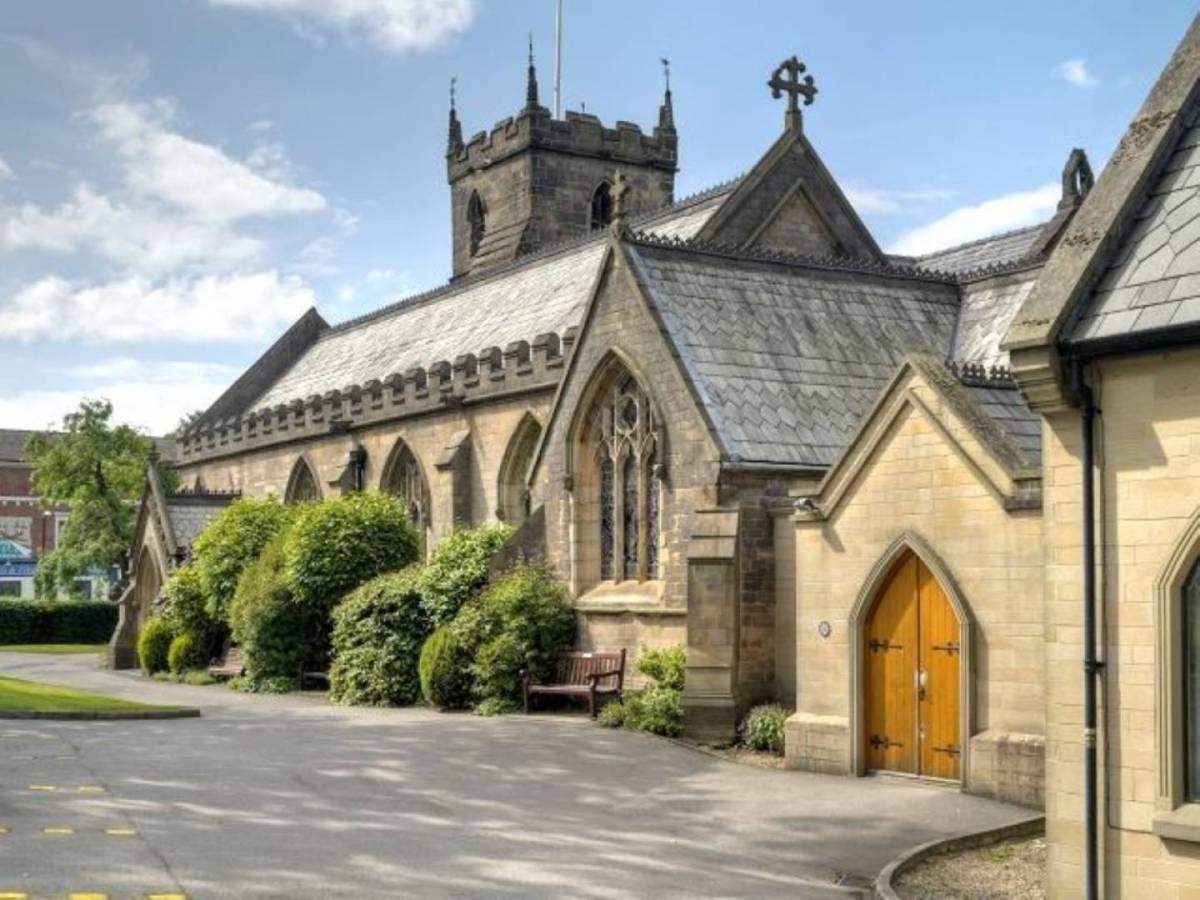


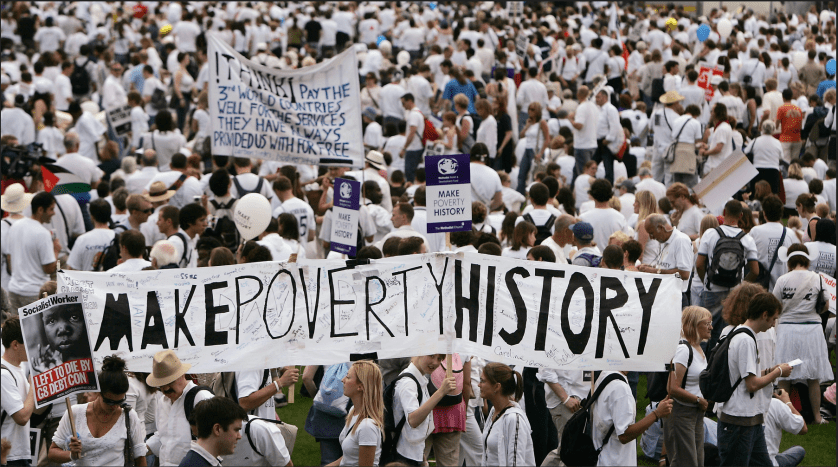

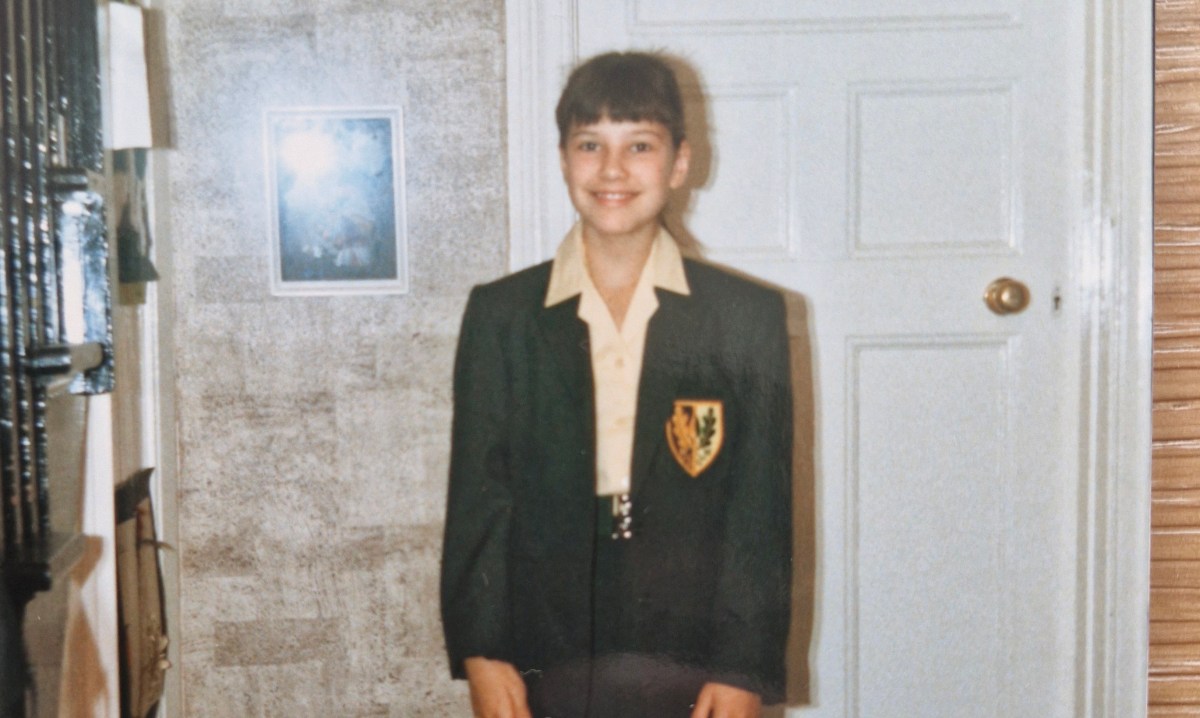

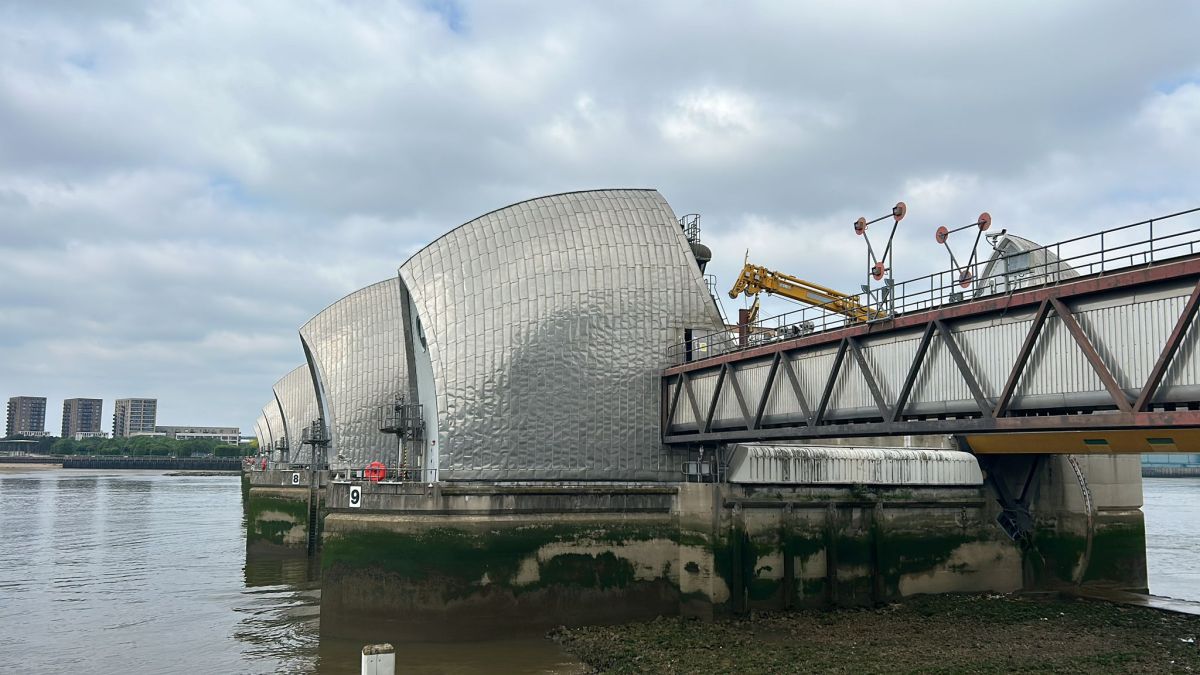


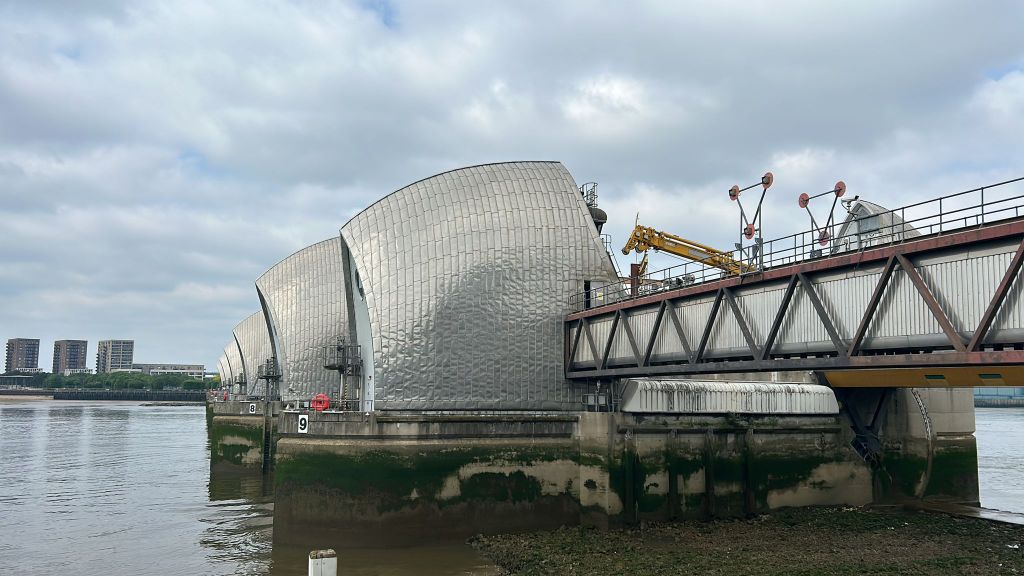




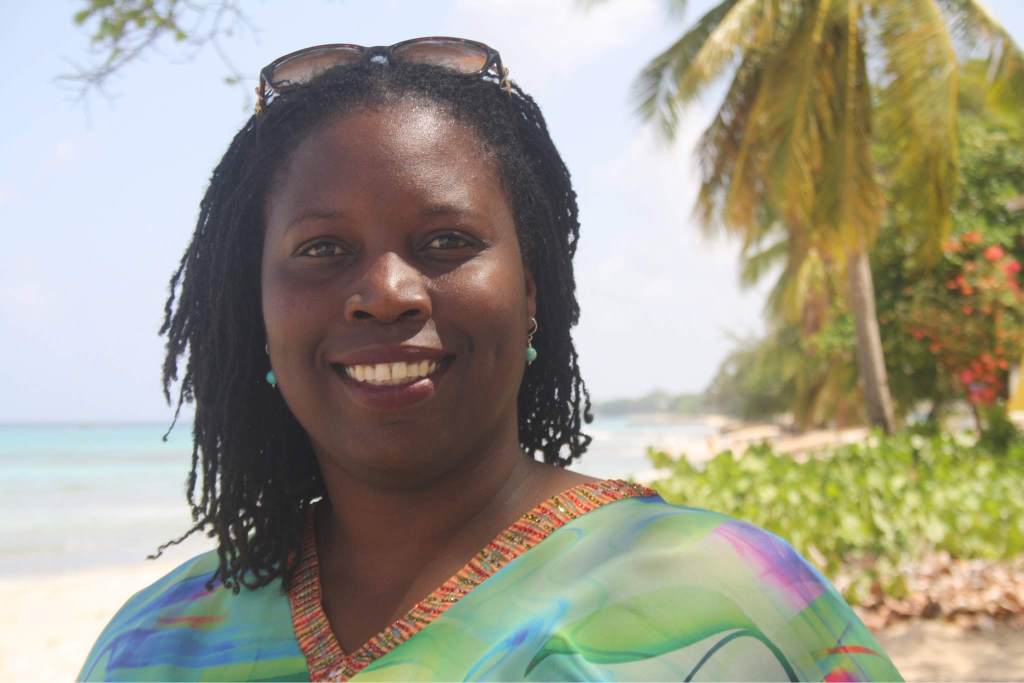



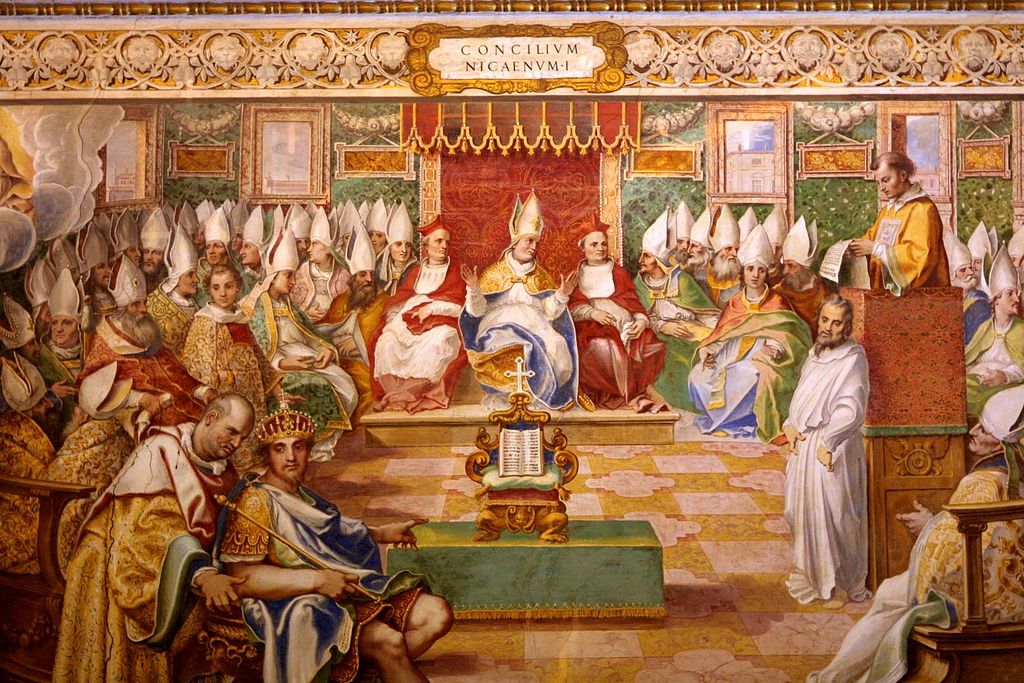


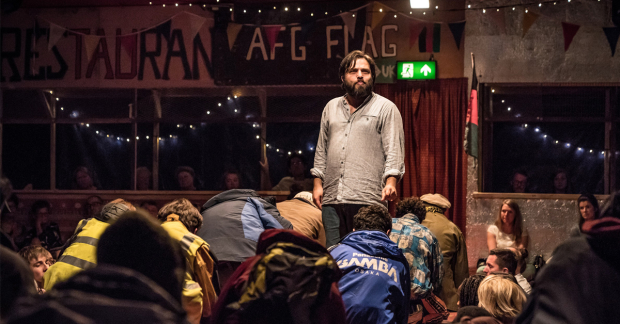


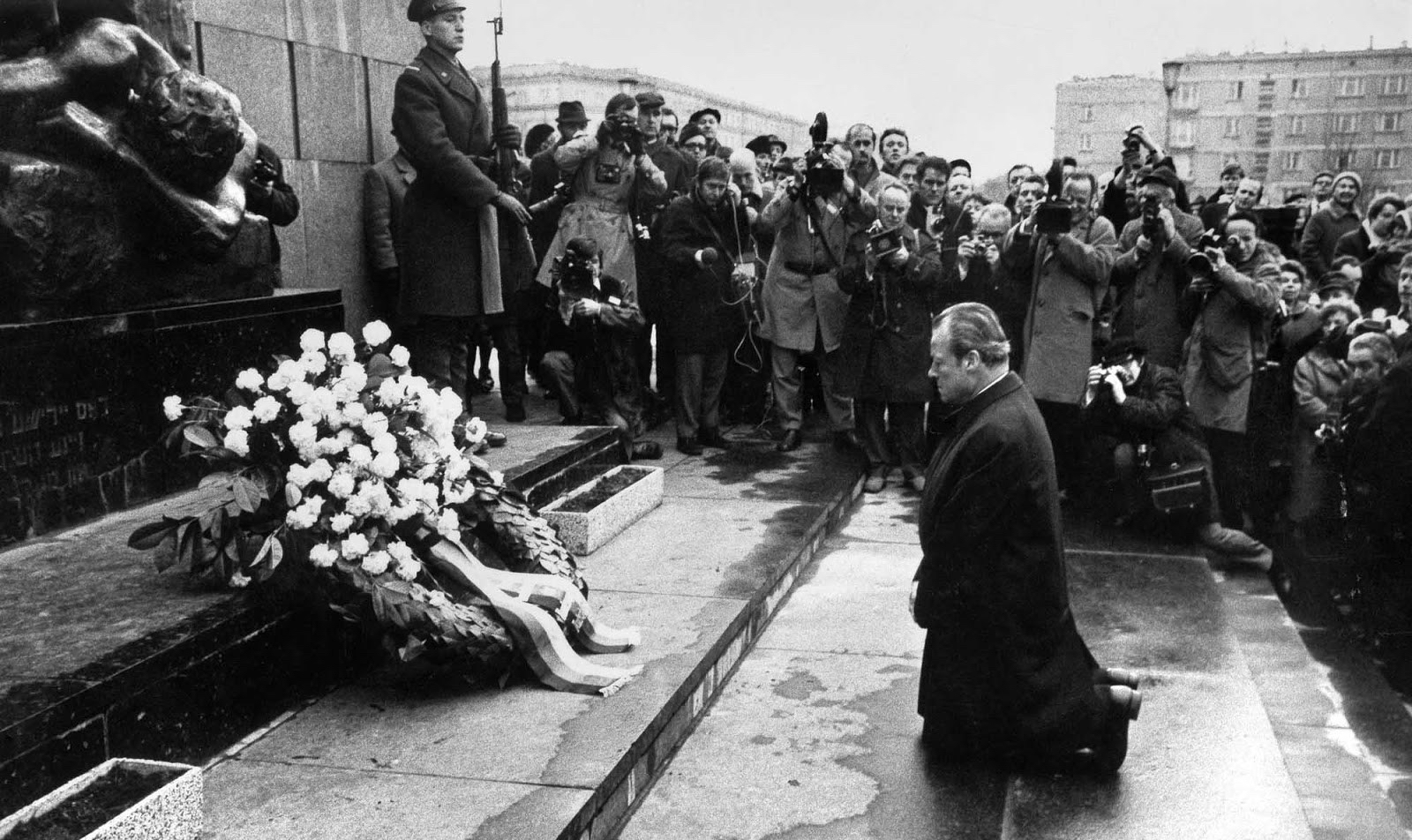
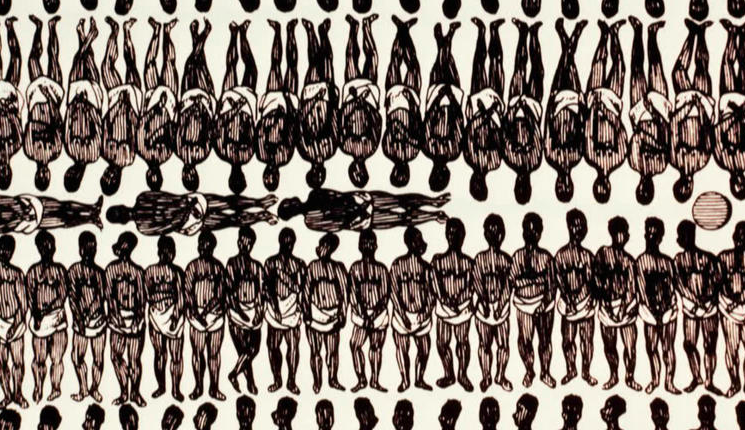


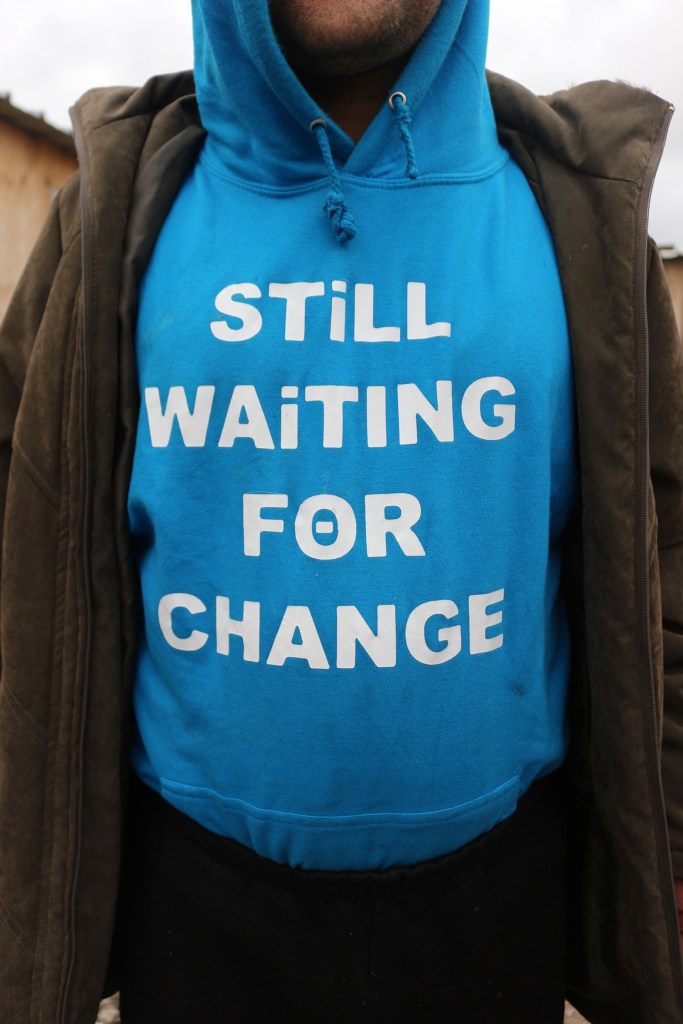

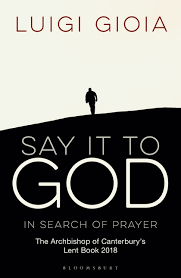
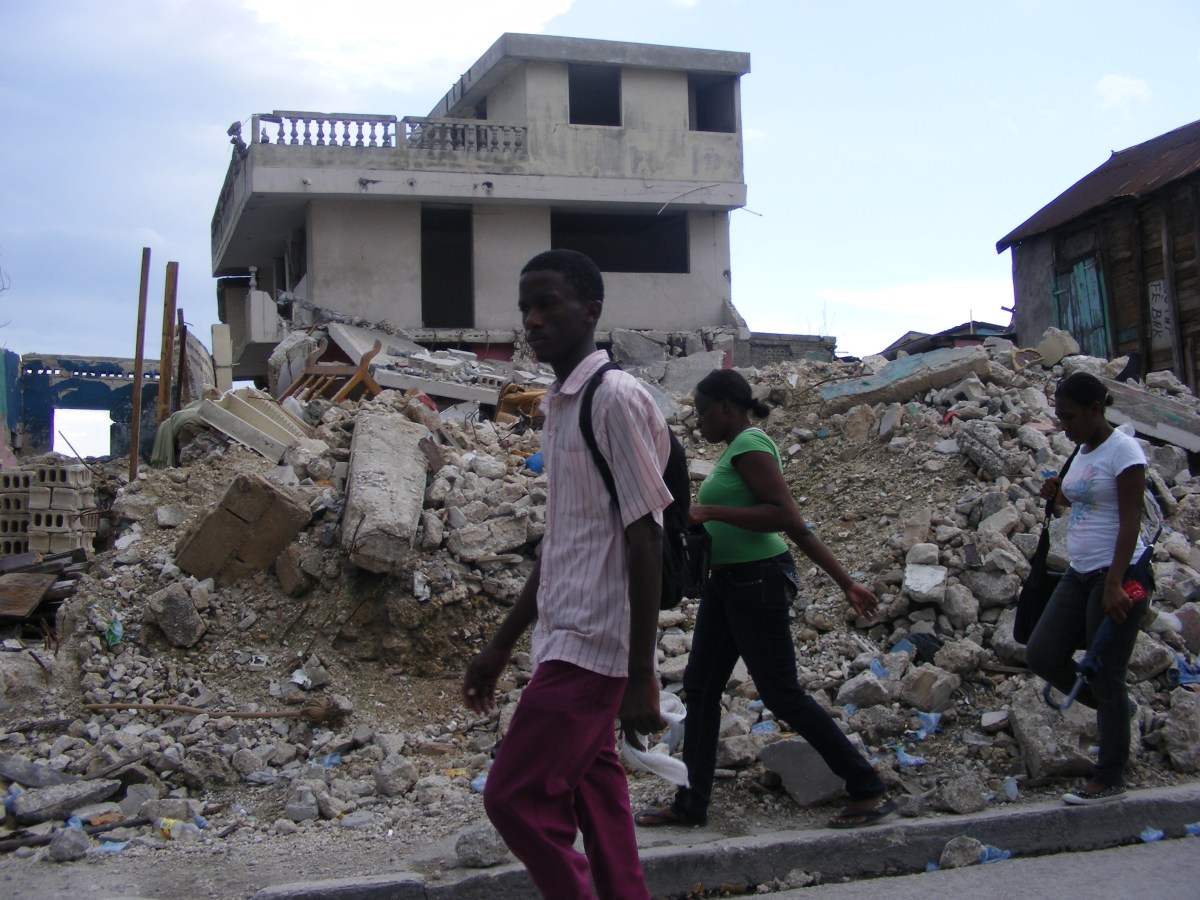


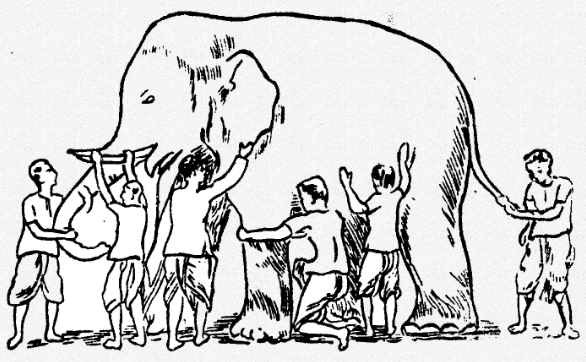




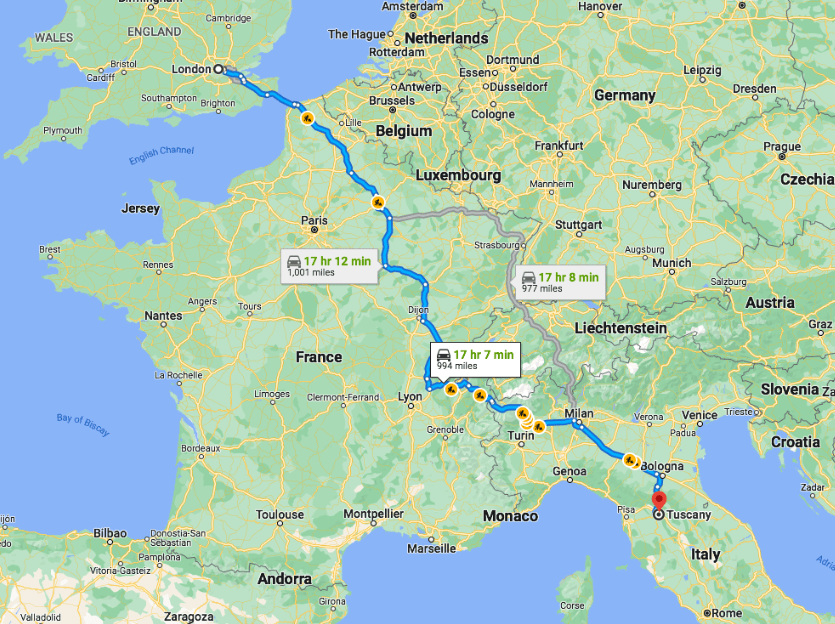




 Commentrary