
Five days since the start of President Trump’s bombing of Iran and the assassination of its senior leaders, the question of what comes next hangs in the air like plumes of dust from the rubble.
Lord (William) Hague has summarised the options as “repression, chaos or liberation”. Repression – again – by the country’s brutal Islamic Revolutionary Guards Corps, chaos if the country falls into civil war, and liberation if somehow millions of Iranians welcome the pro-Western Reza Pahlavi to lead the country to democracy.
Reports that Mojtaba Khamenei, the son of assassinated Supreme Leader Ayatollah Ali Khamenei, is tipped to be the frontrunner, have set the needle hovering between the first two of those options.
It is an anxious time to be Iranian, but even more so if you’re part of a minority community. Why do they matter? The Islamic Republic is not just home to Shia (89 per cent) and Sunni Muslims (10 per cent), but to ancient communities of Zoroastrians, Jews, Baha’i and Assyrian and Armenian Christians. Their very presence in the Islamic Republic challenges its ideology, and they have complained of being treated like second-class citizens.
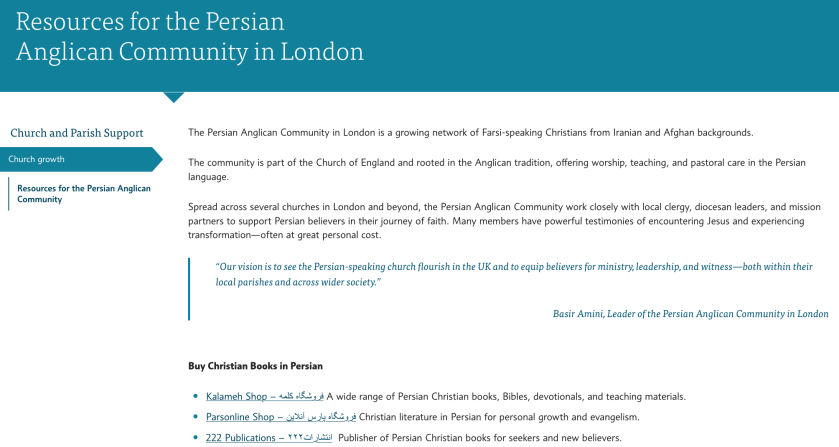
Even more problematic for the regime are Shia who abandon the national creed and become atheist, or Evangelical Christian. A 2020 report found some 1.5 per cent of Iranians identified as Christian, meaning converts alone could number around 500,000. But because “apostates” can face jail, some have fled Iran. Some wash up on UK shores – and in such numbers that the Church of England has devised a Farsi-language Communion liturgy for them. Each conversion away from Shi’ism is a quiet rejection of the 1979 Revolution.
Iranian-born Dr Sara Afshari, research tutor at the Oxford Centre for Mission Studies, has described “religious disengagement and conversion” as a form of political dissent.
Writing during the January protests, in which the IRGC slaughtered 3,000 demonstrators according to official figures (or up to 30,000 according to activists) she explained: “For many, conversion has not been only a spiritual journey, but a symbolic refusal – an existential “no” to religious coercion and political control.”
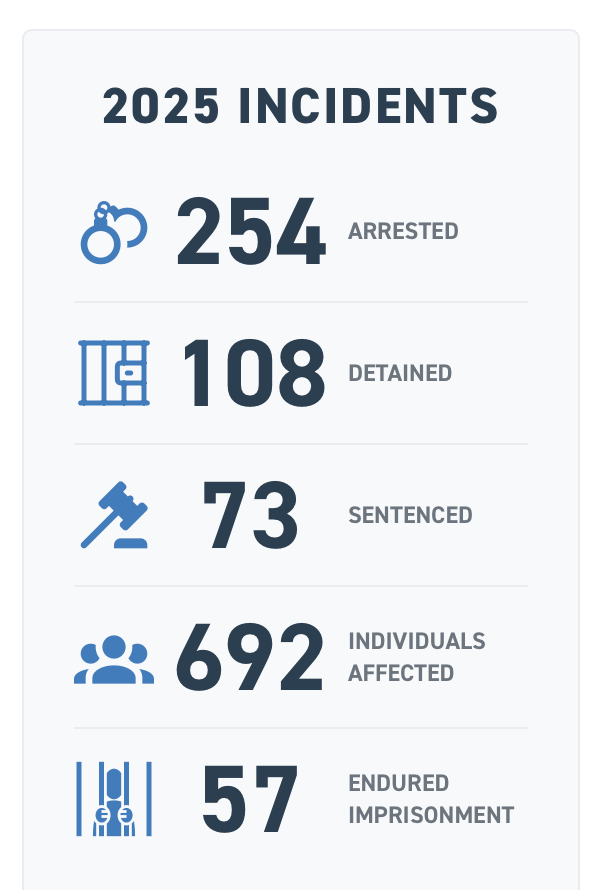
Steve Dew-Jones, news director of the charity Article 18, says he worries that if the regime clings on, it could hit out at its minority populations and those in prison or awaiting trial, who include nearly 60 Christians. (Update: Reuters has reported Evin prison, where many are held, has been bombed and Open Doors has said food distribution and communications have been cut off and prisoners are being moved to undisclosed locations.) A fresh wave of state-sponsored repression could, according to Le Monde, catch anyone picked up by facial recognition cameras.
Other easy targets whose arrests would spread fear would include members of “underground” congregations. Those initially dancing in the streets have included Iranians of all creeds – but minorities are easy to scapegoat. The regime, which enjoys spying on its own people, won’t give up without a fight: the Revolutionary Guard is believed to have more than 190,000 members embedded deep in the country’s population of 93 million, in addition to the forces of the Iranian Army.
A variant of this possibility, “regime readjustment”, could see a tamed regime allowed to continue, on conditions set by the US, as has happened in Venezuela. Iran’s nuclear capabilities and oil reserves would be obvious targets for US negotiators but Trump has not condemned Iran’s poor religious rights record.
Quite a contrast from the US’s intervention in Nigeria on Christmas Day, which Trump framed as protecting the country’s Christians from genocide, or even the 2003 Iraq invasion, which President Bush justified as a mission to export democracy. So if the Iranian regime is permitted to carry on as before except in a few areas, Christian persecution will most likely carry on unchecked.
However, if US-Israeli bombing removed any new leader and enough of the regime for separatist groups to start civil conflict, the ensuing chaos could be even worse for Iran’s minorities. According to CNN, the CIA is working to arm Kurdish forces and other Iranian opposition groups with the aim of fomenting a popular uprising in Iran.
Certainly the 2003 US-led invasion of Iraq and the messy collapse of Saddam Hussein’s government led to total social disintegration. An exodus of minorities followed, that included an estimated five-sixths of Iraq’s Christians. These were ordinary citizens who had had enough of being scapegoated by compatriots and forgotten by US-led troops.
US military planning, such as there was, had not bargained on an Al Qa’eda insurgency or the emergence of ISIS. Both jihadist militias were catastrophic for minorities, and their indulgence in gruesome killings succeeded in attracting new recruits from around the world.
Iranian Christians know they are socially vulnerable and could be made more so by a breakdown in law and order. If they felt it was safer to flee, we might see more of them at Calais and in our churches.
Violence can spread quickly in the Middle East. Last night the Chaldean Catholic Archbishop of Erbil in the Kurdish region of northern Iraq posted on X that drones had damaged an apartment block built for local Catholics, and a nearby convent. Again some Iraqi Catholics are fearing that they should flee.
Liberation might seem the most far-fetched of the possibilities on Iran’s horizon, with a secular democracy that contributed to the peace and stability of the whole region. It is clear that there is huge popular support inside Iran for greater freedoms – freedom for women to discard the veil, freedom to walk away from Shi’ism, freedom for Iran’s LGBT community to become more visible.
The American values the revolutionaries rejected in 1979 seem less objectionable to many Iranians now; American exports such as iPhones and Instagram have proven a hit. This would be the best environment for Iran’s minorities to thrive as equal citizens. But is it possible to leap from autocracy to democracy?
Dew-Jones believes so. “If there was any chance that the people could actually decide and be empowered,” he says, then peaceful regime change could occur, led in the short term by exiled prince Reza Pahlavi, “who appears to be the person whom Iranians inside and outside, not exclusively but by and large, are calling on to lead the transition.”
Realistically, if the US wants Iran to morph into a secular, liberal, non-nuclear regime, it will have to help pay for it. One lesson, from Egypt where the so-called Arab Spring failed to bring about lasting change, is that democracy is not achieved in one regime change or one election: it is the gradual building up of a multi-layered culture of empowerment, respect and rights.
However, another lesson, from Iraq, whose current stability is far from perfect, is that without adequate planning and support, a poorly defined hope of regime change can take years to realise and cost hundreds of thousands of lives.
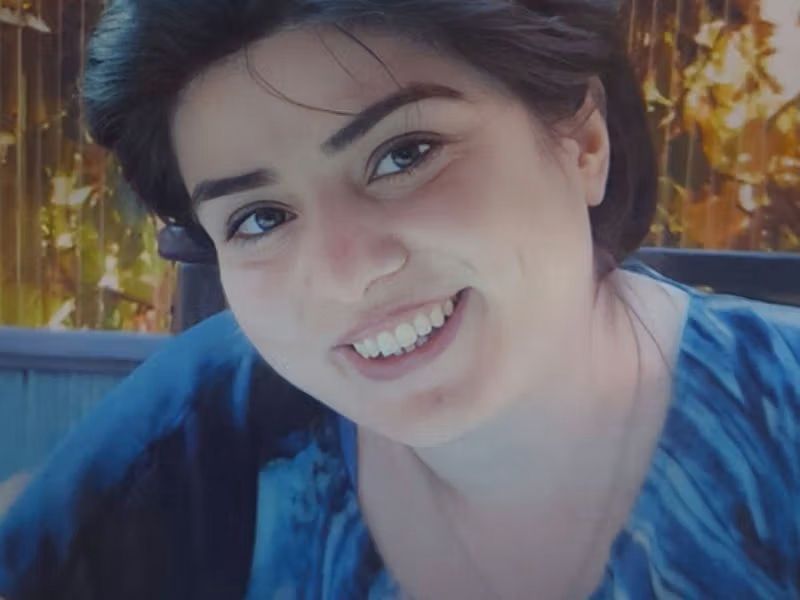
Above: Aida Najaflou, an Iranian convert to Christianity, who was arrested in February 2025 and has been sentenced to 17 years in jail for offences against the Islamic Republic including involvement in an underground “house church”, the longest sentence given an Iranian Christian last year related to their faith. Photo: Article 18

 Commentrary