The government risks shooting itself in the foot over VAT relief scheme

Ahead of Wednesday’s budget Rachel Reeves is having to hunt for cash behind every sofa cushion. But if she removes help to repair places of worship, she could find unintended consequences await

Imagine if you had tens of thousands of volunteers who were motivated to give their time simply because they wanted to make the world a kinder, fairer place. Imagine that their volunteering plugged gaps left unfilled by government and neighbours. Imagine that all these helpful souls needed was somewhere safe and warm to operate from, but without that, they’d have to give up and go home.

This isn’t hard to imagine, of course, because it’s the situation the government finds itself in vis à via the vast array of community work done or hosted by the nation’s places of worship.

The National Churches Trust has estimated that the social and economic wellbeing benefit of the UK’s churches is worth £55bn. That takes the form of food banks, warm spaces, debt counselling, after-school clubs – providing the safety net that prevents people in need from slipping further into poverty or isolation and potentially require more costly intervention by the state.

You’re not going to attract a dementia café or mums and toddlers club to an unheated Victorian barn.

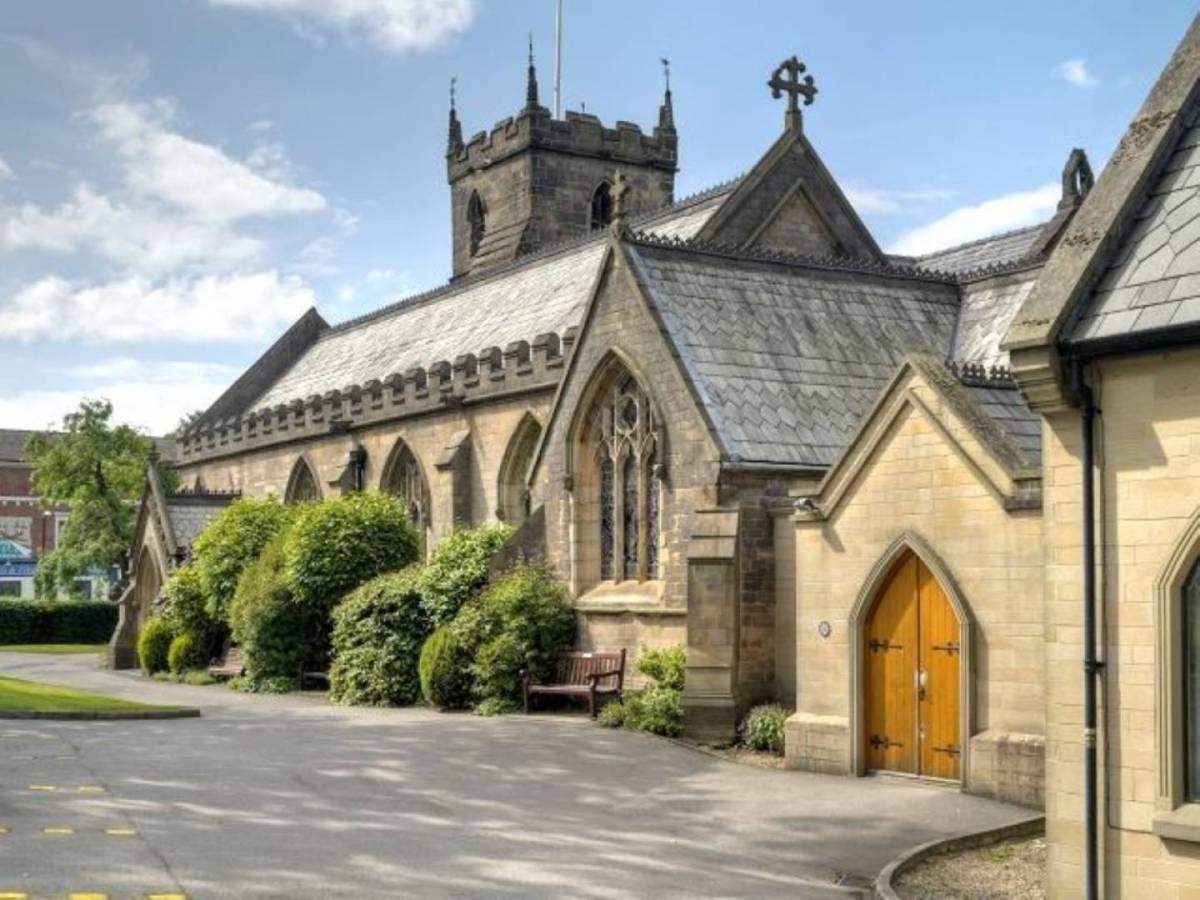
Because many churches are old, leaky and creaky, (some 45 per cent of the UK’s Grade I listed buildings are maintained by the CofE), their congregations want to do the only responsible thing and fix the roof, update the windows, install more efficient heating. You’re not going to attract a dementia café or mums and toddlers club to an unheated Victorian barn.

What made such repairs easier was the Listed Places of Worship Grant scheme put in place in 2001 by Gordon Brown, Reeves’ predecessor as chancellor (rewind past the Tory ones and Alistair Darling), which allowed Listed Places of Worship grants to cover the VAT on repair bills higher than £1,000. Brown understood the contribution faith communities would willingly make.

Yet in April it was suddenly announced that the scheme would only award grants up to £25,000, leaving any major project that was under way or about to begin either scrabbling to find hundreds of thousands of pounds or having to go back to the drawing board to be scaled down. A few churches have supporters with deep pockets, most don’t. 

As the Archbishop of York, Stephen Cottrell, told the Sunday Telegraph, “The vast majority of fundraising for our churches is done locally by heroic volunteers and we are deeply grateful for all they do. For more than 20 years, they have relied on the Listed Places of Worship Grant Scheme to give that crucial bit of extra help.” There are fears it could be scrapped all together.

Volunteers at a church that runs many social projects
Volunteers at St Laurence Church in Chorley, Lancashire, (also above) which has had to postpone finishing roof repairs because of the cap on VAT relief. Photo: CofE

Clearly, ahead of Wednesday’s autumn budget, the chancellor, Rachel Reeves is having to hunt behind every sofa cushion to find cash that can be put towards reducing the national debt. Aside from these buildings’ heritage value, ending the Listed Places of Worship scheme might make some sense if churches only served as a self-righteousness boost for the few.

But a survey published by the Church of England late last week found that two in five people, or 43 per cent of all adults, reported having had contact with their local church, 23 per cent of those – nearly seven million people in the UK – “for community support such as parent toddler groups, lunch clubs and food banks”. The CofE, which runs or supports 31,300 social action projects, estimates that “2.8 million people, 4 per cent of the UK population, have been in contact with their local church for a food bank.”  

The churches have shown themselves to be a trusted partner of government. They shut their doors during the pandemic, aware they had to set an example to other faith communities even though many of their own members were furious; they rallied support for the Coronation of King Charles with the bellringing initiative Ring for the King.

Yet even cathedrals, irreplaceable treasures, are not immune. Jo Kelly-Moore, Dean of St Albans and Chair of the Association of English Cathedrals, said: “The threat to end the Listed Places of Worship Grant, and the cap currently imposed, is having a hugely negative impact on our cathedrals, many of which have long-term repair and renewal projects costing hundreds of thousands of pounds.” Cathedrals are often criticised for charging visitors to look around, yet how else are they supposed to keep the lights on? (And they do stress that anyone wanting a space to pray can be shown in without charge.)

Cutting costs where heritage places of worship are concerned is short-term thinking. Churches come with ready-made goodwill and generally accessible premises. If churches cannot host community events because they are too cold or simply unsafe, alternative provision will sooner or later end up costing the state, undermining what Ms Reeves is trying so hard to achieve.

Can the former chief nursing officer heal the fractured Church of England? 

Bishop Sarah Mullally’s appointment as the next Archbishop of Canterbury is ground-breaking but she inherits a fractured Church. What comes next?

Congratulations to the Rt Revd and Rt Hon Dame Sarah Mullally DBE, who has today been announced as the 106th archbishop of Canterbury and the first woman to occupy the role.  

Her move from just north of the river, as bishop of the diocese of London, is one of shortest distances on the episcopal chess-board. But she arrives at a desk where the in-tray overflows: divisions persisting around how far the Church should recognise gay relationships, ongoing factional point-scoring, and a long-term slow decline in the numbers of dedicated, generous members (bar a modest post-Covid bounceback). 

There is of course, good news; the Bible Society’s findings of a “quiet revival”, especially among young men, should gladden the heart of any church leader. The robust discussion around where the Church should allocate its finances has led to a hearty public defence of the humble parish and the system that has for centuries been the nation’s unofficial safety net. And the Church’s work to address racism and links to historic slavery is giving the Church more of a right to speak up when racism spills anew on to our streets or seeps back into our public discourse.  

As one of the first women bishops, Archbishop-designate Sarah is no stranger to moving into worlds dominated by men, by tradition, by Old School ways. This will surely serve her well. And women leaders are generally seen as more trustworthy when it comes to handling situations of abuse. 

Much has been made of the fact that several provinces in the Anglican Communion, over which she is now “first among equals”, do not recognise female leadership. Closer to home, the campaign group Watch, Women and the Church, say 1 in 12 bishops do not fully accept women as priests or church leaders. (Parishes that don’t are given “flying bishops”.) Today on Twitter/X the group added: “the Archbishop of Canterbury will not be able to celebrate communion in 439 churches – simply because she is a woman”. Meanwhile a statement from Forward in Faith welcomed her while noting that a 2014 agreement meant “provision for an assured sacramental ministry for traditional catholics would continue as before”, with “the consecration of Society bishops … undertaken exclusively by other Society bishops”. Is this a triumph of Anglican “living with difference” or a failure of unity?

I’m also interested in how her first meeting with Pope Leo XIV will go. Her predecessor Justin Welby got on famously with Leo’s predecessor, Francis, who referred to him as “brother Justin”. Catholics who long to see women ordained in the Catholic Church, or at least given more space to use their gifts in the Church, will be watching closely. It calls to mind the photo of Queen Elizabeth II giving the Saudi King Abdullah a spin in her Landrover at a time when women in his country were not permitted to drive. (I’m not equating the Catholic Church with the Saudi kingdom, though 11 years after his eye-opening ride, women’s capabilities were recognised and the ban lifted.)

As for the Church’s need to prove its integrity on dealing with abuse victims with the utmost seriousness, what is needed? A clean sweep, a new broom? Clearing away cobwebs? I’m wanting a metaphor that points to the new archbishop signalling a decisive and much-needed clean start in all sorts of areas where cobwebs lurk.

At 37, Mullally became the youngest chief nursing officer in England. Now she is to become the most senior bishop in the Church of England. Anglicanism’s other famous nurse, Florence Nightingale, would be thrilled. She is quoted as saying, “I attribute my success to this – I never gave or took any excuse.” That could be a good medicine for a Church that suffers from periodic lethargy. 

It’s too easy and almost too hackneyed to do down the Church of England, with its deep divisions and widening differences. But the nation’s not in great shape either. That means there’s plenty of space for Archbishop-designate Sarah to articulate a renewed vision of the nation, one that is hopeful, compassionate, just, wise and varied, but united around common goals.

Photo: Archbishop of Canterbury-designate Sarah Mullally. Credit: Lambeth Palace

Visiting the Thames Barrier – the fiddliest daytrip in London

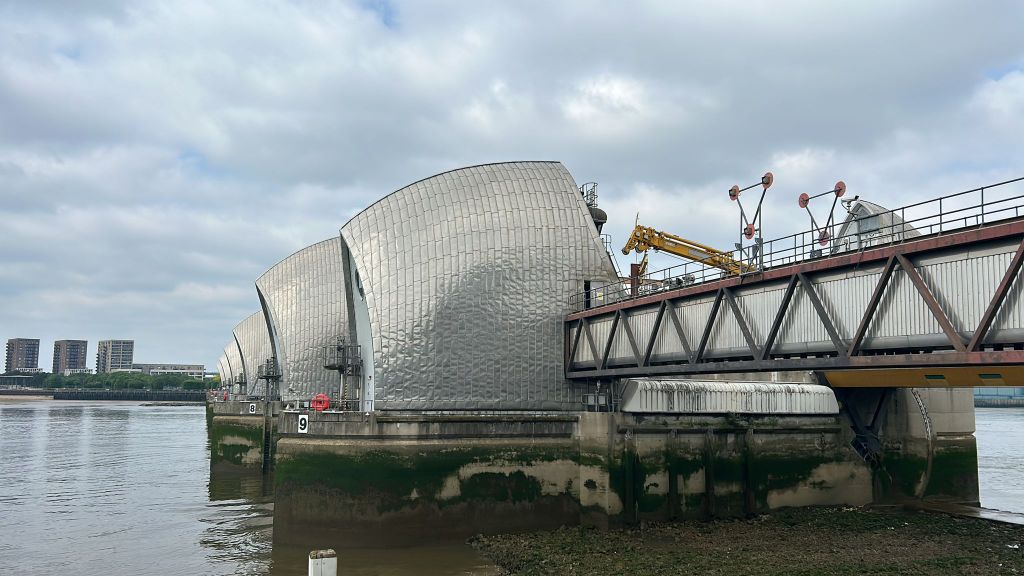
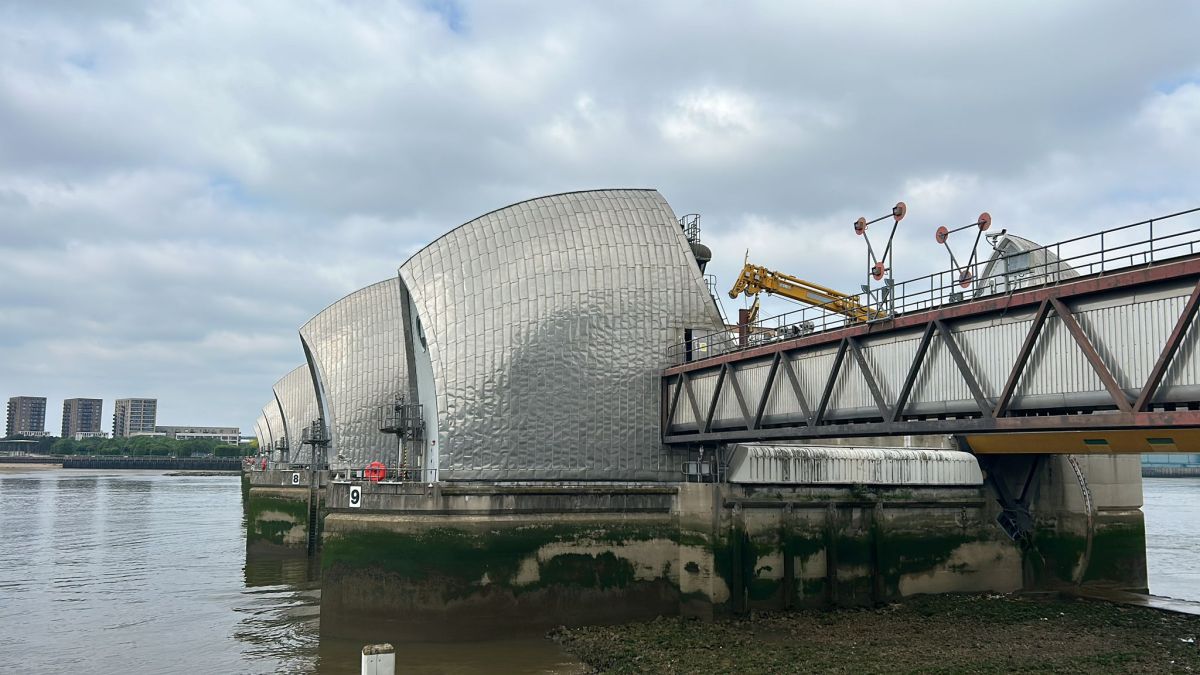
Its gleaming gates rise from the murky waters of the River Thames, and next week one of the country’s most under-sung feats of engineering will receive a visit from one of its highest-profile fans, the Emperor of Japan. But for most of us, planning a trip there is unbelievably fiddly.

Its gleaming gates rise from the murky waters of the River Thames like towers in a medieval castle wall, and next week one of the country’s most under-sung feats of engineering will receive a visit from one of its highest-profile fans.

The Emperor and Empress of Japan are making a private trip to the Thames Barrier before the engagements of their state visit next week. According to a touching article in The Times, Emperor Naruhito, when crown prince, devoted his postgraduate thesis to the river while at Oxford University in the 1980s.

And why shouldn’t they? To stand only metres from one of those giant rotating gates is awe-inspiring.

Except, unless you’re the Emperor of Japan and have imperial levels of administrative support (well, access to private boat trips and chauffeurs), the planning is unbelievably fiddly. In which case, read on.

For the steel-gated super-structure is surprisingly inaccessible.

I wanted to go because my five-year-old son is a budding engineer, into steam trains, diesels, modern trains, trams, buses and so on – and his grandparents were visiting us.

We needed a rainproof daytrip with multi-generational appeal, ie suitable for differing concentration spans and levels of mobility: one member of the group would want to run around constantly; another member would really not.

Even in five years, minus the lockdowns, we’ve ticked off many London attractions. So I cast my mind east and settled on the Thames Barrier. It’s one of the largest movable flood barriers in the world, according to the Environment Agency. And climate change is only making flood defences more topical. The other adults assured me they wouldn’t find it too nerdy.

That was the easy part. I imagined there would be a visitor centre just next to the barrier, from where a boat-trip would take visitors right up close. And a shop where you could buy postcards, cups of tea and books about Charles Draper, the engineer whose cooker’s gas taps gave him the inspiration for the rotating gates.

I adjusted my expectations when I found the barrier isn’t obvious from Google Maps. Que?

And if you want to pass between its gates by boat, the nearest pier is more than 1.5 miles away from the visitor centre car park.

Let’s start with the boat part.

You can take the Uber Clipper, which sails through the barrier, to Royal Woolwich Arsenal, disembark, have a quick coffee, and sail back the other way. There is a Thames Barrier Park on the other side of the river, so, on your return trip you’d need to hop back only one stop to Royal Wharf Pier, and then it’s a 15-20-minute walk away. Apparently there’s a great café there and some eye-impressive topiary, but we didn’t get there because the mobility issues put it out of our reach.

Yours to print out and draw on any missing elements

So accustomed am I to Google’s omniscience that I feel cheated when it turns out to be fallible and I should have consulted other, more British maps, such as Streetmap. So Royal Woolwich Arsenal, for example, is not just the old military buildings turned into tidy streets of private residences. A coffee shop is squeezed into one of two Grade 2-listed guardrooms, and the large Visitors’ Book Café, which has a full brunch menu, sits just the other side of a courtyard adorned with sculptures. Neither of these was obvious in advance. Had they been, we could have enjoyed some shakshuka or avocado on sourdough – tastier than a hasty sandwich on the boat.

Between the pale grey sky and murky grey river we sailed, and passing through such powerful gates was a privilege, if a fleeting one. The Thames Barrier Park being out of our reach, we opted to pad our day out with a quick stop at Greenwich, where the grounds of the Cutty Sark, with their benches and ice cream vans, are clearly more accustomed to welcoming visitors.

There is a visitor centre, next to the barrier, but it’s only open – and its phone is only picked up – for five hours on a Saturday. The boat stops a further 1.7 miles away, so if you want to visit, you’ll need a bus or a car. We returned to Royal Woolwich Arsenal, picked up our car and drove east down a busy A road through a markedly unloved part of town that has you questioning your eyes and your memory. Did I really see a sign? Did it really point down here?

Past the tired garages and up and down over untarred roads finally looms a tall, more promising sight. Sadly, having wanted to prioritise the boat trips, we arrived at the centre at 3.37pm to find it shut. Peering through a window of the centre I saw a notice that said the centre was only open by prior appointment.

Finally paying homage, from the Thames Path beyond the shut Visitor Centre

Nonetheless, being close to the steel that was dazzling in the sunlight that had finally broken through, reinforcing the awe of seeing the structure from the water. The Thames Path bears an attractive mural of the course of the river from its source, though that its main audience when we visited – joggers – looked straight ahead. As for our five-year-old, awe-struck as he was, he also really enjoyed the little play park outside the visitor centre.

This last part will be less important to Their Majesties, but I hope their visit sparks a new interest in the structure that leads to it becoming easier to admire up close and be inspired by. There are some great things to see and do here, but it took perseverance to make them align. And the next time I go to an attraction and inwardly grumble that its marketing is too slick, I’ll remember what a hassle it is to visit something less joined up.