

Six years is a very good innings for a guinea pig; it is a poor one for a badger. The bell is tolling for my trusty old Samsung phone, which after six years is slowing down. With a certain heaviness, I know I need to look for a replacement.
For me, choosing a new phone is not an opportunity to clasp within my hands the most recent years’ technological leaps and bounds; it feels more like a pointed shove to force me to get the hang of the changes the phone companies have made to their models since I was last forced to switch.
In its day, my phone was perfect for live news reporting from the scenes of terrorist attacks such as the Westminster Bridge and Parsons Green attacks, for the German state broadcaster, Deutsche Welle. My phone was ready and well-equipped, with a nice big Qwerty keyboard for writing copy at speed, and a good-quality camera that could record video and audio. Off went my photos to Bonn and up went web pages with my byline on them. I even invested in a DSLR camera so I could add better quality pictures to my copy – though that proved cumbersome and has largely stayed in the cupboard.
I am more desk-based now, and the sheen of ever fancier smartphones has for me been eroded by two reality checks: first, the number of local reports about phone thefts by muggers speeding by on e-scooters or e-bikes, and second, the effect my phone habits could have on my son. Perhaps my concern should extend to all the children who might see me using my phone, but I’m not sure I can put myself through the pain of smartphone-loss for children who don’t often see my habit.
The sheen of ever fancier smartphones has for me been eroded by two reality checks: first, the number of local reports about phone thefts by muggers speeding by on e-scooters or e-bikes, and second, the effect my phone habits could have on my son.
And a habit it is – checking the weather, travel times, email, the headlines if I have a couple of minutes’ dead time. To me this seems harmless: I am not exposing myself to either the harmful or illegal content covered in the newly passed Online Safety Act. But I am demonstrating that free minutes here and there can be absorbed by taking your phone out and staring at its screen, rather than by reading a newspaper or a book or engaging with the people or sights and sounds around you. And by leaving my phone around the house for the odd photo or video, I’m giving the message that this tiny omni-wizard is a harmless, benevolent part of the furniture. And my big fear is that my son or his friends replicate these habits when handed a smartphone, and stumble across online nasties. Or that he becomes addicted to the stream of endless content offered to users.
What would I lose in saying no to a smartphone? I can do without the things I haven’t yet got used to, such as a games, AI editing technology (err, what?), a NASA-grade camera, and a sharper screen for watching films I don’t want to watch on something the size of a large matchbox.
But when it comes to saying goodbye to the things I have got used to, that’s a challenge. A quick look for dumb phones brings up designs for as little as £65 with big buttons and little else. Several are aimed at older people, presumably with poorer eyesight and less dexterity. No Qwerty keyboard; back to slow-texting as we did in the noughties, and no email. A few come with apps, or limited versions of them, such as WhatsApp messaging but no video or audio calling. So then, how would my son chat to his grandparents? We’d have to Zoom from a laptop over the home Wi-Fi. And out and about recently, I needed to scan a QR code to book a medical appointment, which would have been beyond the wit of such a device. I’m sure there are ways to manage without of the fast-fixes we’ve got used to, but they’re less convenient.
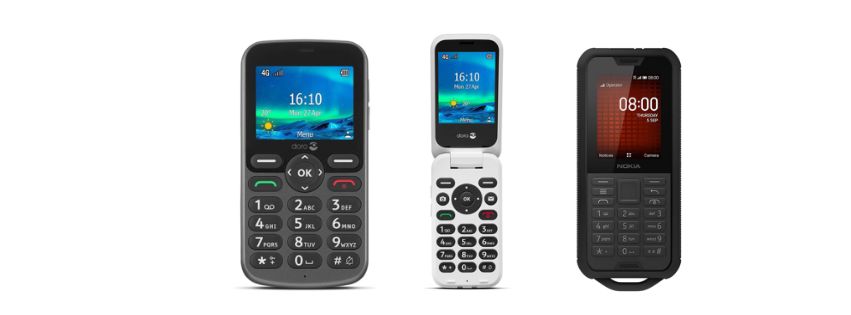
A dumb phone would require a conscious getting out of the tech habits I’ve got into, saving more online tasks for a home computer and leaving the home with lots of reading material, plus pen and paper to keep a note of all those tasks. All of which takes effort.
What I’d like is two phones – one smart and one dumb, with paired SIM cards, so I can use the dumb handset publicly and keep the other for specific occasions. But I’m trying to swim against the tide and feeling like a very small minnow indeed.
 Commentrary