Can the former chief nursing officer heal the fractured Church of England? 

Bishop Sarah Mullally’s appointment as the next Archbishop of Canterbury is ground-breaking but she inherits a fractured Church. What comes next?

Congratulations to the Rt Revd and Rt Hon Dame Sarah Mullally DBE, who has today been announced as the 106th archbishop of Canterbury and the first woman to occupy the role.  

Her move from just north of the river, as bishop of the diocese of London, is one of shortest distances on the episcopal chess-board. But she arrives at a desk where the in-tray overflows: divisions persisting around how far the Church should recognise gay relationships, ongoing factional point-scoring, and a long-term slow decline in the numbers of dedicated, generous members (bar a modest post-Covid bounceback). 

There is of course, good news; the Bible Society’s findings of a “quiet revival”, especially among young men, should gladden the heart of any church leader. The robust discussion around where the Church should allocate its finances has led to a hearty public defence of the humble parish and the system that has for centuries been the nation’s unofficial safety net. And the Church’s work to address racism and links to historic slavery is giving the Church more of a right to speak up when racism spills anew on to our streets or seeps back into our public discourse.  

As one of the first women bishops, Archbishop-designate Sarah is no stranger to moving into worlds dominated by men, by tradition, by Old School ways. This will surely serve her well. And women leaders are generally seen as more trustworthy when it comes to handling situations of abuse. 

Much has been made of the fact that several provinces in the Anglican Communion, over which she is now “first among equals”, do not recognise female leadership. Closer to home, the campaign group Watch, Women and the Church, say 1 in 12 bishops do not fully accept women as priests or church leaders. (Parishes that don’t are given “flying bishops”.) Today on Twitter/X the group added: “the Archbishop of Canterbury will not be able to celebrate communion in 439 churches – simply because she is a woman”. Meanwhile a statement from Forward in Faith welcomed her while noting that a 2014 agreement meant “provision for an assured sacramental ministry for traditional catholics would continue as before”, with “the consecration of Society bishops … undertaken exclusively by other Society bishops”. Is this a triumph of Anglican “living with difference” or a failure of unity?

I’m also interested in how her first meeting with Pope Leo XIV will go. Her predecessor Justin Welby got on famously with Leo’s predecessor, Francis, who referred to him as “brother Justin”. Catholics who long to see women ordained in the Catholic Church, or at least given more space to use their gifts in the Church, will be watching closely. It calls to mind the photo of Queen Elizabeth II giving the Saudi King Abdullah a spin in her Landrover at a time when women in his country were not permitted to drive. (I’m not equating the Catholic Church with the Saudi kingdom, though 11 years after his eye-opening ride, women’s capabilities were recognised and the ban lifted.)

As for the Church’s need to prove its integrity on dealing with abuse victims with the utmost seriousness, what is needed? A clean sweep, a new broom? Clearing away cobwebs? I’m wanting a metaphor that points to the new archbishop signalling a decisive and much-needed clean start in all sorts of areas where cobwebs lurk.

At 37, Mullally became the youngest chief nursing officer in England. Now she is to become the most senior bishop in the Church of England. Anglicanism’s other famous nurse, Florence Nightingale, would be thrilled. She is quoted as saying, “I attribute my success to this – I never gave or took any excuse.” That could be a good medicine for a Church that suffers from periodic lethargy. 

It’s too easy and almost too hackneyed to do down the Church of England, with its deep divisions and widening differences. But the nation’s not in great shape either. That means there’s plenty of space for Archbishop-designate Sarah to articulate a renewed vision of the nation, one that is hopeful, compassionate, just, wise and varied, but united around common goals.

Photo: Archbishop of Canterbury-designate Sarah Mullally. Credit: Lambeth Palace
What my secondary school didn’t teach me

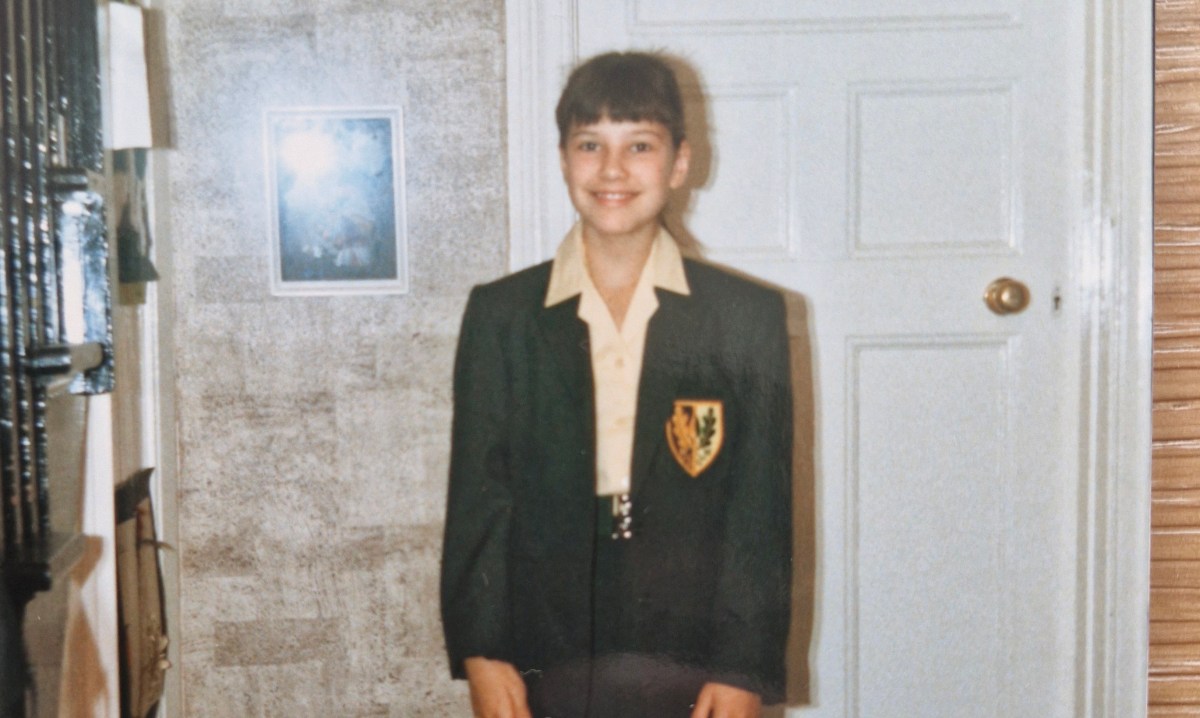
My secondary school has just been named Sunday Times’ State Secondary School of the Year in London 2025. Brava! Yet I find myself reflecting on what they didn’t teach me as much as on what they did.

My old secondary school, Newstead Wood School, has just been named The Sunday TimesState Secondary School of the Year in London 2025. Brava! The girls in bottle green are still swotting away and climbing to the top of the league tables. And brava to the Year 6s who have just been told they have a place there. While I am proud of the school’s academic achievements, two return trips I made there last year – after 30 years – have got me thinking about what I would want to say to those hard-working girls.

According to The Sunday Times, pupils at my old school take part in Model UN debates and there is finally a football club. When one of my peers asked if we could learn football or rugby, she was told it might have damaged the development of our breasts – quelle horreur. Now you will get the chance to participate in the nation’s favourite sport, for which we – all right, mainly just men – divide themselves into tribes and war-paint their faces. I mean, no one ever did that for a netball match.

And I hope you also pick up the post-match bants. This will come in handy when you have to encounter actual men in the workplace. Unencumbered by niceties, manspeak can seem blunt, even presumptuous – but once you tell yourself you were not born obliged to end every spoken request with “if that’s all right?” and every written request with a smiley emoji, you realise it is actually rather efficient.

Surely we educate girls for the workplace, not the netball court.

Talking of netball, what is the point? Who knew fitness can be satisfying and fulfilling? Not us, from the hours we spent watching the tall, sporty kids pass each other the ball while the rest of us loitered, sans endorphins, in our flimsy skirts, feeling redundant. We were closer to hypothermia than breaking into a sweat, yet we were still haunted by the fear of the showers being switched on – and the dreaded communal run-through. No, cycling and running are my cup of tea, and a shower in a locked bathroom.

If netball and hockey were supposed to teach us how to be assertive, constructive members of a team (and maybe football and rugby work for boys), more accessible activities must exist for girls – ones that might actually arise in the workplace and that don’t depend on our oh-so-embarrassing teenage bodies. After all, surely we educate girls for the workplace, not the netball court.

As Margaret Thatcher and Amy Winehouse would say: “No, no, no.”

But here’s the thing, and a big secret you’re not told when the carrot of an A* is being held out just within reach if you only swot that bit harder: there is a social wealth associated with being a man that has been quietly accrued over centuries of unbelievably sexist laws and ways of thinking. While men were favoured because they would legitimately carry on the family line and name, if a woman was made pregnant while unmarried, no one thanked her for the fact the child would continue the name. (One could say “she got pregnant” like she “got a new pair of shoes”, but pregnancies don’t just happen, do they.) And even though we women are far less likely to start wars, invade countries, commit murders and rob banks, some of us are still rewarded with, for example, unconscious bias in families towards boys, and a disappointingly long shadow caused by inheritance patterns that still favour men. As Margaret Thatcher and Amy Winehouse would say: “No, no, no.”

As hard workers and high achievers, you could find yourselves rising to places where privilege, confidence and connections conspire to overshadow Britain’s apparent meritocracy. A grammar girl with straight As may find herself being out-praised by a privileged toff with no chin. Our dear alma mater didn’t spell out this ugly truth, but it’s best you start to come to terms with it now. Just know that your struggle is not yours alone, and is definitely not your fault.

Here’s another tip: top grades open university doors and can boost confidence, but beyond that, there their magical power ends. You may endure a hideous break-up from a spotty oik who never deserved you and wonder, “How did I end up here? I was a straight As girl!” That’s because letters aren’t life skills, darling. Especially if this scenario should befall you once you’re in work, pick yourself up quickly and press on, or the less gifted chap in the office may take the chance to impress your boss while you’re sobbing in the Ladies’.

Perfectionism doesn’t make you perfect, it makes you brittle.

And please, please, don’t become perfectionist. It’s such a temptation for high-flyers to become addicted to top grades – and then have no clue how to handle getting something wrong. Mistakes must be learning experiences, not shaming experiences (even if your boss thinks otherwise). Perfectionism doesn’t make you perfect, it makes you brittle.

I offer a sprinkling of anecdotes from a time when social media had not yet begun to shred teenage girls’ self-esteem and a dose of second-wave feminism went a long way.

At our reunion last year, after a long line of male senior staff had given talks about this or that, the now octogenarian headmistress who had retired during my sixth form skipped up to the podium looking scarcely a week older, and certainly happy to be back. She shared anecdotes, including about when a cancelled school trip resulted in disappointed girls deciding to join her and her late husband on their holiday. She also recalled an occasion a pupil asked to borrow her academic gown for an assembly, and proceeded to lead the assembly impersonating her. Irreverence, girls; vital.

Let’s hear it for irreverence. In my first year at Newstead, a year 11 class (Year 11 – looking so grown up – they even had breasts!) ran a fundraising week, and included a competition for which you had to guess the combined weight of the six male teachers. Without a second thought, we paid our 20p to objectify the men who bravely walked our oestrogen-filled corridors.

One of these short-strawed men had been given a lively Year 10 class for the year, members of which – in distinctly dubious taste – had pinned a Tampax advert to the class noticeboard and scrawled their teacher’s name and that of one of the other male teachers above the two sanitary products pictured.

This was a place that evoked the role-reversing Lord of Misrule (or should that be, the Ladies of Misrule?). During one much-anticipated Sixth Form Revue, a parody assembly was staged in which the wigged girl lampooning the deputy head dropped to her most serious voice to inform the girls that a flasher had been seen in the woods behind the school (not an uncommon occurrence). In their parody the girls all jumped to their feet in excitement and ran off screaming, “Where?”

The lesson from this is that humour punctures fear, and men can be gently mocked. Very handy, in all sorts of situations. When I was in my late thirties, a scaffolder cat-called me. (Me – cat-called in my late thirties!) I looked at where he was standing and enjoyed shouting up, “That’s my house!” At which pointed his colleagues laughed at him and he went quiet. This is all so far away from the nasty intimidation of women that MeToo highlighted.

So, obviously, keep trying to beat the boys in exams – that’s always fun, and becomes more so if later in life you manage to outpace someone who has been more highly privileged by life. But don’t beat yourself up if you don’t manage to; there will be other outlets for your talents. Learn manspeak and how to use it to maximum effect; give up those anxious emojis for Lent/for Ramadan/for ever; do not lower your dating standards, even if you’re feeling a bit lonely; campaign for the abolition of netball and run-throughs; ignore Instagram, and embrace irreverence.  

There’s your checklist, girls!

I despair of the maleness of the Bible

The confrontational military imagery leaves me cold; St Paul’s legal arguments for the reasoning of the Gospel likewise. Women have had to shoehorn their experiences of God into men’s descriptions of Him for too long


O Lord, let me not be overwhelmed.

From without and within I am surrounded.

Mocking men belittle me, they judge me by standards they do not keep.

In their hearts are only lust and vanity.

Day after day I have tried to make peace. I seek no glory for myself; boasting is never on my lips.  

My thoughts swirl around me like a storm, and fear overtakes me.

My hormones crush me to the point of sorrow.

“Your God is good?,” they laugh. “Has he really prospered you?”

Silence them, O God.  

My body is weakened but my hope is in you. Restore my strength, O God.

Have you read this Psalm lately? Me neither. My pastiche may be humble but my point is that anyone reading the Bible is handed a book 100 per cent written by men. Not one single Biblical author is a woman. Not even the books named after women – Esther, Ruth (all two of them).

We know the reasons why: until the last century or so, women were less likely to write anything, or even to be taught to write. And Judeo-Christian traditions are historically built on male priesthoods. Female spiritual writers crop up by the Middle Ages, mystics such as Hildegard von Bingen, St Julian of Norwich, St Bridget of Sweden, later St Teresa of Avila. But they are still a tiny minority.

So what? Because over the centuries Christians have gone to the ends of the earth to ensure that believers can access the Scriptures in their own language, in order to demonstrate that the Messiah is for all and is close to all. And yet sometimes when I open my Bible its maleness sometimes feels like a foreign language to me. The confrontational military imagery leaves me cold; St Paul’s legal arguments for the reasoning of the Gospel likewise.

The Song of Solomon, which includes lines for the female lead (described in the passive as “the Beloved”), was not, as far as we know, written by Solomon and one of his hundreds of wives – nope, it was just by him. Would the “friends” of poor Job have been quite so lacking in empathy if they had been women? Even the Psalms, which I find more accessible than many of the books in the Bible – not a single one is written by a woman, so they all reflect the worldviews or faith-views of men. God is a Father, God is a rock, God is a shield, God is a horn – big, strong things. (They remind me of the imagery plastered all over my toddler son’s clothing: diggers and dinosaurs unlike the fairies and unicorns in the girls’ section.)

A few years ago there was a grave concern in that the charismatics were “feminising” the Church. There was a genre of contemporary song jokingly described as “Jesus is my girlfriend”. I’m not a fan of songs so vacuous that the word “Jesus” can be switched for the word “baby”, and would look at home in the charts. But if you are talking about songs that might speak to over half the congregation (and women usually make up way over half in churches) then why be so dismissive? Women have had to shoehorn their experiences of God into men’s descriptions of Him for centuries. Isn’t it time men did the same for a bit, without moaning?

Many people now read their Bible in inclusive language, so the most obvious instances of excluding women have been addressed. But these are small changes that don’t address the substance of what is written. If the Bible more accurately described the faith-experience of women, perhaps there would also be a better understanding of what a woman is. She is not simply a man with different bits. She has her own way of seeing the world and processing it, based on experiences unique to her. Therefore the Church cannot simply put male-written bits of Scripture into her mouth and assume they adequately express how she wants to relate to God.

I am not saying I don’t believe Scripture is divinely inspired. But I do wonder how it would read if those God had inspired had been women rather than men: female Psalmists, female chroniclers, female wisdom, an account by one of the educated women in Jesus’ or Paul’s circle in the first-century Roman Empire? Instead of Psalms to be sung on the eve of battle, how about a Psalm that described the fear around giving birth? That would at once be historically illuminating, spiritually honest, and would right a tragic historical wrong by showing women’s bodies to be incredible but frail, rather than sinful or intimidating and not to be talked about. (Giving birth is, of course, just one experience that’s more about woman than man.)

I would like to hear more from Miriam, Ruth and Esther; from Mary, the mother of Jesus; from Mary and Martha; from Mary Magdalene; from Pilate’s wife (whatever her name is); from Phoebe. It is too late, but let us at least hear from female authors and theologians today imagining what they might have said, or interpreting biblical authors such as David and Paul. A touching example I recall comes from Bridget Plass. In her book Dear Paul, am I the only one? she imagined a social worker of a teenage girl writing to the Apostle. The girl had destroyed effects to do with her birth family on the advice of the enthusiastic church she had joined, that had advised her to “forget what is behind and strain towards what is ahead” (Phil 3). I had always found that passage impossible, even irresponsible. Plass imagined Paul replying that he was writing only what he as a man on death row had found helpful.

Such contextualisation I had never heard from a male preacher. Plass’s pastoral touch made Paul more palatable and allowed compassion to be read between the lines. We need more of these voices today.